Movie About the Last Malakan in Kars, Turkey
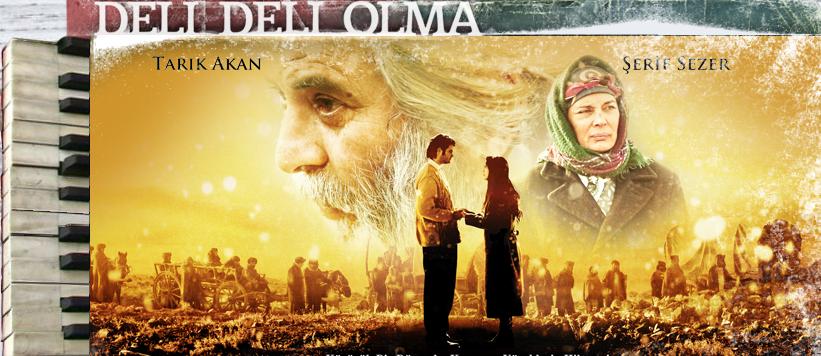
"Deli Deli Olma" (Are you
Crazy?) opened April 17, 2009. In Turkish on
YouTube in 2020.
Mishka, a poor miller, the last Malakan in Kars, gives his piano to the talented
granddaughter of Popuch, the Turkish girl he loves but could not marry.
Popuch hates Misha until his death, but she affectionately performs his Malakan burial.
by Andrei Conovaloff, 2009, updated Dec. 2021
Mishka, a poor miller, the last Malakan in Kars, gives his piano to the talented
granddaughter of Popuch, the Turkish girl he loves but could not marry.
Popuch hates Misha until his death, but she affectionately performs his Malakan burial.
by Andrei Conovaloff, 2009, updated Dec. 2021
See movie trailer (2.5 min).
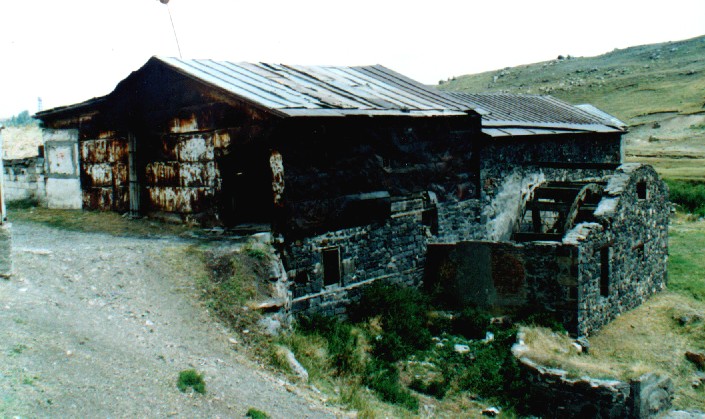
Malakan watermill near Kars, not used in the movie. May hve been built by Ivan G. Samarin for his kids who remained in Kars. Photo by Erkan Karagöz, a consultant on this film.
Movie begins with migration.

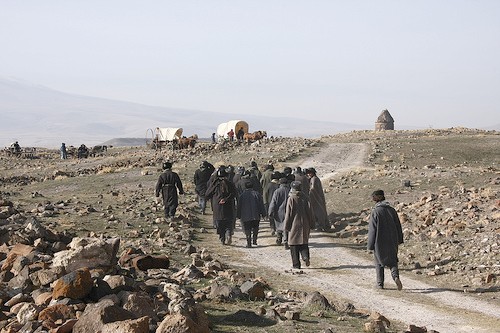
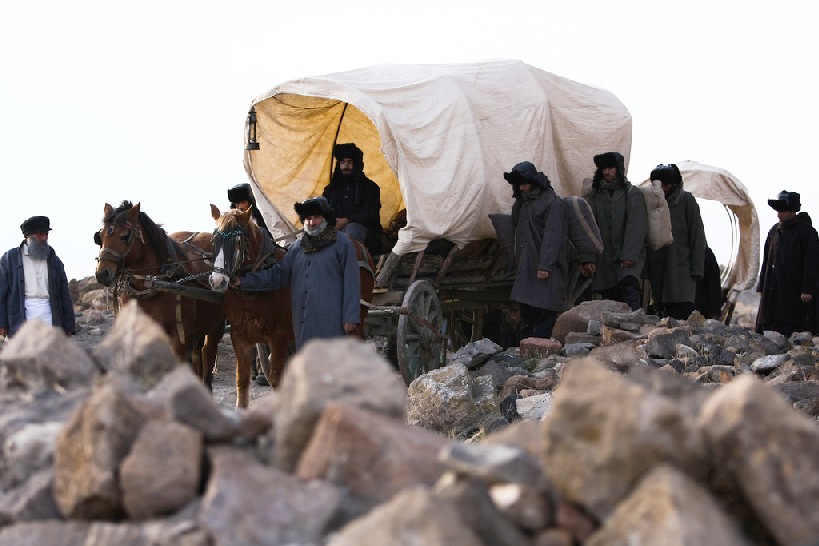
Malakans migrate to Kars.
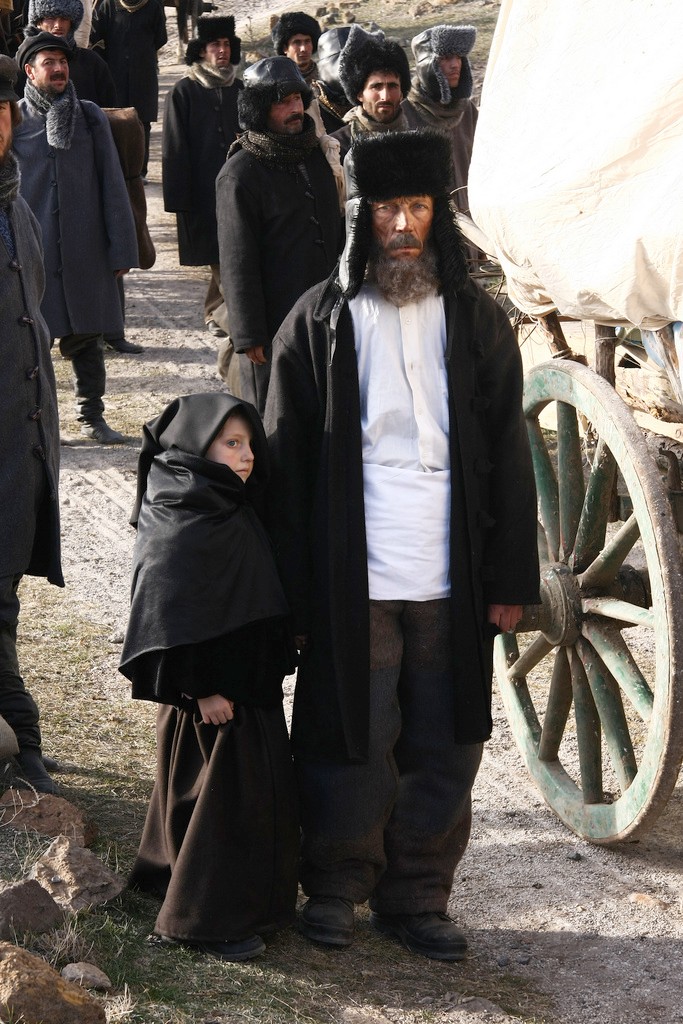

Camera on crane filming Malakan wagon train.
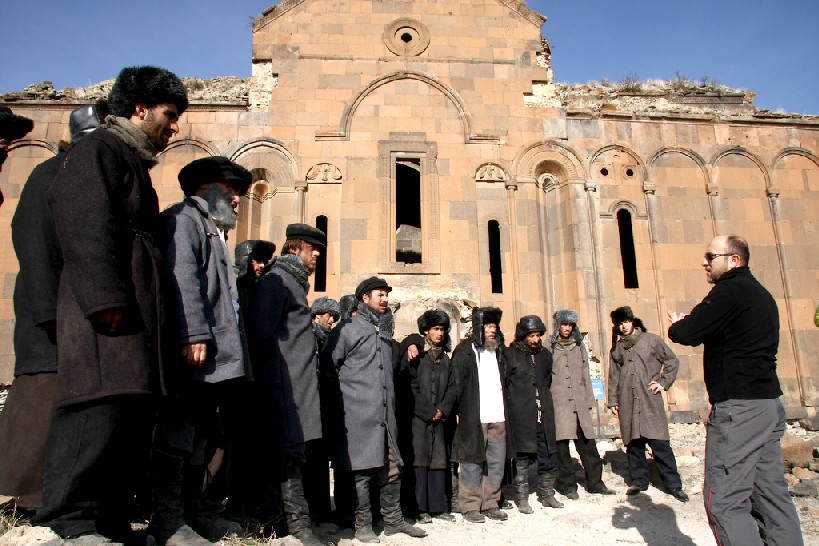
Directing actors playing the Malakans at Ani ruins.
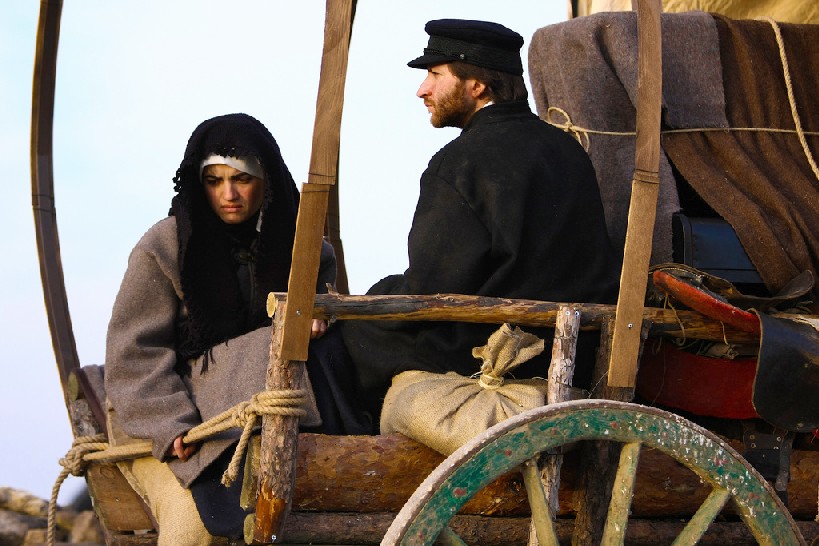
Mishka's parents with piano.
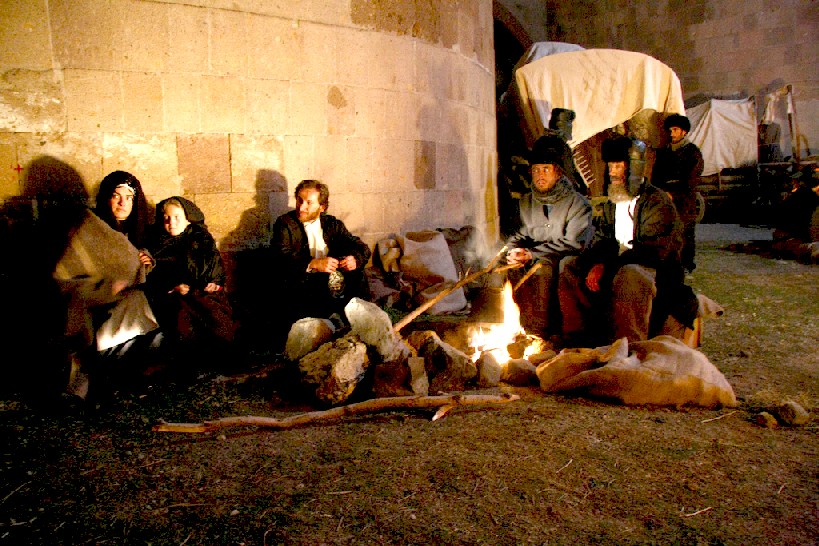
Mishka's family at campfire.
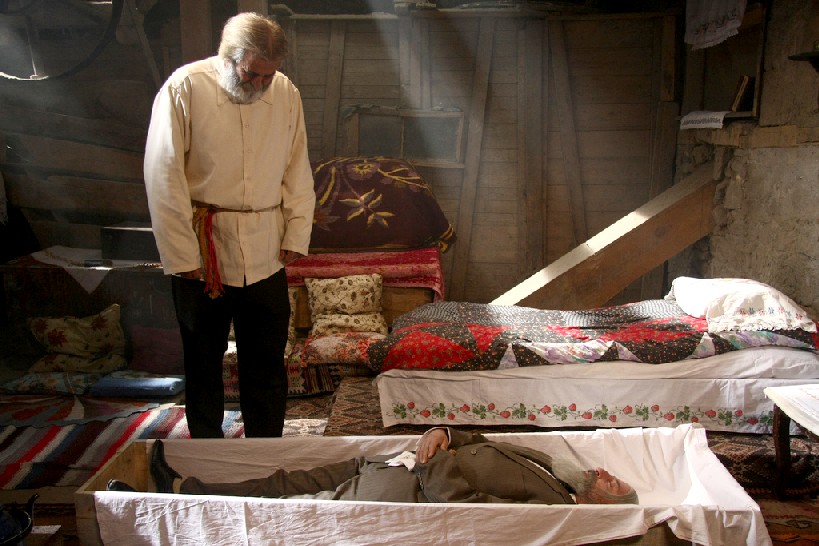
Mishka's cousin soon dies, leaving him the last Russian.
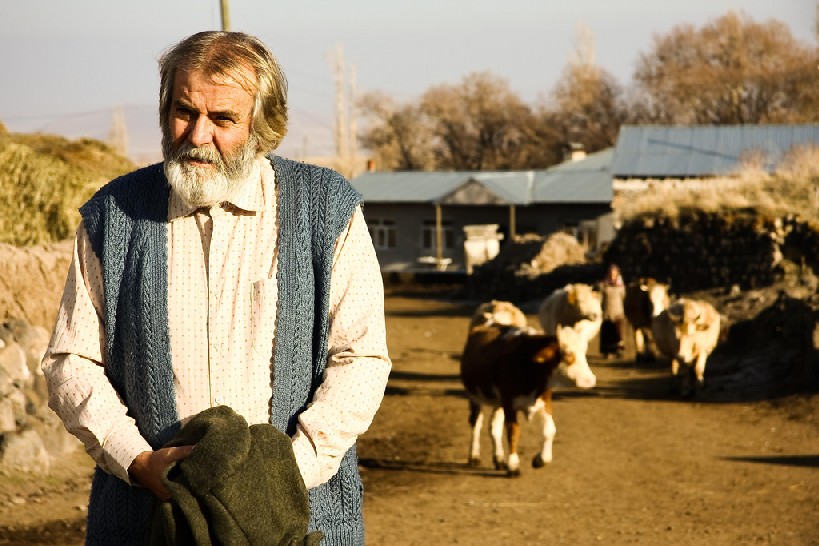
Mishka with cows.
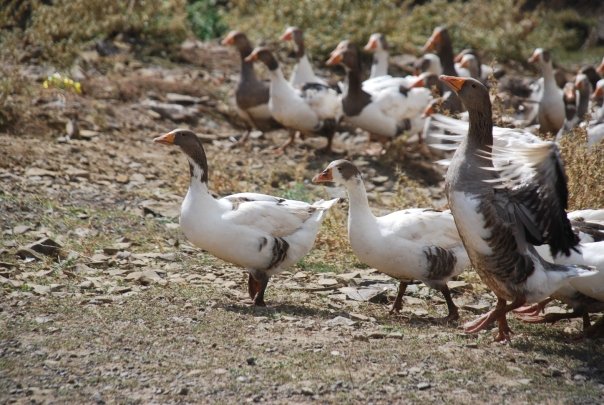
Local geese actors.
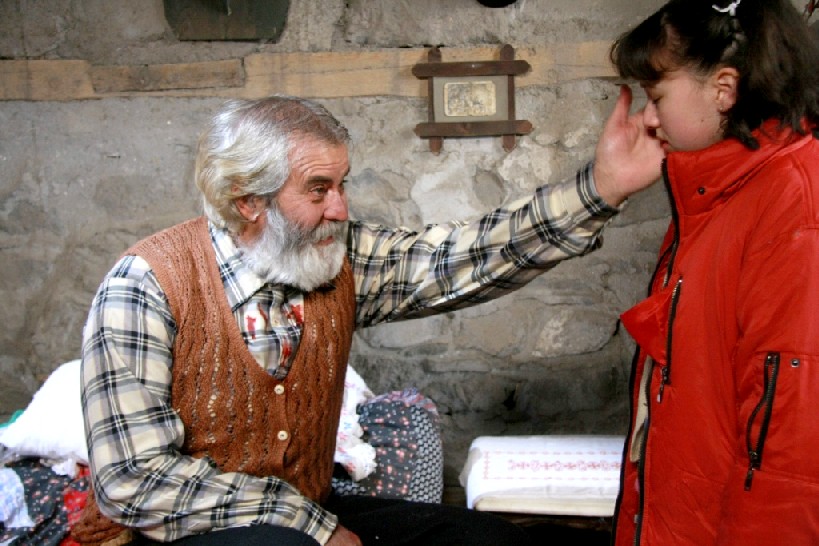
Mishka's mill-house shows Malakan photos, embroidery, rugs, etc.
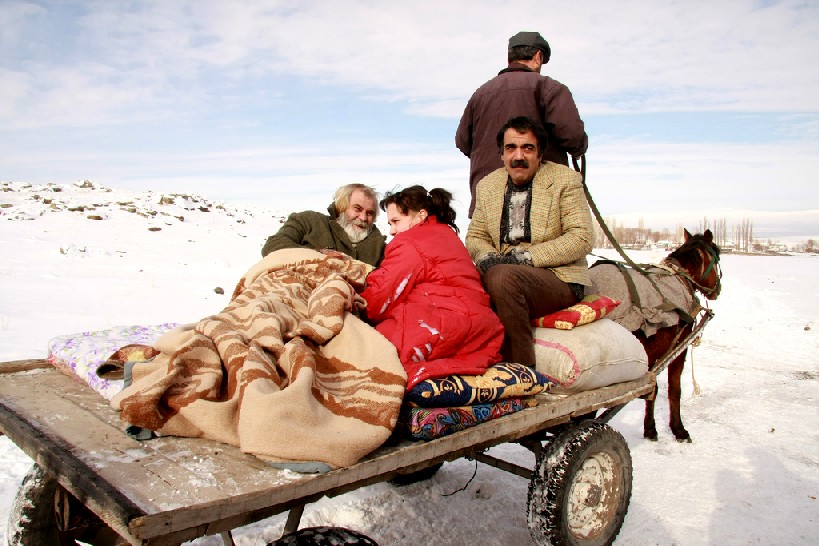
Dying Mishka is cared for by Alma's family while Popuch is out of town.
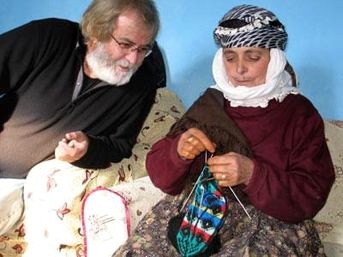
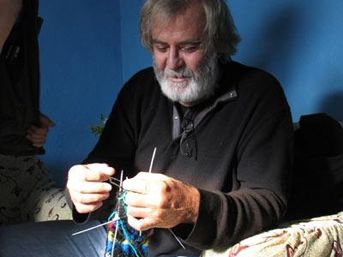
Akan learns to knit his socks in the Molokan-style from woman who knew Molokans.
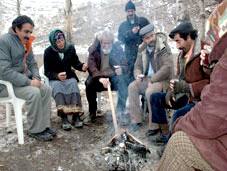
Actors, crew and reporters resting around a fire.
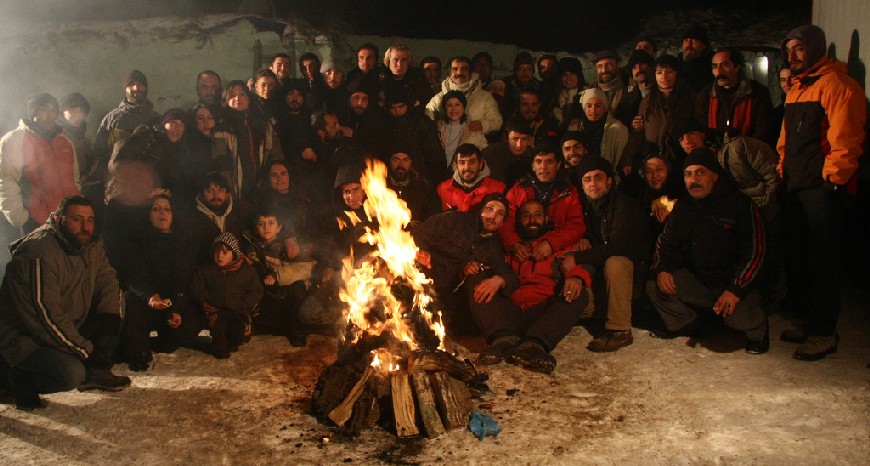
Last day shashlik barbeque party with villagers, cast and crew.
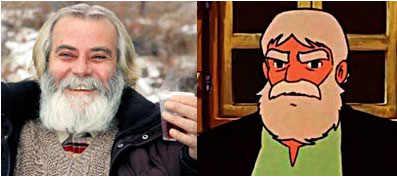 Mishka
was compared to Heidi's grandfather Alp.
Mishka
was compared to Heidi's grandfather Alp.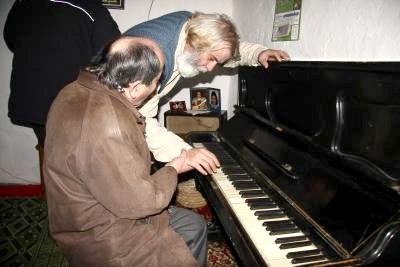
Alan took piano lessons too.
| "Malakan"
is the Turkish and general Caucasian word for all
types of white Christian people who resettled from
Russia to populate eastern Turkey after Russian
conquered the area. In most Caucasian
languages malakan refers to all
Spiritual Christians, Old Ritutalists, Germans
from Russia, and other non-indigenous settlers —
"those white people from Russia". "Mishka" is Russian for Mikey, little Micheal, though he is big. The title in 3 languages:
This is a somewhat musical, fictional comedy set in a rustic Turkish village east of Kars, Turkey, in the 1970s, home of the "last Malakan". Watch free in Turkish, or rent or buy with English subtitles. |
Update December 16, 2021 — Movie has been available on YouTube in Turkish since Dec 5, 2020 with ads. 698,835 views, 5.4K Likes, 788 Comments. — 11 trailers.
Rent on Google Play ($3) — View in Apple ITunes — YouTube with trailers (Rent $3 / Buy $13)
Many links below are broken, changed, or offline. Updating in-progress.
Update Feb 5, 2010 — The first thorough review in English was posted by "shutterbug_iconium from Türkiye" on Blogspot.com and International Movie Database (IMDb). With good English (some typos) he writes a substantive critique from a Turkish perspective. He clarifies the phrase "yeke kishi" (literally "big man"), translated in the English subtitles as "Molokan", though the Turkish word is "Malakan", and plural is "Malakanlar". Yeke kishi (big man) is used more than "Malakan" in the movie. Exactly who the Malakan are is never explained. Apparently the Russian immigrants were bigger in stature than the many diverse indigenous peoples of the Caucasus.
After summarizing the movie and praising the kid actors, he concludes:
... the movie could have
told more about Molokan [Malakan] people, the
people who called themselves "true Spiritual Christians",
instead of giving a sneak preview of their life. In the
movie the only thing we see about these people is a
funeral rite and a few Easter eggs. [There were
other items.] What I mean is that if you do
not do some reading after seeing the movie you will still
not know much about these people but that does not prevent
this movie from emerging as a sweet, humanitarian,
dramatic and even an entertaining movie.
Update February 4, 2010 — Movie is available on DVD in Turkish, with English and French subtitles, for $26 (free next day shipping) from Tulumba.com (New York). Note that the DVD is formated for Region 2 Code (Europe) but can be played in the US on some compatible players and computers. For $14 you can also buy the Turkish only version.
The DVD with English subtitles can be seen very well on your home computer using VLC Media Player, a free, open-source download.
To select the English subtitles when playing the DVD:
- On opening screen:
Click on the third selection at the bottom:
"Ses ve altyazı" (Audio and subtitle).
- Next screen:
On the third line, click on the first item:
"ALTYAZI: ingilizce" (SUBTITLE: English),
then click on the first item of the last line:
"Filmi başlat" (Start film).
- When the movie starts, you should recognize the
universal symbol buttons for
play, pause, stop, fast-forward, etc.
Update January 24, 2010 — Movie Review in Russian by Tanetomo, Tanetomo's Journal, Marginal Notes (LiveJournal.com), an amateur film critic. Translated.
Update October 30, 2009 — Movie won Best Music award (US$14,000) and got a standing ovation at the 46th annual Antalya Altın Portakal (Golden Orange) International Film Festival, Turkey's oldest film festival, and is entered in the Bursa International Silk Road Film Festival. New English title: "Piano Girl", not yet available in the US.
Altın Portakal Festival program (Flash program) shows "Piano Girl" screened in AKM Aspendos Hall, at 20:30 (10:30 p.m.) Monday, October 12.
Update April 27, 2009 — The most personal review of this movie was published yesterday by attorney, author, and Malakan historian Erkan Karagöz.
Update April 25, 2009 — Movie reviews are showing low audience attendance and confusion about the origins of Malakans. Most comments are very positive. One is from a guy who grew up with a Malakan neighbor.
Update April 24, 2009 — ErkanKaragöZ sends a correction.
Update April 5, 2009 — Two Molokane in Turkey, brother and sister, Ivan Denisenko and Ludmila Denisenko sent comments about the accuracy of this movie.
Update April 3, 2009 — This first fictional film about Malakans is to be released nation-wide in Turkey on April 17, 2009. It is now in post-production, so information is somewhat limited. Erkan Karagöz reports on March 29, 2009 that selection of Malakan singing for the sound background editing is in-progress.
[But, no Malakan singing or Russian music appears in the final movie.]
Update Sept. 2009, Vedat Akçayöz (pronounced: Ukchuyez) writes that he was a technical consultant for the movie and he played in the film. His role was a teacher at the music conservatory.
Most of what has been released so far has been summarized here, probably with some errors, from many Turkish press reports, blogs and the film website. See a story board summary from the actual film — in-progress.
 Official Summary: Official Summary:A warm story in a village of Kars ... like a story speaking another language, but a moment away from us but our people ... Two lovely village child; Alma and Rabbit... And a Malakan who's family has been migrated when he was a child from Russia: Miska ... Miska's youth love, a very angry and elderly woman Popuç ... Popuc's crowded, cheerful, animated family against Miska's loneleness ... After the Russian '93 War (which was between Russia and Ottoman Empire) Malakan society, a part of the Russian nation, are forced to migrate to Kars including Miska's (Tarık Akan) family. As Miska grows old in Kars and operating the only mill in the village he fells into financial difficulties at his seventies after the modern machines came out. The cranky old woman of the village Popuç (Şerif Sezer), hates Miska and does not want him to live in their village. But the villagers do not see a harm in benevolent Miska, even like him so they don't chooese any side between Miska and Popuc. Popuç, lives with his son Semistan (Levent Tulen), daughter in law Figen (Zuhal Topal), and three grandchildren. The smallest and wayward of her granddaughters Alma, who is a affectionate girl and has a good musical ear congenital. Alma's teacher, Metin, recognizes the ability of Alma and thinks that it must be evaluated. There is a warm friendship between Alma and Miska. Alma enters Conservatory exams as a result of the teacher's work ... Meanwhile Miska gets sick and they talk in the village that he will die soon. And finally two old people Miska and Pabuc question their histories and big secrets are spilled. |
If you did not know the history of the Spiritual Christians from Russia that colonized Kars, nor read much about this movie, you would have to watch it again to catch the subtle hints in the quick flashbacks, story links, and many scenes will have little meaning. If you do not know Russian culture or Spiritual Christian traditions, you could be misled. I hope the Turkish village culture is accurate.
Owning a piano indicates that Mishka's family may have been wealthy before they left Russia. The fact that he learned to play piano, suggests his family supported education. His was not a typical Russian peasant family in that area at that time.
There was no "last Malakan" in Turkey. About year 2000, I was asked by Ivan Denisenko, from Kars in Istanbul, to help find and compile a directory of an estimated 1000 descendants of Spiritual Christians from Russia remaining in Turkey. I wish I had the time and money to help him.
History Summary
During the 40 years (1878- 1918) that the Russia Empire controlled Kars Oblast (now Kars province), thousands of non-Orthodox folk-protestants (heretics, sectarians) were resettled from the Caucasus (Dukhoborsty, Pryguny, Maksimisty, Molokane, etc), Germans, and Old Ritual Kassaki, to live among Turks, Kurds, Armenians, and other tribes. Hundreds of Old Ritualists (Nekrasov Cossacks) had already been in western Turkey since 1740, in their own isolated village on the south shore of Birds Lake (Lake Manyas), 85 miles southwest of Istanbul. The locals called all these outsider invaders from Russia Malakan.

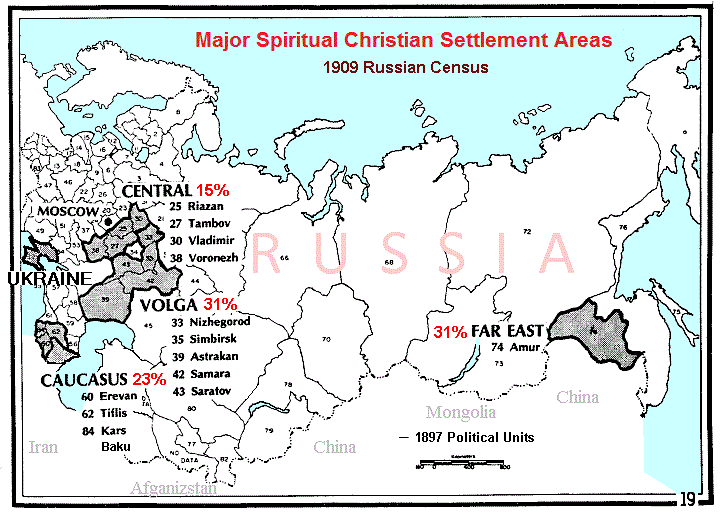
The most thorough treatise to date about how and why Spiritual Christians were relocated from Russia to the newly conquered Caucasus, then to Kars Oblast, is Dr. Nicholas Breyfogle's: "Heretics and Colonizers: Religious dissent and Russian colonization of Transcausasia, 1830-1890s" (1998 Ph.D. thesis:, 387 pages). Less than a fourth of all Spiritual Christians moved from Russia to the Caucasus (Major Spiritual Christian Settlement Areas: 1909 Russian Census), only a few thousand lived in Kars Olbast. Oblast is an administrative division.
In 1895, Dukhbortsy in the Caucasus staged a 3-site protest against the military by burning guns. One of the sites was 35 miles northeast of Kars. Though 100s of Dukhobortsy died when police raid their guns burning protests in 2 of the 3 bonfires, apparently none in the Kars area were killed because they were farther from military police. World-wide news caused intervention by the Society of Friends (Quakers); and 2 international protest letters followed by a huge donation by Count Lev N. Tolstoy. By 1900, most Dukhobortsy in Kars, along with one-third of all Dukhobortsy in Russia, migrated to reserves in central Canada. Though neighboring non-Dukhobor Spiritual Christians were not punished, a few zealots became agitated believing they might be punished next, while travel agents from the Canadian Pacific Railroad were soliciting in the Caucasus for more colonizers to move to central Canada. For a few years some journalists thought that a majority of Spiritual Christians would flee Russia to North America, but by 1903 the Tsar quickly reversed abusive treatment of non-Orthodox heretics, and only about 1% left Russia.
After the Russian Revolution in 1919, Kars Oblast was returned to Turkey. Most Spiritual Christians stayed until the 1921-1925 Soviet-Turkish treaties of friendship, neutrality and mutual non-aggression when ethnic Russians were invited back to their Motherland. Most were resettled in Tselina district, Rostov oblast, where many descendants live today. Spiritual Christian Novye Israeili in Azerbaijan were also moved near the other Spiritual Christians in east Rostov Oblast. It is not yet know how many, if any, Dukhobortsy remained in Turkey.
By 1930, it appears that less than a thousand Spiritual Christian folk-protestants from Russia remained in Turkey. They were now controlled by the first president, Muslim dictator Ataturk, who ordered national dress, language and names (examples: Koroliov became Boyar, Dobrinin is now Dabrenil, Klubnikin is strawberry in Russian and Chilek in Turkish).
In 1962 during the Cuban missle crises, the remaining Russians (mostly Old Ritualists, with about 1500 Molokane, Pryguny, Subbotniki, and a new sect, the Dukh-i-zhizniki) were resettled to the North Caucasus, most to Stavropol' territory (krai) and Astrakhanka. Today many Old Ritualists from Turkey live near, and often work and know the various Spiritual Christian tribes in Levokumka district, northeast Stavropol' Province, Russia; near Woodburn, central Oregon, USA; and Rio Negro district, west-central Uruguay.
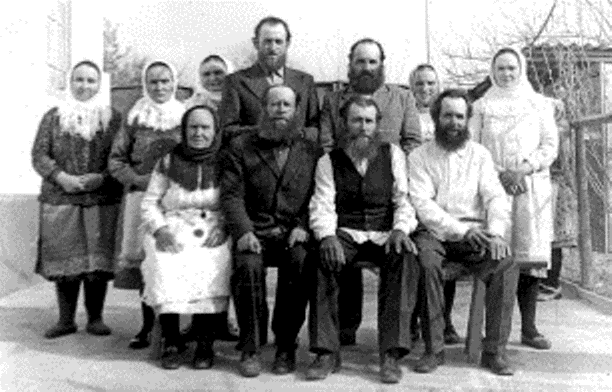
Kars Malakans (ca.
1960) Kars City Guide — Population:
The Molokans (Offline)
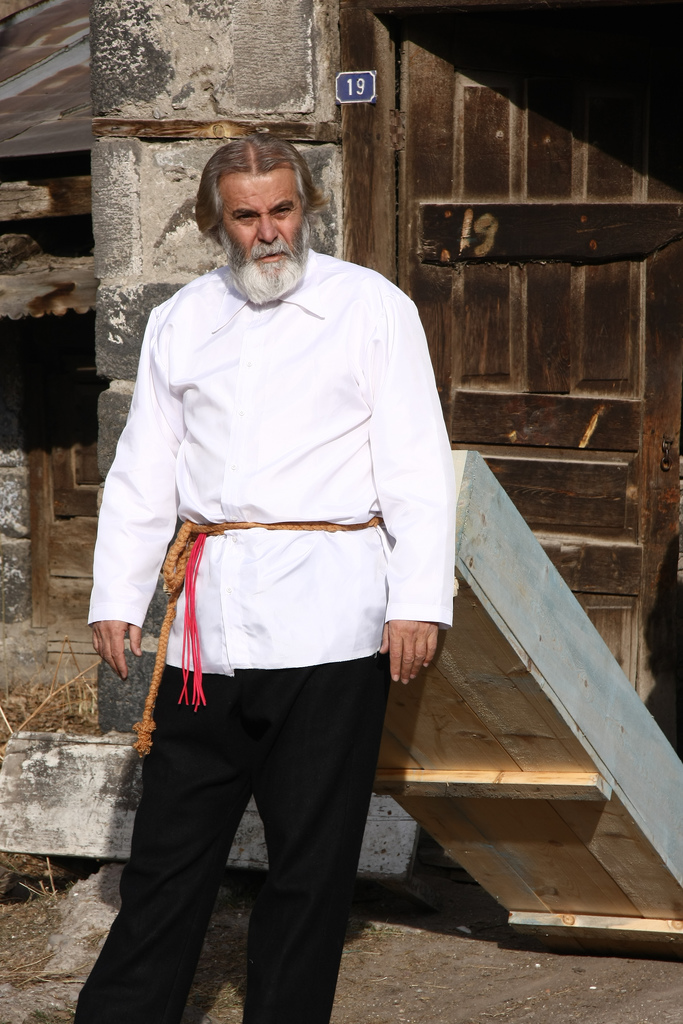
Misha is costumed like the man sitting, wearing a vest or sweater.
These people could be Duk-i-zhizniki.
Misha is costumed like the man sitting, wearing a vest or sweater.
These people could be Duk-i-zhizniki.
Movie Review
The movie opens with the Malakan migration from Russia passing through the Ani Ruins of the Ottoman Empire, about 10 miles driving east from Eşmeyazı village, the main film location Thought Spiritual Christians from Russia never lived in this village and it may not have a mill, it was chosen for being rural (not modern) yet close to Kars. The film crew needed the hotel rooms and restaurants in Kars.
The Ani Ruins are 30 miles from Kars and 5 miles from the Armenian border. This was once the capital of ancient Armenia (Kars was capital before 971, Erevan after 1410). It was on one of the Silk Roads, and had ~200 churches. Lots of history.
Though the Ani Ruins are not along the road which Malakane migrated to Kars, it was chosen as background by the movie director to clue the Turkish audience to the geographic location of the movie with images, not words. Its like showing the migration of Spiritual Christians from Los Angeles to Arizona or to Mexico, going along the Grand Canyon.
The map below shows that most Spiritual Christians (Malakan) from Russia settled along the train and main highway from what are now the Republics of northern Armenia and Georgia. The movie site is far from the railroad and former villages of Spiritual Christians from Russia.
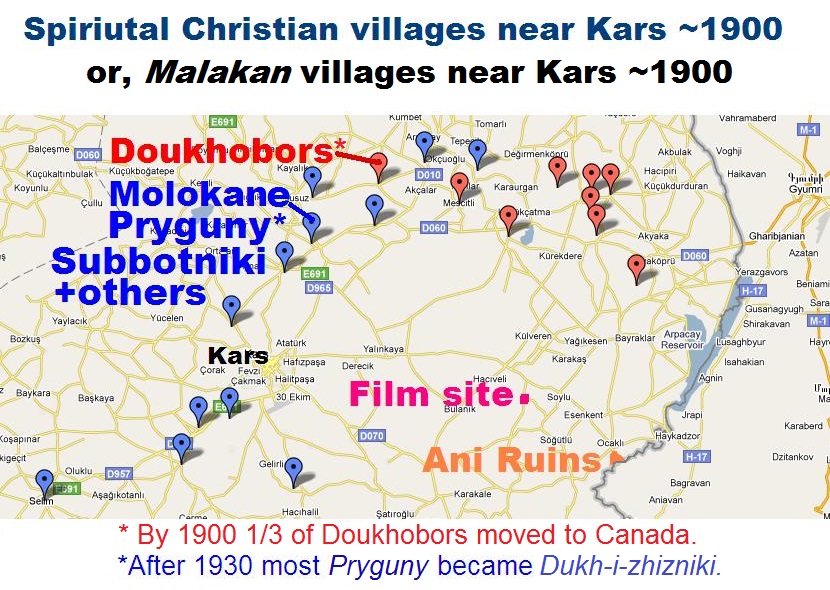
Map adaped from Kars
Doukhobor
and
Molokan
Villages, 1879-1921, by Jonathan Kalmakoff,
2009.
Also see: Doukhobor and Molokan Settlements in Kars Province, Russia, 1879-1899.
For simplicity, Kalmakoff combined all non-Dukhobor Spiritual Christians as "Molokan", which is misleading.
Also see: Doukhobor and Molokan Settlements in Kars Province, Russia, 1879-1899.
For simplicity, Kalmakoff combined all non-Dukhobor Spiritual Christians as "Molokan", which is misleading.
Three wagons are shown in the beginning of the movie in a wagon train approaching the Ani ruins, probably because old working wagons were hard to find, and this is a low budget film.
Actually Spiritual Christians from Russian (Malakans) probably had at least one wagon per family. They had huge contracts to build and drive wagons for the military, aided because the Tsar banned Jews from the transportation business in the Caucasus, but declined when new railroads replaced wagons for long-haul commerce.
Unfortunately no Russian folk music or Spiritual Christian singing was used, though an e-mail (below) indicated it was considered. Maybe the film producers were afraid of possible copyright problems, which is unfortunate, because psalm and hymn singing is central to Spiritual Christian culture. Hymns would certainly have been sung as they traveled and would have been good background sound. The movie was awarded for the Turkish folk music.
The only a few Russian words were spoken, which is unfortunate for the Russian character. But the budget is small, and the producers apparently did not reach out for more Russian language help. Consider how poorly Hollywood showed minorities in America, like Native Americans, even with much larger budgets.
It was filmed in December 2008 in real snow, so cold that in many indoor scenes the actors' breath vapor is obvious.
The interaction of a lone Russian old man with his Turkish Muslim neighbors who try to do the right things is interesting, funny and entertaining. The Russian happens to be a Malakan, but he could have been be from any other local culture.
Malakan history in Turkey has been in the press in the past decade, credit to Vedat Akçayöz, which may have led to this fictional story. He helped with the production.
As other reviewers have summarized in Turkish, the piano has a major role as a character in the story, equal to the poor old Russian, the angry old Turkish woman or her grand-daughter.
The Turkish bağlama (folk lute guitar) is featured more than the piano, probably because the Turkish actors knew it and to show Turkish culture, particularly singing without touching lips. This led to the film's the music award.
Young Mishka falls in love with a pretty Turkish girl Popuch, but he cannot leave his family to run away with her. She is hurt and angry with him the rest of her life.
The movie is set in the 1970s. Mishka buries his cousin. He no longer operates the only mill in their village near Kars and is the last Malakan. Poor, he sells apples because he has the only tree, yet cannot pay his credit at the store run by Popuch's son-in-law.
The very cranky, cussing old woman of the village Popuch, hates Mishka and does not want that "God damn" Russian infidel in their village. But the villagers feel sorry for Mishka and try to help him in his old age, while Popuch cusses out anyone who tries to help Mishka, mostly her own family.
Popuch, lives with her son Shemistan, daughter in law Figen, and three grandchildren. The smallest and wayward of her grand-daughters Alma has a natural ear for music.
Alma's teacher, Metin, recognizes Alma's musical ability and thinks it must be evaluated in Kars. Alma learned by accident that Mishka has a piano and he invites her in to his house to practice. Alma adopts Mishka as her grandfather. Her teacher gets Alma an audition at the music school in Kars and she is accepted. The village and Mishka are very happy for her, but Popuch wants her to stay home to "milk the cow". Her family must move to the city without Popuch.
Popuch discovers Mishka has not paid his credit at the store and demands money. Mishka pays with his piano.
Meanwhile Mishka gets sick and they talk in the village that he will soon die. Finally the two old people Miska and Popuch question their histories and big secrets are revealed.
Other Summary Reviews
The new Turkish film "Deli Deli Olma" is about a Malakan man, Mishka (Mike, no last name), who operates and lives in his family's old water-powered flour mill near Kars, Turkey in the 1970s. He is the last Malakan left in his village and can no longer continue to operate the mill. He is miserable with no family nearby, out of work, and a village woman hates him. He has dreams and flashbacks of his life in Kars. Mishka finds a new purpose in his aging life with his old piano and a young music student.
The movie title can be translated from Turkish into English as: "Are you crazy crazy?", "Crazy Rave", "Mad Rave", or "Really crazy". "Deli Deli Olma" is a fictional film showing how Spiritual Christians from Russia are remembered in Kars. The theme is unfulfilled love, wrapped with some authentic history of and rural village life of the area.
The star, Mishka, and his father (or uncle) stayed in the Kars region while most all relatives, moved to Russia in 1961-62. Mishka is the only Malakan character for the entire film. His father (or uncle) dies early in the film in a flashback. There's a wagon train of Spiritual Christians from Russia who appear to be arriving in Kars in a flashback, judging by the older wagons.
There's tension between Mishka and some relatives over past events. As the story evolves, two old histories are questioned and secrets revealed.
Mishka is a stereotypical Spiritual Christian from Russia man as remembered in Kars, bigger than most men, with a white beard, hair parted in middle, who operates the old water-driven flour mill built by his family. He's the last remaining Russian in a Turkish village. He has photos and flashback dreams of his departed family and childhood. The film is about Mishka's life, his ups and downs, and love — of course, its a movie.
Now alone, Mishka can no longer compete with new electric milling technology and is out of business. He gets sick and perhaps dies at the end of the film. In between this dramatic tragedy is a comical love story. See movie video trailer (2 min, 37 sec).
After shutting down the mill, Mishka gets poorer. He sells apples. Mostly old people remain in his village, and he gets a little sympathy from his neighbors. He is especially hated by the cranky old woman Popuch (played by Sherif Sezer, a Turkish actress). Mishka can no longer tolerate living in his home village and wants to move. But, where to? This is his lifetime hometown.
The lead role of Mishka as a 70 year-old is played by Turkish actor Tarik Akan who is 62 years old. Akan has a feeling for the people and knew the locations well. He attended elementary school nearby in Ardahan, where some Spiritual Christians from Russia once lived, and visited Kars city and the surrounding villages many times in his youth. It's reported that Spiritual Christians from Russia in Kars personally helped him act and talk like a Russian, and authenticate the film. [See Ivan's comments below.]
With nothing else to do, Mishka decides to learn to play his piano again. He attended the Kars music academy for 6 weeks in his youth before his family left for Russia. He retrieves his old piano stored in the barn, used as part of a fence to keep the cows in, covered with hay. Mishka finds joy in playing the piano. Then he finds a purpose in life by helping Alma, the youngest grand-child of his enemy Popuch. Alma has a talent for music which she inherited from her father.
Mishka's loans his piano so Alma can take piano lessons. The neighbors love the new entertainment, but Popuch hates the piano and Mishka for wasting Alma's time with piano lessons. Popuch attacks Mishka and goes on a rampage to destroy the piano.
Akan actually plays the piano because he was coached during filming. During promotion, Akan visited music schools. Vedat Akçayöz (pronounced: Ukchuyez) writes that he was a technical consultant for the movie and he played in the film. His role was a teacher at the music conservatory.
The story gets interesting and complex with flashback scenes of Mishka and Popuch in their youth when they fell in love. They could not continue their romance because they were from different cultures and religions, and never married.
Though Popuch is against her grand-daughter Alma studying music, with the support of the village and hard work, the talented Alma earns a seat in the Kars Music Conservatory, and a way out of the village into the modern world. (Local Molokane reported to me that there is no such conservatory in Kars.)
After their secret former romance is revealed, Mishka and Popuch forgive each other, but Mishka becomes ill and is dying. The ending is not yet revealed but it appears from the film trailer and images posted that Mishka is taken by Alma's family to Russia to die with his relatives there, which could explain why he is riding in the wagon lying down near the end.
Most actors appear to be Turks, and some of European origin. It is not revealed yet if any were among the reported nearly 1000 descendants of Spiritual Christians from Russia living in Turkey, but it is reported that many local Malakans helped with the dress, costumes, set design, props, locations, story line and singing.
The film shows the actual rustic rural life in Turkey at that time. Roads are not paved. Transportation is by horse, or on foot. Modern appliances are mostly absent. Alma has a TV. Farm animals abound: cows, sheep, geese, chickens. Buildings are of rock, adobe (mud brick), heated by fire.
In 2015 I toured through many of these villages with 10 Doukhobors from Canada. Cow dung bricks (kiziki) are still used for fuel, cooking, heating. Besides Vedat, we met no remaining descendants of Spiritual Christians.
The snow scenes were produced outdoors in weather as cold as minus 30 degrees Celsius (-22° F), tough for the film crew and actors who only wore authentic clothing for the scenes, then had to bundle up in heavier coats and stand near electric heaters and fires. Akan said he kept warm by drinking a lot of hot tea, like a Russian, and roasted potatoes in the fire coals. The snow is real and weather much colder than it looks, even inside.
Historic accuracy was a high priority. The costumes are authentic or close reproductions of Malakan styles, and fabric. Some were loaned by local Malakans and residents. The local people in Kars and Çalgavur (Chakmak) helped sew and knit the wardrobe, socks, Russian shirts with rope belts, cardigan sweaters and coats in the Malakan-style. [See items below.] Some authentic clothes and photos were loaned and used in the film. A local Turkish woman taught lead actor Alan how Russians knitted their socks.
Information about the diverse Malakans in Turkey has increased in Turkey recently. News articles, several books, a 2008 photo exhibit and documentary film researched and produced by Vedat Akçayöz have highlighted the fact that Turks recognize how their life and culture in Eastern Anatolia, particularly in the Kars region, has been enhanced by the Spiritual Christians who moved there from Russian more than 100 years ago. More about Spiritual Christians in Turkey.
The Russian colonizers created a different culture in this region of Turkey by bringing new technology, soap making, Gruyère cheese (a Swiss-type now called Kars Gravyeri), new agriculture, food plants, electricity, new breeds of the "Malakan" horse and "Malakan" dairy cow, and other lasting changes. Many of the abandoned Russian buildings are still in use.
In a interview published on Dec 28, 2008 Akan says that Malakans were "... very resourceful for Kars. They bought the first gravyer cheese, potatoes, flour mills, beekeeping, and their agriculture with them." He also said his character is from the Crimea, the "Milky Waters" region of the South Ukraine. He also said he met and talked with two Malakan families now living in Kars, and they helped authenticate the costumes, background and story.
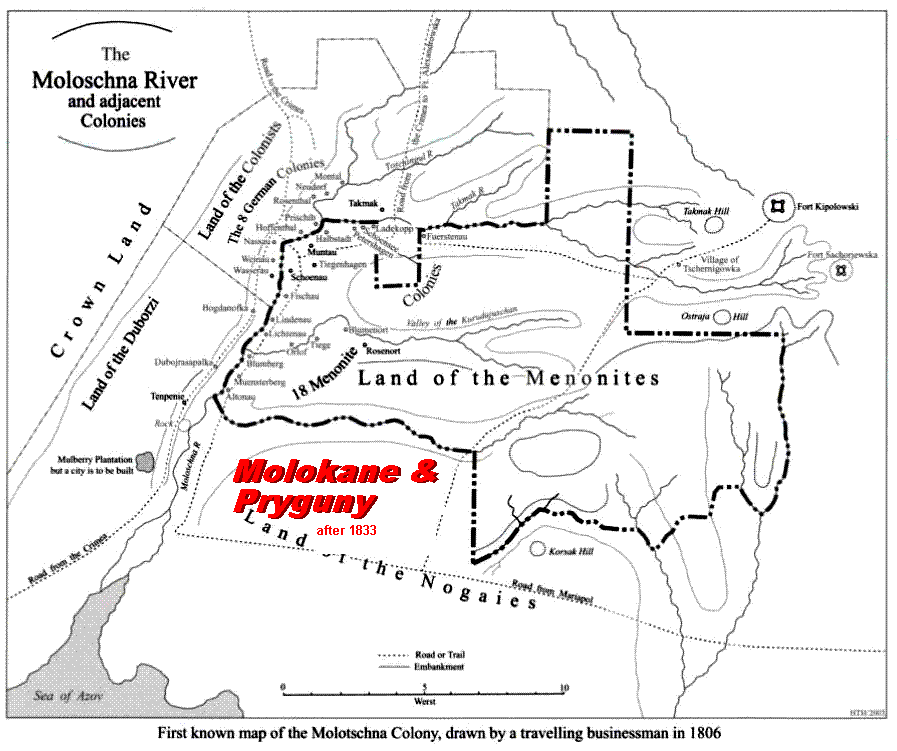
For viewers not familiar with Spiritual Christians from Russia, the film notes that they separated from the Orthodox as heretics and moved into Kars province during the Russian invasion of Turkey in the 1877-78, and they went back to Russia in 1961. Probably not stated in the film is the fact that they moved out in waves — in 1899-1900 (many Dukhobortsy to Canada), 1905-1912 (some non-Dukhobortsy to the US), ~1926 (to east Rostov, USSR), and 1961-62 (most Old Ritualists and Spiritual Christians to north Stavropol' and Astrakhan provinces, USSR).
In an interview published January 29, 2009, lead actor Akan states that he extensively researched the character for accuracy "... all the colors ... of the Malakans hair to the shoes ... A Malakan who watches this movie, will not find an error." [See Ivan's comments below.]
Akan was also told: "Now there are about 3 million Malakans in the world, some in Turkey." There should be that many descendants of Malakans in the world, but much less identify themselves as ethnic Malakans, and only about 15,000 regularly participate in religious worship service around the world because most have assimilated.
Akan continues: " ... the basis of the piano is to tell the story of the journey. Together they show a sense of life, human love, and loneliness which is a host to many emotions." He then voices his opinion, shared by many Turks, about the government forcing the Russians out of their country. "Here in Turkey there were policy mistakes against minorities. If they were not sent to Russia in 1962, thousands of Malakans would now be in Erzurum, Ardahan, and Hopa. Today our geography would be ten times more beautiful. These people were more prosperous and a pleasant experience. Of course we can not prove it, because they are not living here today, we can only speculate. But they have left and we have their culture in this film. ... We are telling you something very true. ... to love the beauties of the minority culture. We're telling people to love each other ..."
The village scenes were actually filmed 18 miles (29 km) east of Kars in Eşmeyazı village. No Spiritual Christians from Russia lived there, but the village provided a good typical rustic example and close to Kars city. Spiritual Christians from Russia lived in valleys north and south of Kars city.
"Deli Deli Olma" a film drama produced in Kars, Turkey, opens April 17, 2009, in theaters across Turkey. Filming started December 3, 2008, and was completed in 5 weeks, on January 6, 2009. Well-know Turkish actors Şerif Sezer and Tarık Akan have leading roles. The roles of them as youth were played by their own real children. Written by Yılmaz Güney and Şerif Sezer. Directed by Murat Saraçoğlu. Cost $2 million. Distributed by Pinema Productions.
The Turkish entertainment press reports that the lead actors in this film, Akan and Shezer, were last paired in a love story 28 years ago in a popular film "Yol" ("The Road"). This is their third film together. In this film the young actors that played them in their youth are actually their own children in their first movie roles. The idea for the kids to play the parents came from the kids' siblings.
Akan promoted education by visiting schools in the area, telling kids that he also went to school in Kars region and urged the kids to read more and continue their education. Music schools got a boost from the film.
Some newspapers reported that Mishka looks like grandfather Alp in the popular Turkish version of the illustrated children's book "Heidi" written by Johanna Spyri in 1880. Heidi is required student reading in Turkey, has been made into many movies since 1920, and translated around the world.
E-mail from Molokane
and Friends in Turkey
From Ludmila Denisenko [Ivan's sister, West
Turkey]Date Sat, Apr 4, 2009 at 11:08 AM
Subject Re: Deli Deli Olma
Although it is a very good thing a Molokan story is put on film; but I am very sorry and afraid that the film may have inevitable errors. They never tried to consult anybody [among us Molokans].
Let's be positive and wait
Ludmila
Ludmila
Ludmila is a local historian, wrote about Molokane in Kars, speaks 5 languages, and often visits her daughter's family in Seattle WA. About 2010, I took Ludmila to sobranie in Gervais Oregon were she met Dukh-i-zhiniki for the first time. She had a better experience with the Staroobryadtsy from Turkey whose women snuck her into their evening service because she befriended them in Turkish.
From: Ivan Denisenko [Ludmila's brother, Istanbul]
Date Sun, Apr 5, 2009 at 6:39 AM
Subject Re: Deli Deli Olma
New Movie About MalaKans in Kars, Turkey
Dear Andrey Conovaloff,
There are several mistakes on this statement :
- After the Russian 1893 War >>> should be 1877-78
(common
mistake
made
even
by
historians;
this
last
war
is
known
as
'93
war'
but!
it's not 1893 ! )
- Mishka decides to learn to play his piano again,,
>>> Malakans were playing piano in Kars vilages
? My point of view : this is unreal !
- Kars music academy >>> never existed ! but as far as I know there were 'Public Houses' where young people learnt to play piano, violin etc. after Ataturk's revolution.
Again on: Sun, Apr 5, 2009 at 5:24 PM
There's another point I forgot to mention :
'' The Russian sectarians
created a different culture in this region of Turkey by
bringing new technology, soap making, Gruyère cheese (a
Swiss-type now called Kars Gravyeri) ''
Very different people from different origins lived in Kars as well as Malakans.
Jewish, Greek, Estonian, German... Probably this very famous Kars Gruyère cheese is brought by Germans and not Malakans. Have to prove I'm wrong !
In Turkdoghan's 1962 PhD thesis, published in 1972 and republished in 2005, he credits Malakans with introducing Gruyère cheese to Kars province.— Andrei
Well, we are not talking about Stone Age, not to be able to reach the correct knowledge is inadmissible. Turks used to say : '' Atarsan destekli at ''.
I wish you a very nice spring, Thank you for giving me the news !
Ivan Denisenko
From: erkan karagoz <aequitas44@gmail.com>
Date: Fri, 24 Apr 2009
Thanks a lot for your reply and for the information [links to song files by Molokane in Russia]. The company that has made the film has got nothing to do with me; I don't know them, and they don't know me and I was NOT the consultant of the film [Deleted above]. They didn't ask me anything about the film during the production of it. But when it came to the music, songs, they have been told that it would be right to ask Erkan K. about the copyrights of the music as he is one of the best to know about the Malakans. That's why they came in touch with me and I asked you for some information.
Luckily, that has been very useful. According to the information you gave, the music is the music of the Malakans who lived in Kars. And that's really important for the film. Thank you very much, ...
... As far as I know, at that time, the Malakans in Kars weren't interested in music, especially in the piano, because of their religious belief.
--
Avukat ErkanKaragöZ
Aequitas Hukuk-danışmanlık
0-212-2342915 -2196453-
Fax:231 07 51
0532-2231950-0535 2885853
Halaskargazi cad.Saksı sok.13/3
Şişli-İstanbul
http://erkankaragoz.com
More later ...
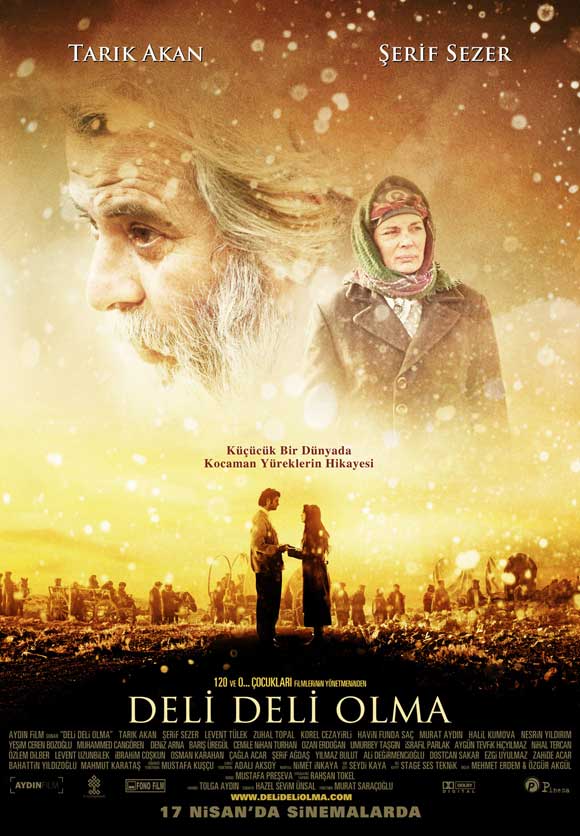
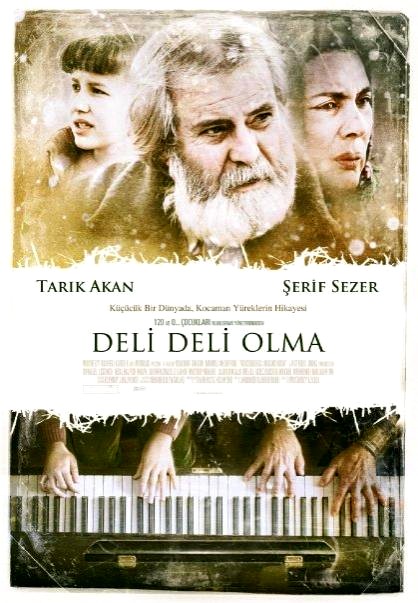
Translation of DVD cover and poster: (actors) Tarik Alan, Sherif Sezer; (theme) A small world, The Story of a huge heart; (title) Crazy Rave.
See movie trailer (2.5 min).
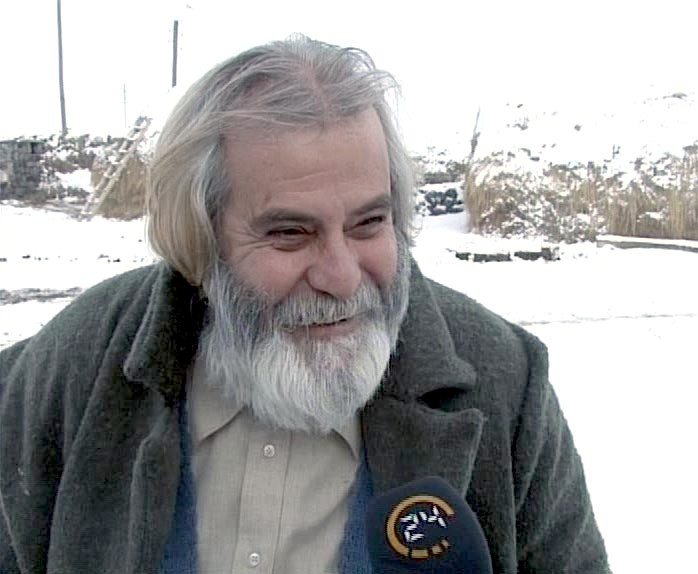
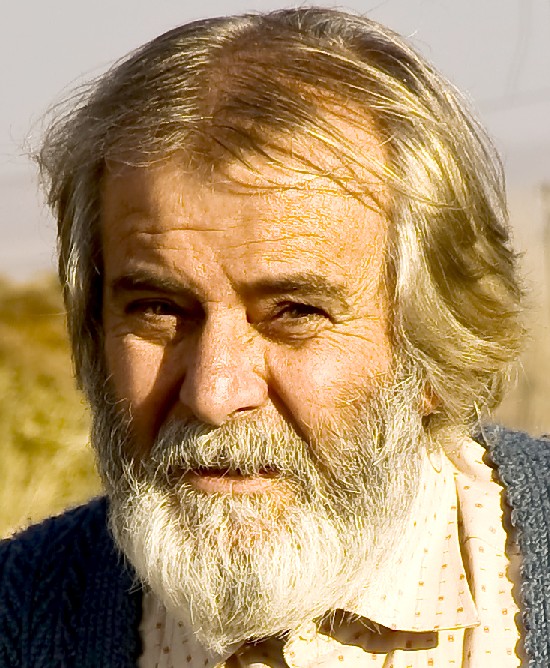
Mishka the Malakan miller is played by actor Tarik Akan.
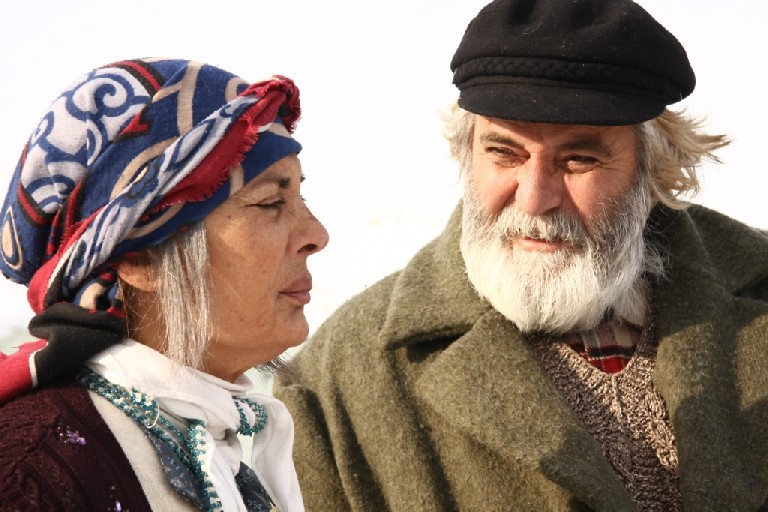
Popuch and Mishka.
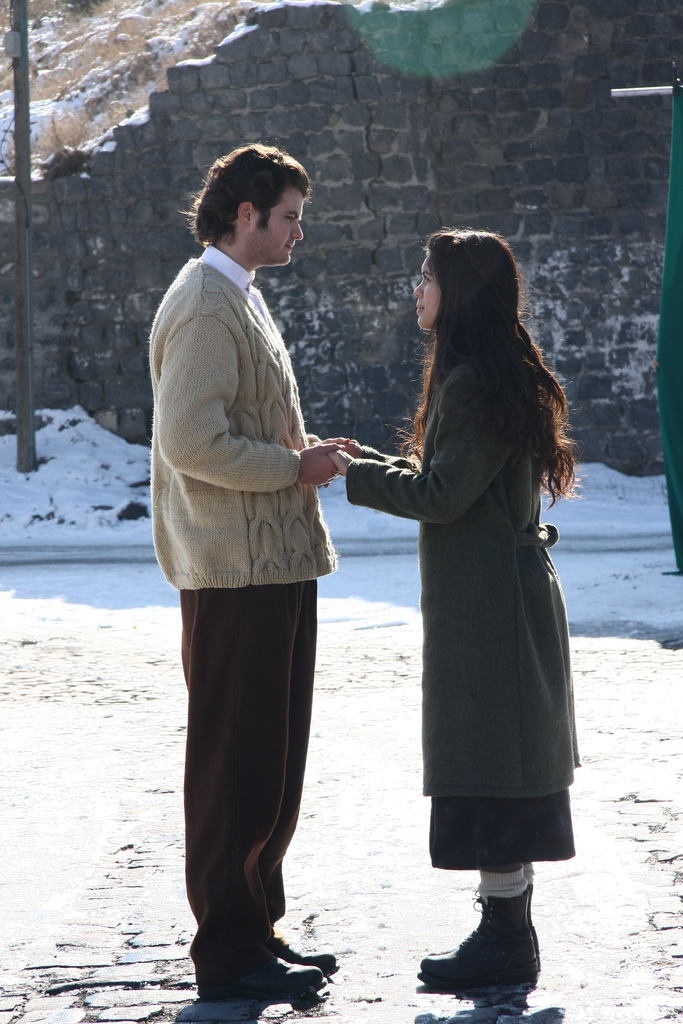
Young Mishka and Popuch, played by the older actors' kids.
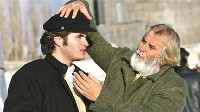
Young Mishka is played by the lead actor's actual son.
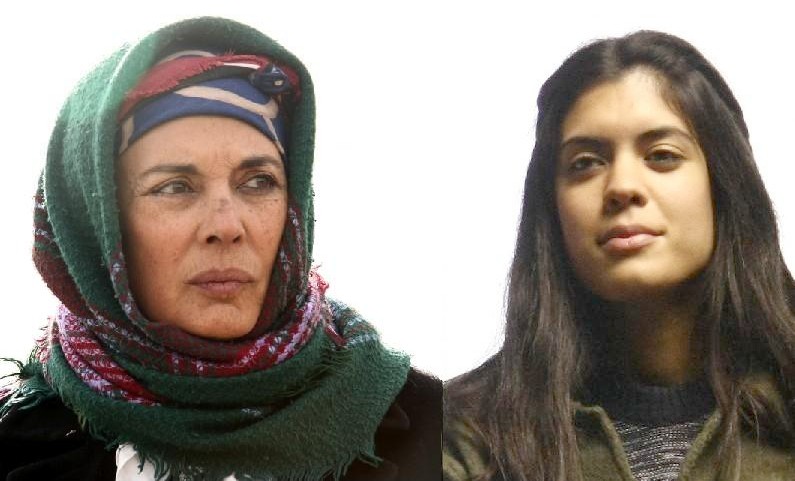
Young Popuch is played by the lead actresses' actual daughter.
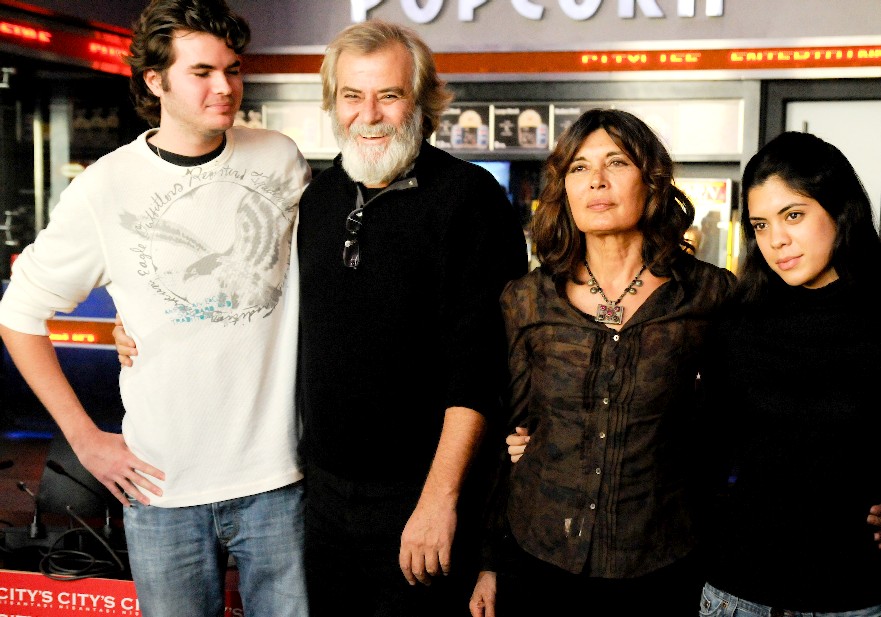
Third movie with lead actors together, first roles for kids
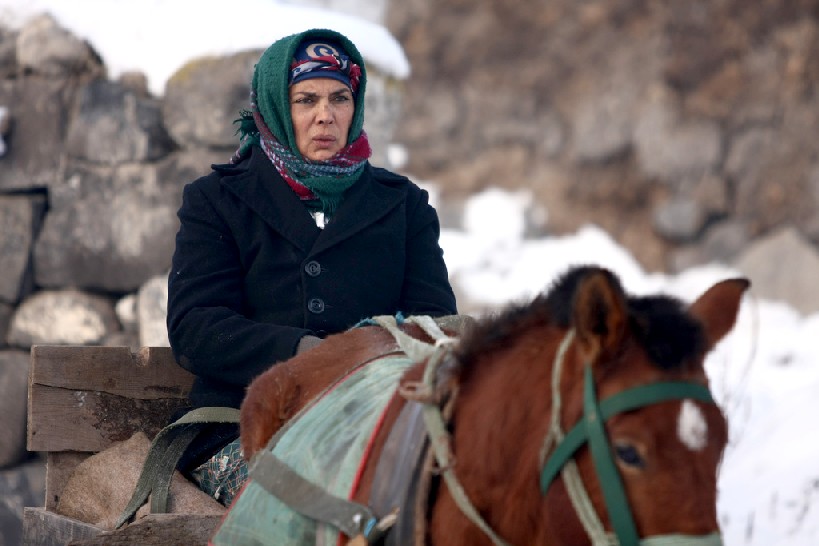
Popuch on one-horse wagon
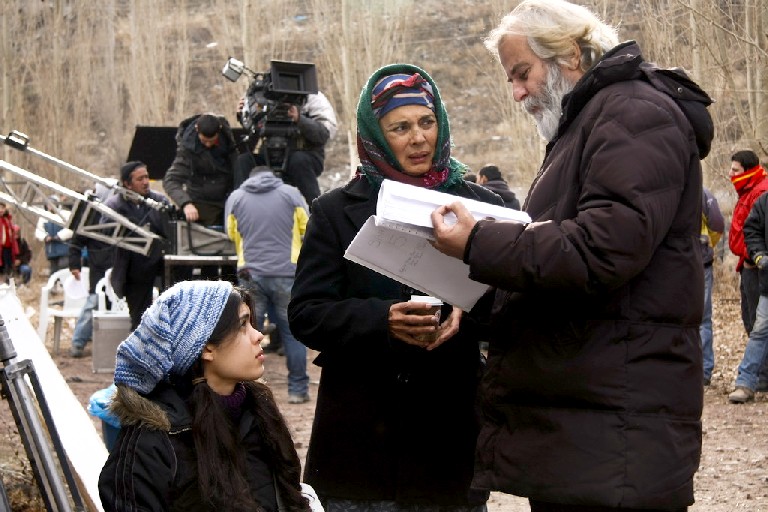
Lead actors check script on set.
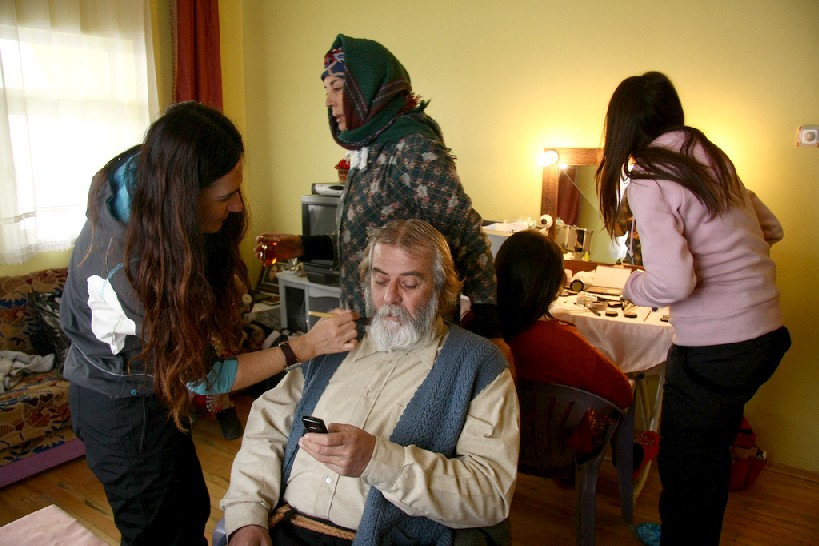
Makeup, checking messages.
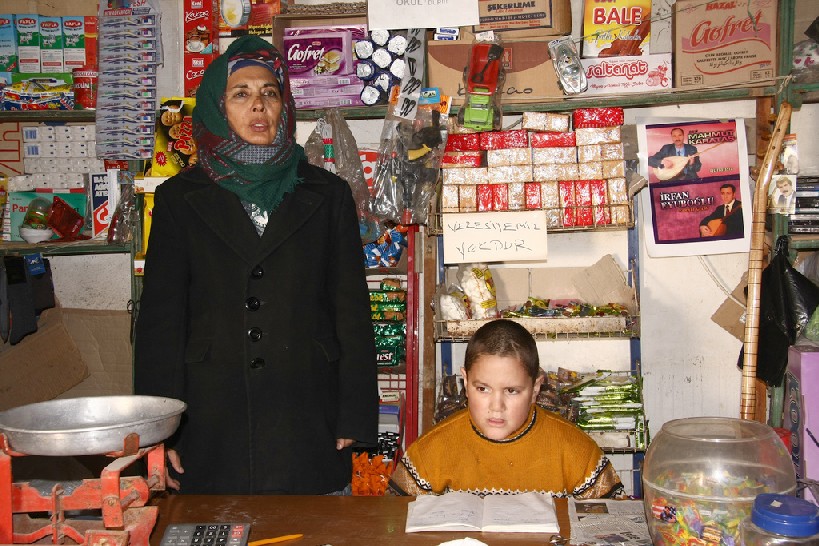
Popuch in their village store.
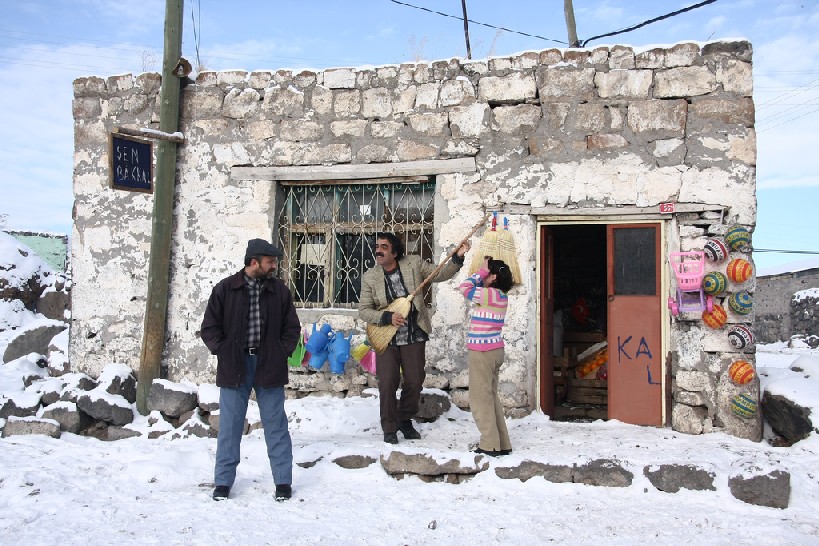
Alma's father joking outside their store, playing a broom.
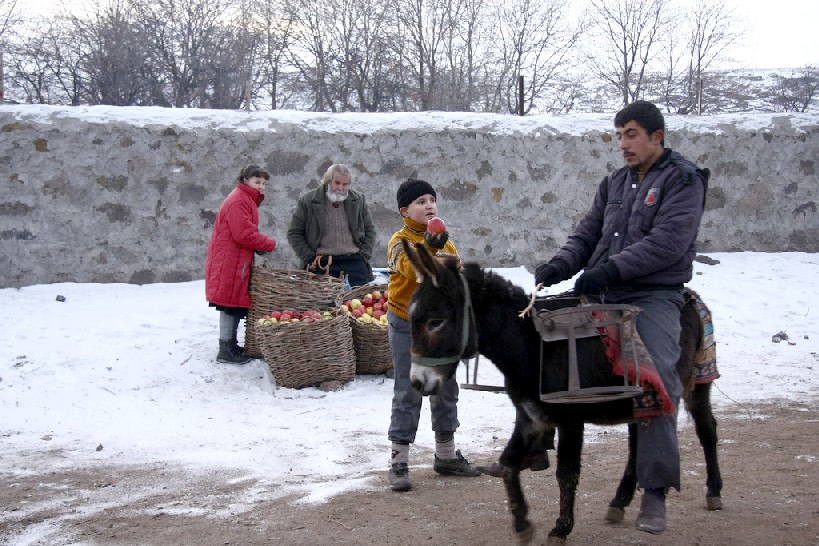
Kids help Mishka sell apples.
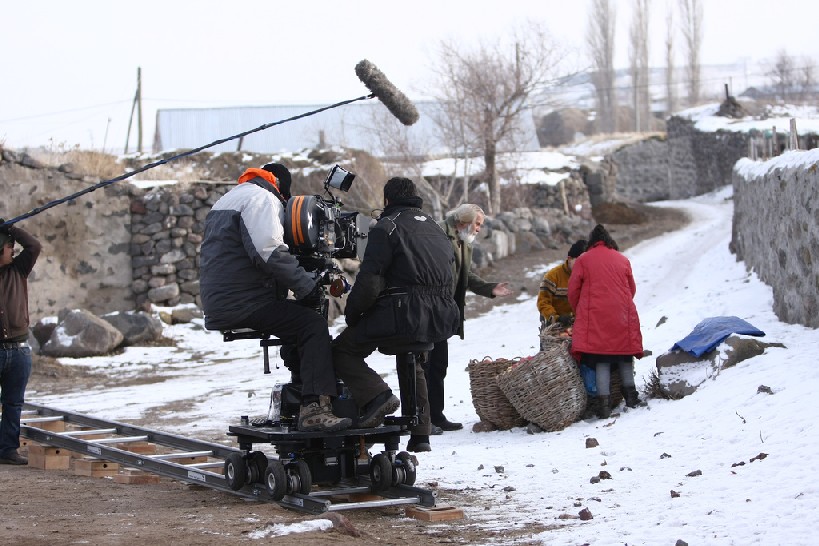
Camera dolly set for street scene of apple stand.
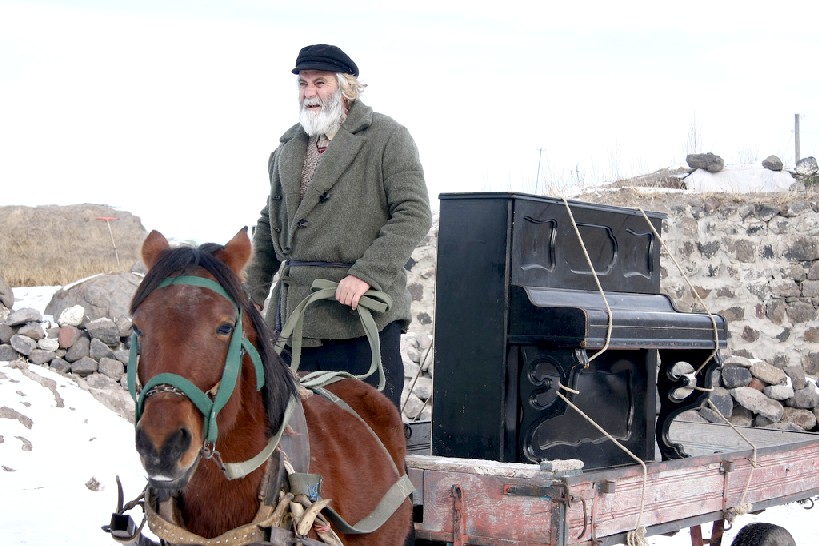
Mishka pays debt with piano.
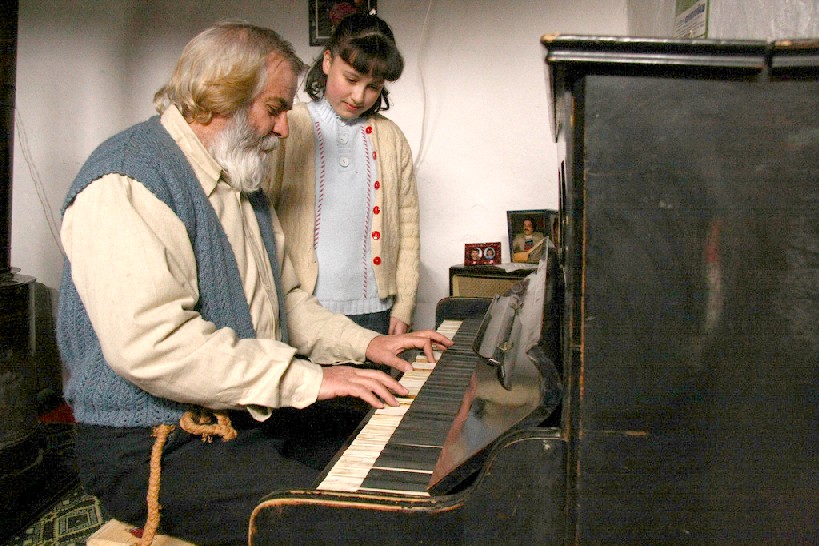
Piano lesson.
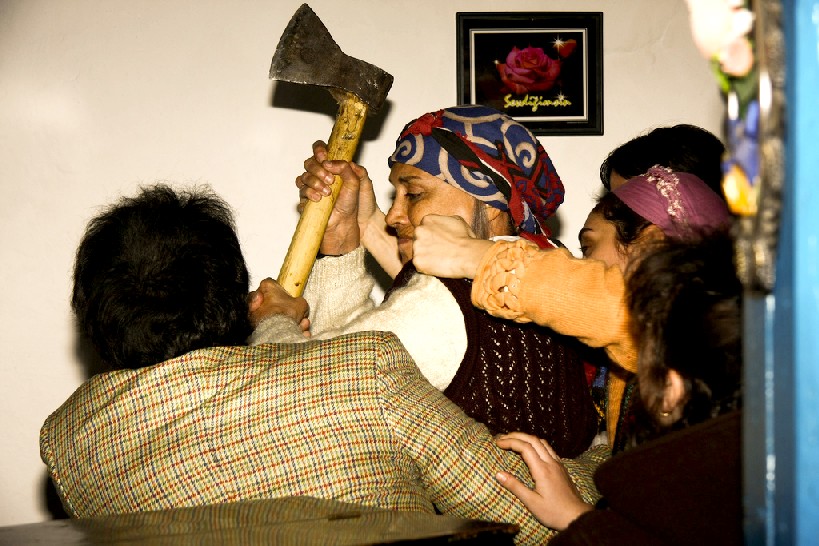
Popuch tries to destroy piano.
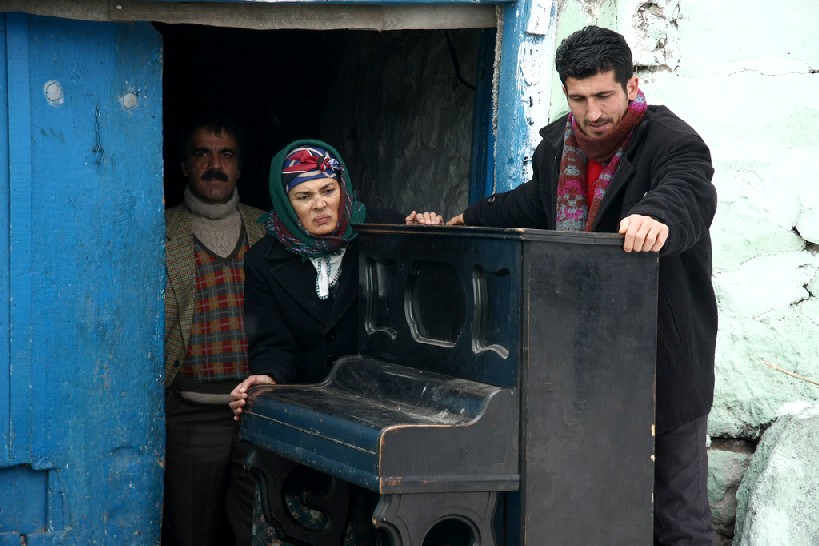
Popuch throws out the piano she hates.
Malakan/ Russian items in movie (authentic and similar):
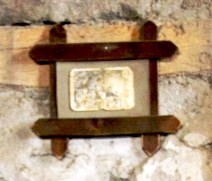 Photo |
 Photo, teapot |
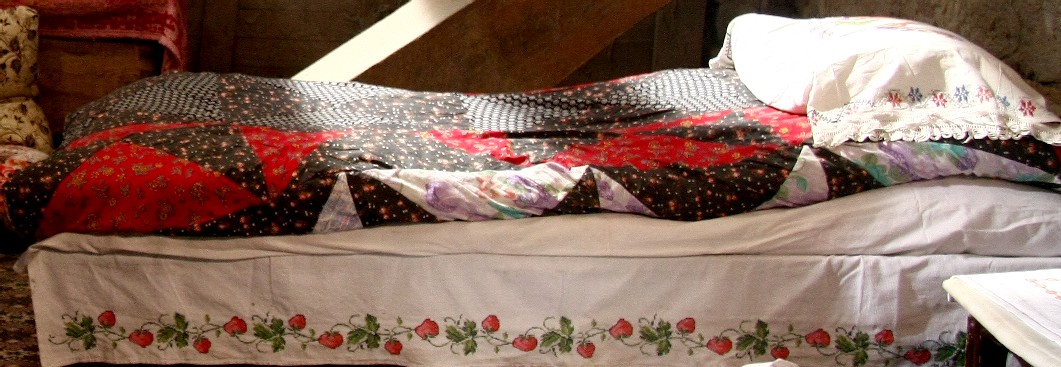 Bedding |
 Teapot |
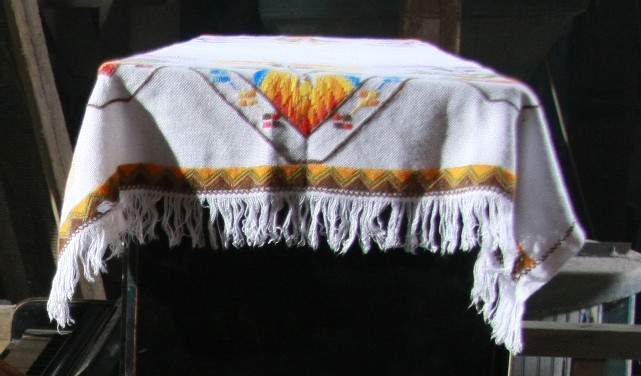 Towel |
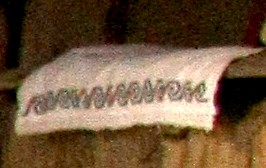 Towel |
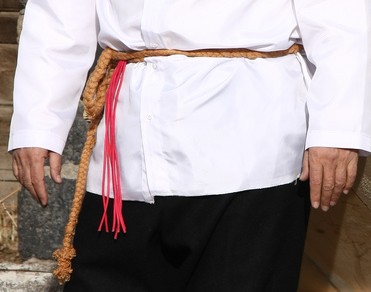 Belt, shirt |
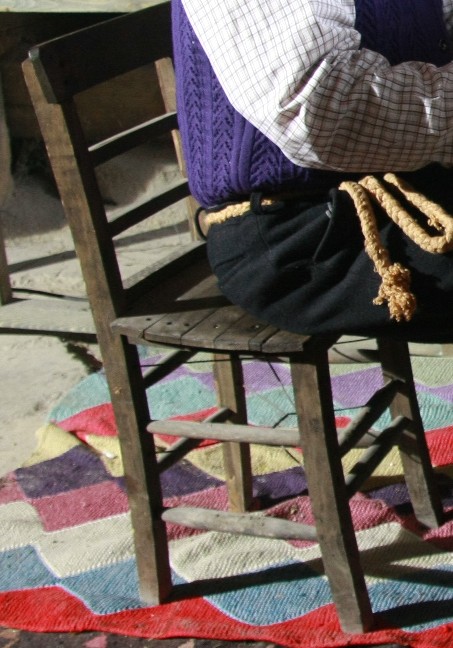 Chair, rug |
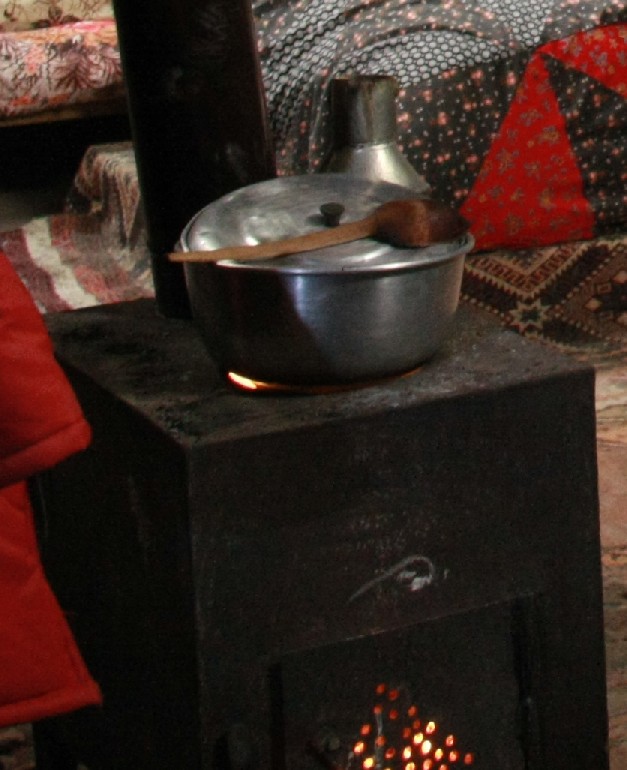 Stove, spoon |
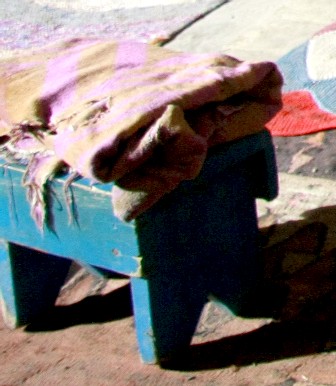 Bench, rug |
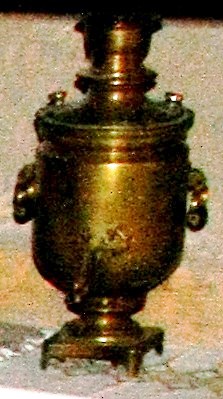 Samovar |
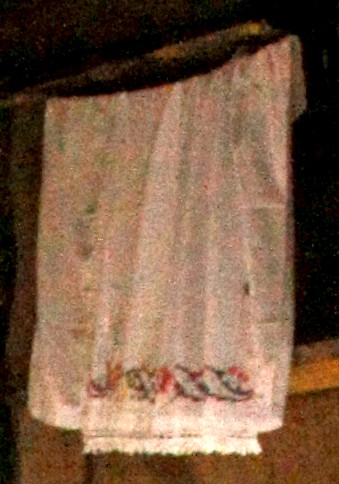 Towel hanging |
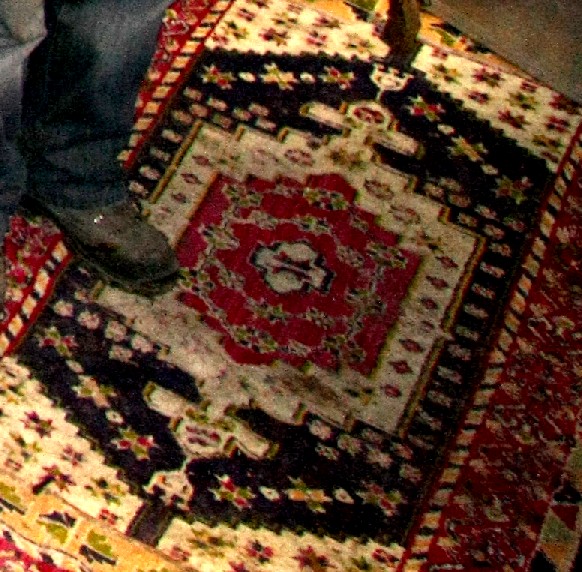 Rug |
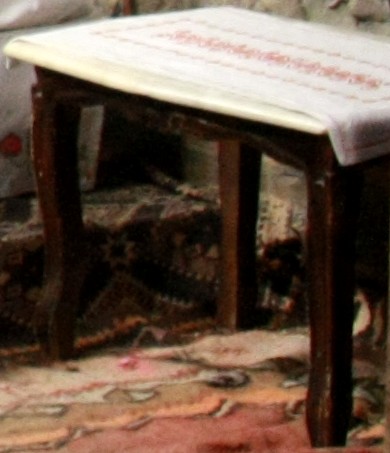 Towel, table |
Movie websites:
- Tulumba.com (New York). Buy Turkish DVD (English and
French subtitles) for $26.
- Deli Deli Olma.com (Turkish) (English)
- Movie trailer also at YouTube.com
- Facebook.com
- Deli Deli
Olma.com /Galeri — 25 photos
- Flickr.com
by Canburak — 344 photos (26 Nov 2008, 13 Feb 2009)
- Sinema.com — 35 photos
- Sinemalar.com — 31 photos
- Dizifilm.com — 50 photos
- Flickr.com — 38 photos at press conference November 2008
- Forum
DivXPLANET.com — 12 photos, poster, trailer
- 2008 November 17 — Sadibey.com, Deli
Deli Olma (Crazy Rave)
- 2009 January 7 — Bir masal kahraman (A fairy tale hero), Deli deli olma filminin çekimleri Kars'ta devam ediyor (Movie Crazy Rave is being filmed in Kars.)
- 2009 January 7 — Deli Deli Olma Blog, “DELİ DELİ OLMA” Filminin Çekimleri Tamamlandı (Filming of movie "Deli Deli Olma" is finished)
- 2009 February 22 — KaRmaLizma, “Deli Deli Olma” filminin afişi hazırlandı! ("Crazy Rave" movie posters are made!
- 2008 November 26 — Turkcell, Deli Deli Olma tanıtıldı (Crazy Rave is introduced)
- 2008 December 24 — Çevrimiçi Haber, 62'lik
Jön Heidi'nin Dedesine Benzedi (Similiar to the
grandfather in the 1962 "Heidi")
- 2008 December 28 — Haber Doksan, Tekrar “Yol” dalar, bu kez yanlarında çocukları da var (Repeat of the "Path", this time with their children)
- 2008 December 13 — Kars Manset, Tarık Akan Kars 'ta Çorap Ördü (Tarik Akan knits socks in Kars)
- 2009 January 1 — Haber Takimi, Malakanlar'ın
öyküsünün çekimleri bitti (Filming the Malakans'
story is finished)
- 2009 January 26 — Magazin Sortie, Tarik Akan Eski İşleri Yalamak Bize Yakişmaz (Tarik Akan revives unworthy old stories)
- 2009 January 26 — Sabah gazetesi, Sine Life.net,
Filmde
hiç
hata bulamazlar (No mistakes in this movie)
- 2009 February 27 — Günaydin Magazin, 'Deli Deli Olma' filminin afişinde aile saadeti var (Family is happy with 'Crazy crazy' movie posters)
- 2009 March 10 — Hürriyet, Küçük
dünyada kocaman yürekler (Small world and big
hearts)
- 2009 March 11 — Gazet Port, Tarık Akan, oğlu ile aynı filmde (Tarik Akan, son in the same film)
- 2009 March 16 — Bungün Magazin, Ünlü oyuncudan piyano resitali (Celebrities from player piano recital)
- More soon ....
Reviews — Translation help is needed to expand these reviews in English
- 2009 April 21 — Millyet — The first Caspian Jews who are strict about religion arrive in Kars. [Error: Pryguny and Dukh-i-zhiniki were Judiasers, Christians who adapted some Jewish traits.] Now only a very few remain in the world. ... Everything affects the lives of the characters in the film ... poverty, deprivation, ignorance, isolation, ethnic discrimination, love, profanity, humor, melodrama, drama .... That "unbelievers" [in Islam] can be a human being is so beautiful. I love you and love the unbelievers and the intensity of feelings of pain and wasted years of history can are lost. ... I suggest you watch it. It's good of course.
- 2009 April 22 —Yazisler — 'Deli deli olma' is a fiasco. The interest in this movie has been low during the first week in theaters. Only 17,312 have seen the movie which cost about $2 million.
- Cerik
Savran — The piano has a leading role. Beatoven
music. 35 mm film shows excellenct scenery. Overall the
movie was really good and recommended for families,
except for the ending. [Error in a statement that
Spiritual Christians were "forced" to migrate to Kars.]
- Sinemas inemadir — I laughed and weeped a few tears, and I was sadden. The story was both hot and cute. [Mishka may have found money hidden in a shoe.] The film ended sad but in a happy way.
- 2009
April
23
—
Cemal
Yeşilyurt —
The film is a true work of art. One of the Malakans was
our neighbor. We were both just 7 years old, his name
was Vova [Vladimir]. His mother had died, and he lived
with his father. He had a bright yellow circle of hair,
and blue eyes. The little known facts of the reality of
the Malakans is shown on the silver screen for the first
time. The are peaceful, against war, and don't have the
strict rules of non-Orthodox churches. It is an
understanding and gentle religion, with tolerant and
compassionate people ... They taught the local Kars
people to make Gruyere cheese. They are experts in
milling. They are named milk-drinkers [dairy eaters].
Hard working, they produce great honey, milk, cheese,
flour ... It's ossible to see in this film that there
was both dry and warm heart-felt friendships between the
different races, like a horse can be [friendly, then
stubborn]. We need something like this so much that no
matter what the cost, surely we must protect these
values. I still know one family in Kars district.
- 2009 Apriil 26 — Erkan Karagöz, Piyano çalan bir malakan ya da “Deli Deli Olma” (A Malakan plays the piano, or "Crazy Rave") — He appears disappointed that the piano has a central role because Malakans and Jumpers he grew up with and knew well rarely played musical instuments. And he seems to not approve of the way the lead actor portrayed the elder Malakan Mishka. A Malakan would not live in a mill, though Turks moved into abandoned Malakan mills. More when translated.
- 2009
October 12 — Sundays Zaman — Altın
Portakal (Golden Orange) International Film
Festival, AKM Antalya
Culture Center, Antalya: ... The foyer of the festival's premier
venue was humming for the gala screening of Murat
Saraçoğlu's “Deli Deli Olma” (Piano Girl), a comic
drama set in a snowy village outside distant Kars. The
village's last Molakan (a little-known ethnic group
expelled from Russia by the tsar after the 1877-78
Russo-Ottoman war) befriends a local girl and
encourages her latent musical talent, with the help of
the Molakan's ancient piano. Entertaining if
melodramatic, the rapt audience gave it a standing
ovation.
- 2009 October 18 — Hurriyet Daily News & Economic Report — International Antalya Golden Orange Film Festival Awards, Best Music Award: Mehmet Erdem-Özgür Akgül for “Piano Girl”, which included Malakan singing, 20.000 TRY (US$14,000)
- 2009
October 30 — Todays Zaman — Ten new Turkish
films are in the running for best picture and best
director awards at this year's Bursa International
Silk Road Film Festival, slated to mark its fourth
edition in November in the northwestern province, ...
Five of the 10 titles in the running for Silk Road's
Golden Karagöz awards, which come with modest cash
prizes of TL 50,000 for best film and TL 25,000 for
best director [TL: 1 Turkish Lira = 0.66 US$ (30 Oct
2009)], are entrants that missed out on big prizes at
this month's Altın Portakal (Golden Orange)
International Film Festival in Antalya. They are ...
Murat Saraçoğlu's “Deli Deli Olma” (Piano Girl), a
comic drama about a
two*cranky elderly Malakan immigrants in a distant eastern Anatolian village; ... * This Turkish news agency misinterpreted the lead roles as 2 Russians.
- 2010 January 24 — Tanetomo — In Russian, Tanetomo's Journal, Marginal Notes (LiveJournal.com), an amatuer film critic. He enjoyed it but was critical of the accuracy. Translated.