 |
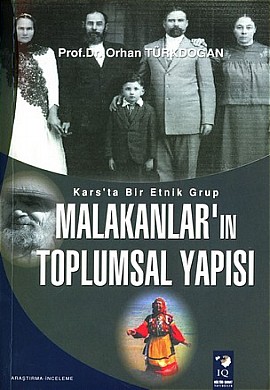
Advertizement:Professor Orhan TurkdoghanAn Ethnic Group in KarsMolokan Social Structureor: Spiritual ChristanTurkey 2005 [This is a republishing of Turkdoghan's Ph.D. thesis first published in 1970.] |
| Kars'ta
Bir Etnik Grup Malakanlar'ın Toplumsal Yapısı Yazar : Orhan Türkdoğan Yayınevi : IQ Kültür-Sanat Yayıncılık Etiket Fiyatı : 20,00 YTL Dharma Fiyatı : 15,00 YTL Kazancınız : %25 |
Social
Structure of an
Ethnic Group in Kars: Spiritual Christians Author: Orhan Turkdoghan [He wrote 35 sociology and culture books in Turkey] Publisher: IQ Kulture-Sanat Yayincilik List price: 20 Turkish liras [$26] Discount price: 15 Turkish liras [$19.50] Savings: 25% |
| Malakanlar, Beyaz Rus Kökenli bir etnik halktır. Kars ilimizin, Ruslar tarafından 1877-78 savaşları sonucu işgali üzerine, dönemin Rus yöneticileri tarafından Kars'ın Arpaçay ilçesine bağlı Atçılar, Çalkavur ve Yalınçayır (Zöhrab) yörelerine yerleştirilmiş bu dinsel etnik grup; seksen yıllık bir ortak yaşamdan sonra, 1962 yılında, kendi özgür ve bağımsız kararlarıyla Rusya, Amerika ve Avusturalya'ya göç etmişlerdir. Bu göç sürecinde, çok yakın akraba ile evlenme durumunda kalmaları (incest taboo), yerli halkla evlenme yapmamaları, ayrılık kararlarında önemli etken olmuştur. | Spiritual
Christians |
| Kars ilimizin üç köyünde yaşayan bu insanlar, yöre halkına değirmencilik, peynircilik ve tarımsal alanda önemli yenilikler getirerek, adlarını unutturmamışlardır. Osmanlı Arşiv belgelerinde bile, Ermeni zulmüne maruz kalmalarına rağmen, yerli halkla uyumlu ve barışçıl bir yaşam tarzını sürdürdüklerine tanık olmaktayız. | The Spiritual
Christians |
| II. Petro'nun modernleşme girişiminden ötürü, kimlik kaybına maruz kalacakları endişesiyle, IV. Mehmet döneminde ülkemize sığınmayı tercih eden Rus Kozakları veya Kazakları da yaklaşık 250 yıllık bir süreden sonra, Malakanlarla birlikte 1962 yılında Türkiye'den ayrılma durumunda kalmışlardır. | During the reign of
Peter
II [Russian
Tsar
1727-1730] the Russian Cossacks [Old
Believer-Nekrasovtsy, Nekrasovites,
or Staroobriadtsy:
Old-Ritualists]
were afraid to be modernized and
lose their identity. The Russian Cossacks [Old Believers]
decided to
live
under the Turkish rule of Mehmet IV [Ottoman
Empire sultan
(ruler) 1648–87 A.D.] After living in Turkey for 250
years they had
to
leave to Russia with the Spiritual
Christians |
| Türk
insanının etnik
gruplara olan bakış açısı,
yönelimleri, kültürel mannerizmi ve dünya
görüşleri hususunda tanıtıcı çizgide olmak üzere,
yeni yaklaşımlar ortaya koyduk. Bunları, sırası gelmişken
açıklamaya çalışalım. "Kürt Sorunu" olgusunun
söz konusu olduğu bir politik arenada, Malakanlar ve Don
Kazaklarına yönelik etnik deneyimimizin boyutlarının
ortaya
konulması, hem kültür zenginliğimiz, hem de etnik gruplara
yaklaşımımız açısından önemli olsa gerek. |
This book explains how
great the
Turkish government dealt with the ethnic minority groups.
I hope we
laid out new venues for you to understand. We like to
explain this to
you as they come. During these times when we have the
"Kurdish problem"
in our country we would like to give you more information
about the Spiritual Christians
|
| ISBN
: 975-255-039-8 Basım Tarihi : Eylül 2005 |
[Summary
translation
from Turkish by Dmitri Bruhin, born in Kars.] |
Дальше:
|
More:
|
| NOTE:
In
the early 1990s Dr.
Margarita
Mazo (ethnomusicologist, Ohio State University) with
Serefima Nikitina (linguist, Russian Academy of
Science) began researching Spiritual Christian and Old
Believer-Nekrasov
singing in Stavropol Russia and the US — Dukh-i-zhizniki
in California/Oregon,
and Nekrovsty in Oregon. Descendants of both
groups originated in
Turkey and were separated for generations. She arranged
for 4 choirs, 2
from each group
in the US and Russia, to participate in the 1995
Smithsonian
Festival of American Folklife, Washington DC
(10 days ending July 4). Though Dukh-i-zhizniki in Russia organized their best singers into a choir, the American Dukh-i-zhizniki did not see the invitation which was mailed to presbyter John Kochergen in Fresno, California. Kochergen hid the invitation, not showing it to anyone because he knew it would be rejected and agitate zealots. Unfortunately he did not inform Dr. Mazo of his decision until she asked for a list of names to arrange plane tickets and hotel rooms in Washington D.C. In June, just a few weeks before the trip, Molokane in Stavropol were given the surprise invitation. With such short notice, only those from Azerbaijan could be quickly selected. The Stavropol' Dukh-i-zhizniki who democratically selected their best singers, practiced together, and had all their passports and visas arranged, are still upset they were denied a free dream trip to mix with Dukh-i-zhizniki in the U.S. More work by Drs. Mazo and Nikitina:
|
|
Spiritual Christians Around the World