NEWS
Spiritual Christians Around the World
By Andrei
Conovaloff — NEWS added before 2003
Updated September 2021, thanks to
Archive.org
| Also see: Molokan People (Russian), Molokan Home Page, Molokan History, Molokan Genealogy 5 Dukh-i-zhiznik discussion groups: (Russian, Yahoo!, MolokanTown, MolokanCentral, MolokaniNarod, MolokanUnderGround); Doukhobors |
2002
Spiritual
Christian Women Wanted for New Book
Girls and women who are descended from spiritual Christians from
Russia are invited to submit essays, letters, and poems for a
new book: Letters To My Sisters. This project is by
Connie L. Jones, an Anabaptist (Mennonite) who wants to
show "... how similar and unbreakable the bond of
womanhood is in every culture of the world....", "...the
many similarities we share despite sometimes vast differences in
culture...", and "... the importance of female relationships —
of true sisterhood..." Letters To My Sisters,
will be published in spring 2004.
Deadline for submissions is
March 31, 2003. Contributors will get copies of
the book. Read more about this
project. If this project goes well, Connie will follow it
with the men's version: Letters To My Brothers.
Bryan J. Zolnikov —
12 Papers in Neuropsychology
 Stories
like this are hard to do without your help. I got a note from
Jon Zolnikov who was proud of his brother: "...who received a
full scholarship (everything paid) to the University of Nebraska
in Lincoln to study Neuropsychology. He was the first
undergrad to have published work in a nationally publicized
journal on aids research. His research has brought new
advances in neuropsychology and is being actively recruited by
top pharmaceutical firms. It is a great story. I am his brother"
Sure. Here's his bio: "Bryan Zolnikov is currently enrolled in
the Clinical Psychology Ph.D. program at the University
of Nebraska, Lincoln. His general research interest is in the
field of cognitive neuroscience, which examines the
relationship between thinking and the structure and function of
the brain. For this purpose,
Stories
like this are hard to do without your help. I got a note from
Jon Zolnikov who was proud of his brother: "...who received a
full scholarship (everything paid) to the University of Nebraska
in Lincoln to study Neuropsychology. He was the first
undergrad to have published work in a nationally publicized
journal on aids research. His research has brought new
advances in neuropsychology and is being actively recruited by
top pharmaceutical firms. It is a great story. I am his brother"
Sure. Here's his bio: "Bryan Zolnikov is currently enrolled in
the Clinical Psychology Ph.D. program at the University
of Nebraska, Lincoln. His general research interest is in the
field of cognitive neuroscience, which examines the
relationship between thinking and the structure and function of
the brain. For this purpose, 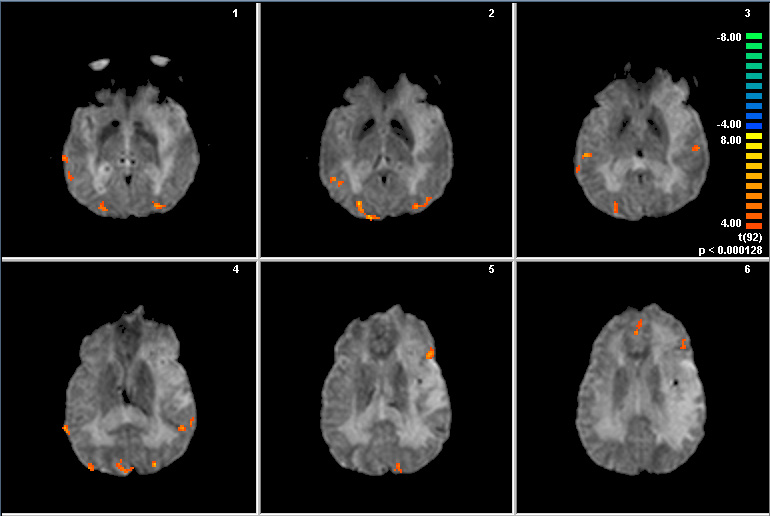 Bryan employs
functional magnetic resonance imaging technology (click brain
images to enlarge) to assess activity in the brain while a
person performs a cognitive task (e.g., a memory task). Bryan
also works in forensic mental health services conducting
insanity and pre-sentence evaluations in mentally ill
populations (e.g., schizophrenia, antisocial personality
disorder). His professional objective is to pursue a career that
involves clinical neuroscientific instruction at a medical
institution or an academic department, and the procurement of
external funding for the continued development of research
projects. He is open to any questions and/or comments you have
and can be reached at the snail-mail or e-mail address
below.
Bryan employs
functional magnetic resonance imaging technology (click brain
images to enlarge) to assess activity in the brain while a
person performs a cognitive task (e.g., a memory task). Bryan
also works in forensic mental health services conducting
insanity and pre-sentence evaluations in mentally ill
populations (e.g., schizophrenia, antisocial personality
disorder). His professional objective is to pursue a career that
involves clinical neuroscientific instruction at a medical
institution or an academic department, and the procurement of
external funding for the continued development of research
projects. He is open to any questions and/or comments you have
and can be reached at the snail-mail or e-mail address
below.
All members of the Society
of
Educated Molokans are invited to submit your stuff too.
Australian Dukh-i-zhiznik
Russian School Burned
2002 November 3 —
Adelaide, South Australia — The Advertiser: "Community
reels
after arson blow" by John Merriman — On November 1, Dukh-i-zhizniki
Molokans in South Australia lost their entire
Russian language school to fire. They rented 4 classrooms rooms
from the Salisbury East High School on Monday and Wednesday
evenings where all of their course materials—books, lessons,
records, etc.—were stored. On Friday night, just after 10:30, it
took 32 firefighters almost an hour to stop an arson-started
fire which destroyed a section of the high school including the
4 rooms and computers used by the Dukh-i-zhizniki Molokan-Jumpers
of Australia to teach Russian. Thanks to L.H. for the tip.
D.M.in Adelaide adds: "As far as the school continuing, it may
very well be cancelled for the rest of 2002 as we are fast
approaching summer break. I fully expect to see the school up
and running by next year. ... The suspected arsonist is from a
Christian school a few miles away!!" Could
someone send in an address to send in donations?
Mark Grigorian
Almost Killed
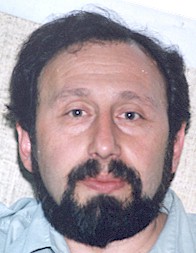 2002 October 22
— Erevan, Armenia — Terrorist almost kills an Armenian
journalist who has been trying to help Spiritual Christians from
Russia. CPJ
News Alert 2002 reports: "Grigorian suffered serious
shrapnel wounds to the head and chest from a grenade thrown at
him ... [in front of the]... Yerevan Choreography School... he
underwent surgery to stop bleeding in his lungs.." Reporters
Without
Borders report: "Grigorian maintains that the grenade was
clearly targeted at himself and that it exploded under his feet.
He sustained injuries to his right lung, abdomen and
legs,..." Grigorian "is deputy director of the Caucasus
Institute for Mass Media and a Reporters Without Borders'
correspondent in Yerevan, believes the motive of the attack was
to prevent publication of an article he is preparing about a
commando assault on the Armenian parliament three years ago.."
in which 8 top officials were killed. See
Grigorian's first story about Spiritual Christians in: "A Handful of
Russia in the Armenian Highlands".—Thanks to J.M. for the
link.
2002 October 22
— Erevan, Armenia — Terrorist almost kills an Armenian
journalist who has been trying to help Spiritual Christians from
Russia. CPJ
News Alert 2002 reports: "Grigorian suffered serious
shrapnel wounds to the head and chest from a grenade thrown at
him ... [in front of the]... Yerevan Choreography School... he
underwent surgery to stop bleeding in his lungs.." Reporters
Without
Borders report: "Grigorian maintains that the grenade was
clearly targeted at himself and that it exploded under his feet.
He sustained injuries to his right lung, abdomen and
legs,..." Grigorian "is deputy director of the Caucasus
Institute for Mass Media and a Reporters Without Borders'
correspondent in Yerevan, believes the motive of the attack was
to prevent publication of an article he is preparing about a
commando assault on the Armenian parliament three years ago.."
in which 8 top officials were killed. See
Grigorian's first story about Spiritual Christians in: "A Handful of
Russia in the Armenian Highlands".—Thanks to J.M. for the
link.
International
Molokan
Youth Congress
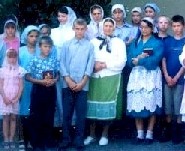 2002 August 3-10 —
Stavropol' Russia — Inozemstvo hosted this year's nearly annual
Molokan Youth Congress. About 50 youth participated in the 7 day
event. All Molokan children and youth in the world were invited.
The congress was lead by Timofei Vasilich Schetinkin, the head
presbyter of the SCM Center in Kochubeevskoe,
Stavropol', Russia, assisted by other elders. Featured were
courses about the Holy Spirit, rituals, historic martyrs, and
singing the Psalms. The photos show that the congress was held
indoors and outdoors at the new Molokan Church in Inozemstvo.
Last year the program it was held in Iutsa, Stavropol. Several Pryguny
but few Dukh-i-zhizniki attended. See
translated
invitation. See
photos.
2002 August 3-10 —
Stavropol' Russia — Inozemstvo hosted this year's nearly annual
Molokan Youth Congress. About 50 youth participated in the 7 day
event. All Molokan children and youth in the world were invited.
The congress was lead by Timofei Vasilich Schetinkin, the head
presbyter of the SCM Center in Kochubeevskoe,
Stavropol', Russia, assisted by other elders. Featured were
courses about the Holy Spirit, rituals, historic martyrs, and
singing the Psalms. The photos show that the congress was held
indoors and outdoors at the new Molokan Church in Inozemstvo.
Last year the program it was held in Iutsa, Stavropol. Several Pryguny
but few Dukh-i-zhizniki attended. See
translated
invitation. See
photos.
 Oregon
Cemetery Indexed
Oregon
Cemetery Indexed
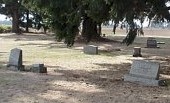
2001 — The Gervais Masonic Cemetery was photographed and 301
grave markers indexed by a genealogy volunteer Katie Baptiste.
Find captioned surnames of Spiritual Christians from Russia:
Axionoff, Bagdanoff, Baghdanoff, Berokoff, Delmatoff,
Grigorieff, Ivanoff, Karnoff, Kobzeff, Konovaloff, Konovalov,
Kostrikin, Kreloff, Ledieff, Mohoff, Muraviov, Nazaroff,
Patapoff, Pavloff, Samaduroff, Samarin, Shubin, Sisoev,
Sissoyev, Slivkoff, Tickenoff, Valkoff, Vinogradoff, and
Zolnikov.
 Jung-Stilling
just translated
Jung-Stilling
just translated
2002 June — Those of you curious about how Pryguny (Jumpers)
were created among Spiritual Christians in Russia should study
this recent translation of Johann Heinrich Stilling's
revolutionary thoughts which moved people to Zionism. Originally
some called him Stilling Jung, also Jung-Stilling. In Molokans
in America, Berokoff wrote
that this book was "..interpreted by some Prygun Molokan
elders as a prophetic book concerning God's chosen people, their
wandering from place to place in Europe and finding eventual
haven in the Near East. ... in Persia or Turkey." And that the
one book brought from Russia "... was borrowed back and forth by
so many people that it is now black with age and use." The German
Harmonists (find: "Harmonien") also helped stimulate the
Spiritual Christians in the Milky Waters area to seek Mount
Zion. D.
H.
Shubin reviews this book: "..the valuable ideas and
concepts of this unique and famous German mystic and Christian
visionary." Now you can get a copy for about $20+ and judge for
yourself the where and when of pahod, the second coming
of Christ, and whether this book, or any book, is "poison" to
the Knira solntse, dukh i zhizn and the Bible. — Update 2021:
In the 1880s a band of German Anabaptists, led by prophet Claas
Epp, trekked to central Asia, with his "bride community" to meet
Christ. He is comparable to the Prygun M. G.
Rudomyotkin, but did not get arrested.
4 Books by Daniel H.
Shubin at Amazon.com
Attributes of Heaven and Earth, paperback, $22.
Theology..
Conflict of Ages, paperback, 50 pages, December 1999, $3.
Pacifism versus military.
(This also online, see NEWS,
2001 Nov 21.)
Kingdoms and Covenants, paperback, 244 pages August 2000,
$22. Bible commentary
Monastery Prisons, paperback, 228 pages, April 2001, $22.
Russian religious prisons.
Shubin is a speaker (besednik) at the Los Angeles
Samarin-Percy St church. I found these by accident. When you
search Amazon.com books for "Molokan", only 2 books appear.
Under Moore's book is this advice: "1 person recommended Attributes
of
Heaven and Earth instead of Molokan oral tradition;
legends and memorates of an ethnic sect" Click the title and
learn that Daniel is promoting his book over Dr. Moore's. Also,
read Dan's attack of the reviewer of his Attributes...
who says: "we find his book to be less than satisfactory in
regards to explaining attributes of heaven and earth. First, the
book could have benefited immensely from a good editor." That's
Dan. :-) Submit your reviews of these books to Amazon.com.
MolokanUnderGround
is
5th cyber-sobranie
The fifth and most recent group of Dukh-i-zhizniki
to meet in cyber space is the mislabeled
"MolokanUnderGround" hosted at MSN-Groups. This makes 3 at MSN,
one still at Yahoo, and one thread on a Russian server, and
several threads on genealogy sites. When I applied for
membership, I got a response from the monitor: "Another 'Freedom
Fighter' will notify if your status is approved or disapproved.
If your interested in "publishing" anything contained
"inside" the forum/web-site, you must have explicit
written permission to do so, should you be approved. All
articles and publications in the Molokan Underground are
considered intellectual property, this includes the discussions.
Nothing may be referenced without approval as well. In
addition, participation is required. We've noticed you like to
publish material, this may impose a conflict of
interest." Later, FF announced: "We are aware of your
honest appreciation for all [Spiritual Christian] sects and for
your diligence in research and in broadcasting. With these
efforts in mind, we are flattered by your email request;
however, after much debate, the members of this site have
decided to decline your request for membership at this time.
Please visit us again in the future, as the members may
reconsider based upon your future endeavors and their impending
results. Thank you and God bless! Sincerely, The Molokan
Underground". At least they debated and left the door open. But
for our Dukh-i-zhizniki youth to express such
distrust and fear in a free country indicates that they do not
feel free from attack by their own Brothers and Sisters. One
elder summed this up to me: "We .... have become our own worst
enemy! We no longer fear the government, the draft...we fear the
guy standing next to us in [a meeting]!"
 Boyle Heights
Project Opened
Boyle Heights
Project Opened
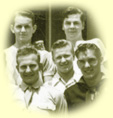
2002 Sept 8 — Photos of 65 named Dukh-i-zhizniki
are on display in Los Angeles at the Japanese American National
Museum. I identified another 10 without names. See 45 Dukh-i-zhizniki
display items — photos, texts, videos, and singing on
CD. I first reported on this Project in 2000, during planning,
and a year late, it is now open for 6 months, until the end of
February. Do you recognize these COs and their sailor buddies in
front of the UMCA in 1943? There are over 1000 photos in the
exhibit, so I cross
indexed every name alphabetically with location to help
you find friends and relatives.
200-Year Celebration Planned
2001 January 3 — "In the year 1805, His Majesty, the King of All
Russias, Aleksandr Pavlovich, decreed freedom of religion to all
Molokans." Molokans around the world are alerted to the upcoming
200-year anniversary of our freedom of conscience. The
presbyters of the communities of Spiritual Christian Molokans in
Russia will celebrate the 200-years of freedom of religion for
our doctrine in village of Kochubeevskoe
on July 21-22, 2005. You are invited. In the US make
arrangements with Alexander Shabalin, 650-878-8526; Fax:
650-754-1316. — A report and video is online.
Arizona
Church
Files Complaint
2002 Sept 17 — The Arizona Republic — "Church
tradition debate sparks suit" —By Carol Sowers — After months of
trying, The Church of the Spiritual Molokans of Arizona, Inc.
has been unable to negotiate with 12 people (the Cowboys and
ni-nash relatives). Now the 12 must respond to a court
order: stop threatening violence, give back the money,
open the locks, correct false filings at the Corporation
Commission, and go away. The state Attorney General (district
attorney) is alerted and may take action. See report last
August: "Arizona
Church Under Sieze".
Avalanche
near
Vladikavkaz
2002 Sept 24 — The Associated Press — Russia Rescuers
Try to Reach Village — The avalanche slid 20 miles downhill, 6
miles north of Vladikavkaz, locations of one of the largest
Molokan congregations in Russia. They even have a "Molokan
Bazarchik", market ... 150 dead ... the road to Gizel and
village of Kaban destroyed ... 3,000 people relying on
helicopter drops of food and there is no drinking water.
 Floods
Affect Molokans in Russia
Floods
Affect Molokans in Russia
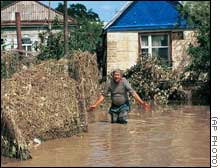
2002 June 19-22 — The worst flood in over 100 years
has devastated the Northern Caucasuses where most of the Russian
Molokans live. Fresh food prices 5 to 6 times higher.
- 343 settlements affected, most in Stavropol and Krasnodar.
- June 28 declared an official day of mourning in Stavropol.
- 498 bridges, 1,200 miles of road, 250 miles of electric power lines, 90 miles of gas lines need repair.
- 105,000 people in 174 cities and towns without power, restoration slow.
- 360,000 people are without fresh water.
- 200,000 homeless.
- 90,000 homes destroyed or damaged — outhouse feces washed into river.
- Death toll ... 300 in Essentuki alone (via phone).
- $500+ million in damages, increasing.
- Crops and soil washed away... "There will be no harvest."
- Diseases — hepatitis infections from outhouse shit; 2000 anthrax sources, burial pits of dead cows washed open, vaccinating all cattle against anthrax.
- Moscow to Min-Vod air traffic cut.
To donate to the Molokan Flood Fund — Contact: Alexander Shabalin, 650-878-8526; Fax: 650-754-1316. San Francisco Molokans gave $2,500. Arizona Dukh-i-zhizniki gave $700, directly.
Russian
Molokans
& Doukhobors legal
2002 April 30 — Prism — Volume 8, Issue 4 —
"Revising Russian Religious Legislation" — By Mikhail
Zherebyatev — New bill to classify religions
- All-Russian traditional organization — the Russian Orthodox Church.
- Religious organizations of individual peoples — Muslim, Buddhist and perhaps Jewish organizations, which are mainly located in the Russian regions.
- Traditional historic religious organizations — Jewish organizations, and also religious groups of the smaller peoples of the North, Siberia and the Far East who apply to shamans for spiritual guidance, and also ethnically based faiths among the larger ethnic groups of Russia, such as Russian Old Believers, the Molokan and Dukhobor sects, Orthodox Tatars (known as "Kryasheny") and Lutheran Germans. Among Protestants, the only people who may rely on qualifying for this group—and only then hypothetically—are Russia's Baptists and Adventists. [Dukh-i-zhizniki did not apply.]
- Representations of traditional foreign religious organizations — The Roman Catholic Church.
CO Camp Protest During WWII
2001 Spring — Roots and Fruit, No. 7 — Civilian
Public Service Work Strike by Samuel R. Tyson — "CPS #2
San Dimas (Tanbark Flat) opened in June, 1941 and was the sole
camp in California until Camino opened in April 1942. As a
result CPS #2 had Brethren, Mennonite Friend and [Dukh-i-zhiznik]
plus the larger assortment of church affiliations." ... Being
jailed in 1946 was not like being put away in the 1960’s. A high
light must have been to hear coming down the aisles the singing
of the [Dukh-i-zhizniki]. How eerie and also
heartening sound behind the bars. Spirit reigns, [Dukh-i-zhizniki],
had been transferring into CPS 76 because they were there from
the start and it was closer to home, Fresno area, Phoenix, Los
Angeles. .... In the Spring of 1946 a number of Glendora inmates
went on a work strike. The war was over, they were still
held.... For all these strikers there is no release date in the
CPS directory. They have functionally been on probation ever
since. Those who were never released from CPS night include
partial alphabet as a sample ... Peter Berokoff, William
Berkoff, .... Morris Dolmatoff, John Eropkein,
... CPS 2/76 was the longest operating Conscientious Objector
camp. ... The federal government was in an improbable situation.
The dilemma was how could people be sentenced for not working
when paid nothing for years-shades of the Soviet Union."
Lives That Made A Difference by Samuel R. Tyson — "... [Dukh-i-zhizniki],
left Russia to relocate in the southern San Joaquin Valley
(Fresno), Los Angeles and Arizona. The [Dukh-i-zhizniki],
an obscure sect, as non-war people were a part of Civilian
Public Service (Conscientious Objectors) during World War II. Of
the approximate 12,000 inducted into CPS there were 76 [Dukh-i-zhizniki],
who over time transferred into CPS 2/76(San Dimas/Glendora) and
so closer to home. Some of these were an important part of the
work strike in the Spring, 1946 at the Glendora facility. In
fact a John Tolstoy was one of the persons who died in
CPS."
Azerbaijan & Georgia News
2002 June 30 — E-mail from Tiblisi, Georgia — "The Baku Jumpers
emigrated to Siberia when the USSR broke up." [about 1992]
..."...there are only 3 sobraniya in Tbilisi..." [5 existed in
1993] one is called "the Saburtelo sobarnie". Thanks to Nina
Belyayeva, a Constant Molokan originally from Baku, Azerbaidjan,
who will soon move to Houston, Texas, with her daughter who
married an engineer.
The
Spirit
of Literacy, by Janice Chernekoff
2001 — Department of English, University of Illinois — Nicole's
Writing Studies page — Book Review — Part. IV: “Teaching” — "The
final five pieces of Writing Permitted in Designated Areas
Only are auto-ethnographic essays written by some of
Brodkey’s former graduate students. These students engaged in
the same kind of ethnographic studies of themselves as Brodkey
did for “Writing on the Bias.” One of these auto-ethnographies,
written by Janice Chernekoff and entitled “The Spirit
of Literacy,” ...Chernekoff writes a compelling narrative
in which she describes the general beliefs her childhood
religion ([Dukh-i-zhizniki]) in relation to
literacy. According to this religion, nothing learned in school
is as important as what is taught by parents and the church. She
was taught that those outside of the religion were mistaken in
their beliefs, and that particular ethnic groups were damned.
When she recognized such beliefs as an explicit form of bigotry,
she embraced wholeheartedly the image of literacy “more publicly
respected” (260). Next to the understanding of literacy she was
taught as a child, the image of literacy that promised equality
seemed so benevolent and enlightened. Now, however, she wonders
“if academic literacy is any less oppressive or more rational
and beneficial to society” (260). This is the question that
drives her narrative as she compares the notions of literacy
that pervaded her home and church to those that reinforce and
reproduce the ideology of academics, and finds complex
similarities."
Russian Molokans and
Baptists
2002 February 18 — The Russian Baptists: A Fundamentalism
File Research Report by Mark Sidwell — "Molokans -
Also contributing to the rise of the Baptists were native
Russian groups, among whom were the Molokans, or ["dairy
eaters"] "milk-drinkers," a name derived
(according to one theory) from the fact that they [ate dairy
products] (moloko) during Lent. This quasi-Protestant group, who
called themselves "spiritual Christians," originated in the
eighteenth century. They were a quietist group, like the
Quakers. They rejected baptism, had no ordained ministry, and
relied on an inward spiritual leading. Many early Russian
Baptists, such as N. I. Voronin (whose baptism in 1867
traditionally marks the beginning of the Baptists in Russia),
were of Molokani background." ... (McBeth cites A. I. Klibanov,
who maintains that over half of the Molokans joined the
Baptists. McBeth, Baptist Heritage, p. 491. The
poignant account of a Molokani convert to the Baptists and the
persecution he suffered is the firsthand testimony of Vasili
Pavlov in Michael Bourdeaux, Faith on Trial in Russia
(New York: Harper and Row, 1971), pp. 33-36.) "The traditional
date for the origin of the Russian Baptists is 1867. In that
year, a former Molokan, N. I. Vorinin, was baptized as a
Baptist. Although some converts had been previously baptized by
immersion as believers (the Baptist pattern), they had been
ethnic Germans and [Anabaptists] Mennonites. Vorinin represented
the spread of the evangelical revival to ethnic Russians.
Realizing the potential legal liabilities from the czar's
government, the Mennonites encouraged the Russians to organize
their own groups [separate from the Germans]. Baptist
congregations began to form among "awakened" converts."
American Molokan
Demographics
1995 March 1 — Canadian Historical Review - Volume 76,
Number 1 — Russian Refuge: Religion, Migration, and
Settlement on the North American Pacific Rim by Susan Wiley Hardwick — Reviewed by
Royden Loewen — "The very sequence of Russian religious history
- the Old Believers, Doukhobors, Molokans, [Dukh-i-zhizniki],
Baptists, and Pentecostals - is transplanted to North America.
Lineage here seems to legitimize the Russian presence on the
west coast. Russian cultural traits in Alaska 'linger today':
the Orthodox missionaries who stayed on in Alaska after 1867
eventually migrated southward to provide the first 'nodes' of
Russian settlement, making the west coast familiar to the later
Molokan and Baptist migrants. These Russians contributed
indelibly to the development of the west coast." [Some people who read Hardwick, now a
professor at the University of Oregon, mistakenly think that
Molokans came to California via Alaska. See: ]
Molokan character in Russian story
2002 July 6 — The Guardian — Defenders of the faith
by Linda Grant — In "After the Battle" [by Isaac Babel], the
narrator is discovered to have gone into battle with no
ammunition in his gun; he is accused of being a member of the
Molokan Sect — a pacifist and God-worshipper. But this is
not it at all. Trudging through the rain, the narrator pleads
for a favour, "imploring fate to grant me the simplest of
proficiencies — the ability to kill my fellow-man". Babel wrote
stories about Russian Jews. "After the Battle" is one of the Red
Cavalry stories, which gain their force from the
tension between Babel’s alienation from the Cossack soldiers
around him, his disgust with their brutality, and his longing to
be as strong and cruel as they. In “After the Battle,” the
narrator (named Lyutov, the alias adopted by Babel to hide his
Jewishness from the Cossacks) is cursed for his cowardice by the
one Cossack he has managed to befriend. Also see The
Complete
Works of Isaac Babel. [Add Babel to
Chekov and Pasternak — Russian writers using Molokans in their
fiction.]
Dukh-i-zhizniki pushed out of the "Flats"
2000 February 23 — Contested Territories: a collection of
essays on the material manoeuvres of artists in space —
"Pico Aliso Village Housing Projects" — by Sue F. Schechter,
Chairperson, Office of Historic Preservation, Sacramento,
California — "This desperate effort to create a slums/dystopia
versus renovation/utopia opposition is not at all anew tactic.
During the late 1930s when the projects were first built,
Housing characterized the Boyle Flats area as among the worst
slums in Los Angeles. Lloyd Wright himself described the
Boyle Flats community as "one of the worst obsolescent
areas in the city at its figurative front door." According to
official reports, slum housing in the area known as "Russian
Town" had corroded the family structure of the seventeen
ethnic groups living in the Flats, leading to juvenile
delinquency, crime, tuberculosis and venereal disease. The
reports singled out the large population of Russian immigrants’
most of whom were part of the [Spiritual Christians from
Russia] Molokan Christian sect as the
primary factor in the decline of Boyle Flats. The elder Russians
were described as an "inassimilable element" while the youth
were portrayed as a "delinquent and criminal class." The
building of the new Aliso Village housing, completed in 1946,
became an occasion for Housing to reveal how a slum neighborhood
could be transformed into a vision of American democracy. In
contrast to the miserable conditions of "Russian Town", the new
public housing of Aliso Village offered the displaced residents
sanitary and modern housing. Combined with a variety of
community support services such as daycare and youth clubs,
Aliso Village was a modern miracle, a community of almost 900
households living in newfound harmony. .... Unfortunately, the
completion of the Aliso Village housing projects coincided with
the United States’ entrance into World War II. What was
originally intended as replacement housing for the displaced
residents of the Flats, eventually became housing for workers in
the war-time industries. As a result, not only was the majority
of the "Russian Town" slum eliminated but so too were the
vast majority of its residents."
 Obituary
of
Mike Tolmachoff
Obituary
of
Mike Tolmachoff
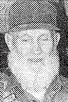
2002 June 27 — Arizona Republic — Glendale
farmer, 90, never lost the simple touch — By Connie Cone
Sexton — "Before Alzheimer's took its toll, before old age
slowed him down, longtime Glendale farmer Mike Pete Tolmachoff
delighted in welcoming friends and family into his modest
home....he liked to sing little songs in Russian and they loved
that he even spoke to the cows in his native tongue....
 USC Trojan Swim Team - Erik Tolmachoff
2002 Profile: Junior at University of Southern California, Los
Angeles. "Pac-10 point-scoring or beyond... Tolmachoff prepped
at Clovis West High in Fresno, Calif. … All-American first team
honors ... Scholar-Athlete Award ... His Clovis Swim club team
won the 1999 Junior Nationals West....a chemical engineering
major.
 Cibicides
colombianusTolmachoff,
1934
Cibicides
colombianusTolmachoff,
1934
Department of Geoscience, University of Iowa — A sub-species of
Benthic Foraminifera: Microscopic ocean-bottom-dwelling
single-celled organisms similar to amoeboid organisms, having a
shell perforated by pores (foramina) through which slender
filaments project, and occupy a wide range of marine
environments. The Tolmachoff variety appears to live in waters
off the shore of Columbia. Probably found by Invertebrate
Paleontologist Dr. Innokenty P. Tolmachoff, 1925-35, Ph.D.,
University of St. Petersburg.
 ASU
Bioengineer
— Aaron Conovaloff
ASU
Bioengineer
— Aaron Conovaloff
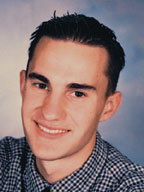
1999 — Signal Archives — "Question: What do
prosthetics, artificial organs, tissue division, and genetic
engineering have in common with AWANA? Answer:
Aaron Conovaloff. Combine Aaron’s fascination with
subjects like biology and life science with his father’s career
in mechanical engineering and you have a Citation Award achiever
who is majoring in bioengineering at Arizona State University.
... straight-A student who finished sixth in his graduating
class at Northwest Community Christian. ... full-tuition
scholarship to ASU."
LA-UMCA Picnic
Cancelled!
2002 June 19 — "The LA picnic has been canceled for this
year. A letter had been mailed to about 1000 households
inviting all to a meeting that was to be held on 18th. About
fifty showed up for the meeting. The concern was not enough help
and no one wanted to take charge to coordinate this years event.
The canceled picnic is just the beginning, if the people don't
wake up and start pitching in, then there is a strong
possibility that the UMCA will be shut down. I'm not sure what's
going to happen to the scheduled fund raising events planned for
the rest of the year." Thanks to
John Rooski, manager of the Molokani
Narod forum who invites you all to join his
Internet discussion group. Offline about 2007
 Colonia Ruso Museum in Mexico
2002 May 4 — Ensenada-Guadalupe Trip — digital photo
album by Ghrishka Bolderoff, Mariposa (north of Fresno)
California — Thanks to Ghrishka for posting 51 pictures of his
trip. Most are current images showing the Molokan Colony 15
miles inland from Ensenada Baja California North. See the Mexico
Molokan Church and Cemetery, Russian Restaurant, and one of the
two Molokan history museums showing most all the exhibits.
Gavril Kashirski, who still lives there, is a tour-guide.
Offline, Ghrishka died in 2013.
Doukhobor Cow
Not only were the "Molokan horse" and "Molokan dairy cow"
recognized breeds in the Caucasus, but so was the "Dukhobor cow" (at end of 2nd
to last paragraph). I suspect that the Molokan and Dukhobor cows
may be the same. (See: The Molokan
Heritage Collection: Volume II: Molokans in Turkey)
[Thanks again to Jon Kalmakoff for another
interesting link.]
ARMENIE
"Armenia, the last Molokan villages, near Yerevan, the Armenian
capital." More photos of Spiritual Christians from Russia in
Armenia. Some you've seen before.
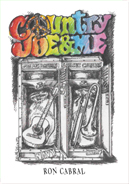 Country Joe and Me
2002 — by By Ron Cabral and Joe McDonald — "My grandmother,
Thelma Gorbonoff, and her family also fled Czarist
Russia in 1906-07. At that time men were conscripted for 25-year
hitches for the Czar's Army. They were poor peasants living in
Siberia near the town of Chita,
when they decided to flee and head east towards Harbin,
Manchuria. They loaded up all the horse-drawn wagons they
could find and drove across the Siberian plain .... lived for
years on Potrero Hill,
a working class neighborhood with stunning views of the San
Francisco Bay ...Neither Russian Orthodox nor Jewish, she was
connected someway to the Molokan Sect ...There was a
large contingent of Molokans who settled on Potrero
Hill. Illiterate in both English and Russian she lived to age 94
and is buried in Seaside, California." Read
more:
books for sale, reviews...
2 Azerbaijan Molokan churches
registered
Here's 3 recent articles about Molokans in Azerbaidjain from the
Keston Institute, London, which
"monitors freedom of religion and researches religious affairs
in communist and post communist countries". Of the 13 Molokan congregations, only two
have registered. They are in Baku (200+ members) and Sumgait, a
northern suburb. Timofei Baryshev appears to be the
representative for the largest congregation.
- 2002 April 9 — Keston News Service — FACTFILE - AZERBAIJAN: 125 Religious Groups Reregistered — "Molokan community, Baku" and "Molokan community, Sumgait" officially reregistered [None of the other Molokan churches have registered!]
- 2002 March 11 — Keston News Service — AZERBAIJAN: Widespread Opposition to Religious Reregistration — by Felix Corley — Baku Molokan community had also gained re-registration, but the Molokan chairman Timofei Baryshev told Keston only that his 200-strong community "always submitted to the authorities, just as we submit to God".
- 2002 March 13 — Keston News Service — SPECIAL REPORT: AZERBAIJAN: Believers Unhappy Over State Committee's 'Illegal' Demands — by Felix Corley — ".. Aleksandr Kozlov of the State Committee ... had "recommended" to the Baku Molokan community that they should register. "We warned them that the community is very large and that they should therefore seek registration. The other communities are only very small." Molokan leaders in the traditionally Molokan village of Ivanovka in central Azerbaijan ... never had registration and that they did not understand the registration system. It is not clear why State Committee officials have this time decided to pressure the Baku Molokan community to complete the paperwork to apply for re-registration. ... [Also] ... the State Committee demanded that "newer" religious groups (apparently every group except the Muslims) should provide the statute of a religious headquarters outside the country, duly approved by that country's authorities, regardless of whether a local community was subordinated to one or not. Article 5 of the new registration instructions specifies this requirement, but makes no mention of what religious communities should do if they are not subject to a higher body."
- 2002 April 9 — Keston News Service — FACTFILE - AZERBAIJAN: 125 Religious Groups Reregistered — by Felix Corley — 2 Molokan communities in Azerbaidjian had registered in the country, Baku and Sumgait [district of north Baku.]
Molokans in the 1918 Azerbaijan
Army
"The Spring of 1918: The Armenian Terrorism in
Azerbaijan" — by Azerbaijani scientist, professor, Jamil
Hassanly — This site has links to of photos of mutilated
bodies in Kars and surrounding areas.
- "In the result of the liquidation of Caucasian Front the Russian regiments returned back and sold their guns and military supplies to the Russians (Molokans), especially to the Armenians too cheaply"
- "There were created additional Russian-Molokan
armed gangs in Shamakhi
and Mugan,
too. During the March
Tragedy the Molokan gangs entered the city
from the direction of Lenkoran." [Lankaran]
- "They began to spread gossip among the Russian National Soviet, Caspian sailors and the parties of Esers and Mensheviks as though the officers returning to Lenkoran by "the Evelina" had been ordered to destroy Russian and Molokan villages in Mugan together with the Moslem detachments in Lenkoran."
- "Still on March 30 Bolsheviks had informed the majority of the ship staffs as if Moslems killed the Russian population in Baku. After the terrible bombing for some hours the Russian sailors saw that it was just a provocation and the great majority of Moslem-Turkish population was executed brutally under the name of Musavat, so they ceased the fire. Also a great number of Russian-Molokan gangs had been brought to Baku from Mugan by means of the same provocation. But when they saw the real situation in the city, they all refused to fight."
Now-adult
Doukhobor
children sue B.C.
2001 April 4 — Toronto Star (Canada) — Vancouver — From
1953 to 1959, 150+ children of members of the Sons of Freedom
Doukhobor sect were incarcerated 300 miles east of Vancouver and
forced to abandon their Russian language and culture.. Last year
49 of them filed a lawsuit against the B.C. government seeking
an apology, counseling and compensation. Their lawyer filed the
suit in B.C. Supreme Court after the government failed to
respond to recommendations of the provincial ombudsman in a
report two years ago. Mike Verigin painfully recalls police in
riot gear swooping on Doukhobor communities ... clubbing adults
and yanking children from parents.... his aunt being struck in
the face, his mother fainting. He fled and hid in nearby
mountains but was found and taken. [Off line]
Molokan Women Working
in Yerevan, Armenia
2002 May 10 — ArmeniaWeek, an online news-and-analyses
weekly service — Dirty Business: Ethnic Russians have clean
reputation among Yerevan home owners — By Suren Deherian,
reporter — Most women of Spiritual Chrstians from Russia in
Armenia work as house cleaners because they can be trusted not
to steal. This news article with photos is about 2 young Molokan
house cleaners Valia Berukov and Tania Koroliov who take a
2-hour bus trip from their village of Lermontova to Yerevan to
make 4 times the average salary. Correction:
About 5,000 Spiritual Christians from Russia Molokans
"remain" [not "settled"] in Armenia today. See Ivan Sem'onov's
book (next) for more details. —
Thanks to journalist Mark Grigorian for the link.
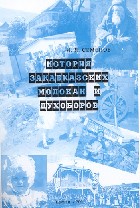 New book
about Russian Molokans — $8
New book
about Russian Molokans — $8
2001 — Author Ivan Sem'onov is offering his book to you for $8
plus postage. The book "A History of Transcucasian Molokans, Dukh-i-zhizniki,
and Doukhobors" [Spiritual Christians from Russia] (120 pages
with 16 photos) was published in Russian language in 2001 in
Armenia. Send your name, address, and how many copies you want
directly to the author: Ivan's telephones (3741) 44-33-41;
(3741) 22-89-93; fax: (3741) 44-24-39; <
E-mail: ivansemyonov@rambler.ru
Russian
only> "I'm be very glad to meet you. Ivan Semyonov,
Yerevan."
"The
Spirit Wrestlers" Theatre & TV Schedule
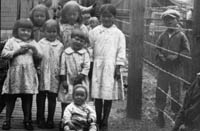 2002 May - July — "A feature length
(94 minutes) documentary by Jim Hamm which looks at the story of
the Doukhobors in the 20th century. After fleeing persecution in
Russia in 1899, the pacifist, communal Doukhobors struggled to
keep their way of life alive in Canada. Eventually, conflicts
with state agencies led the RCMP to take away Doukhobor children
and place them in former Japanese internment camps, where they
would be raised as "patriotic" Canadians. In response, certain
Doukhobor extremist groups carried out some of the worst acts of
domestic terrorism in Canadian history. The Spirit Wrestlers
draws on archival footage, as well as interviews with Doukhobors
and former RCMP officers, to present a balanced view of this
dramatic chapter of Canadian history." See more..and negative Comments Buy a copy
for $60.
2002 May - July — "A feature length
(94 minutes) documentary by Jim Hamm which looks at the story of
the Doukhobors in the 20th century. After fleeing persecution in
Russia in 1899, the pacifist, communal Doukhobors struggled to
keep their way of life alive in Canada. Eventually, conflicts
with state agencies led the RCMP to take away Doukhobor children
and place them in former Japanese internment camps, where they
would be raised as "patriotic" Canadians. In response, certain
Doukhobor extremist groups carried out some of the worst acts of
domestic terrorism in Canadian history. The Spirit Wrestlers
draws on archival footage, as well as interviews with Doukhobors
and former RCMP officers, to present a balanced view of this
dramatic chapter of Canadian history." See more..and negative Comments Buy a copy
for $60.
- May 22 — 7:30 pm — Nelson — Capitol Theatre — (panel discussion after)
- May 23 — 7:30 pm — Grand Forks — Gem Theatre — (panel discussion after)
- May 24 — 7:30 pm — Castlegar — Selkirk College Theatre
- May 25 — 2 pm — Castlegar — Selkirk College Theatre
- June 18 — 7:30 pm — Vancouver — Pacific Cinematheque
- July 31 — 9 pm — History Television
Doukhobor Retreat/Fundraiser
2002 July 12-14 — Whatshan Lake Retreat and Music Festival is a
Family event. Many of the talented musicians will be of
Doukhobor background.A maximum of 700 tickets will be sold due
to only 135 campsites. Early Birds: $25 for the weekend , and
$30 for the weekend after June 15 All daily passes are
$15. All proceeds are to be used to sponsor Children’s
Camps for the underprivileged. The website will outline
the project that the Society undertook to create a fitting gift
to Society in general to commenerate 100 years since Doukhobors
came to Canada in 1899. The project was dedicated in July of
1999.The Doukhobor Heritage Retreat Society #1999 is a
non-profit, charitable Society and operates the Whatshan Lake
Retreat. Tickets from: Elmer
Verigin, president
Doukhobor Peace Day
2002 July 12 — by Koozma J. Tarasoff — A centuries-old festival
honouring the Apostles Peter and Paul, Peter's Day (June 29th
Old Calendar, July 12th New Calendar) coincides with the birth
of Doukhobor leader Peter "Lordly" Verigin in 1859 and the
"Burning of Arms" in 1895. Author Koozma J. Tarasoff explores
the enormous significance of this "Peace Day" to the Doukhobor
movement.
[Johnathan Kalmakoff started his Doukhobor website at
cableregina.com/users/doukhobor.genealogy, and by 2003 got the
domain name Doukhbor.org, archived
here.]
Russian Researcher Explains 605 Church
Hysteria
2002 March — In the Summer of 1985, two horrible articles
appeared in the Los Angeles Times inferring that
Molokans killed and ate children. (See: Soup Bones or Satanism?
Churchyard Dug Up in Molestation Case; and Expert's Opinion in
Molestation Case: Bones in Churchyard Called Table Scraps).
Why did Vicki Meyers insist that the police were wrong, and
Molokans were indeed sacrificing children in strange religious
rites? Well, new research about Russian sectarians by A.A.
Panchenko (St. Petersburg, Russia) reveals that similar
accusations have been made about "alien faiths" for a thousand
years. I recently interviewed Panchenko and told him about the
605 Church story. He said that the same hysteria occurred in
Russian many times. Not mentioned in his article are cases where
Russian medical doctors and scientists were given bones from Khlysty
and Skoptsy rites to study, and they turned out to be
chicken or lamb bones, not bones of children. Study his new
article: "Strange
Faith"
and the Blood Libel — in progress. Also study his
article about pakhod: "Eschatological
expectations
in a changing world: narratives about the end of the world in
present day russian folk culture".
 "Kosher" Efseaff at
UCLA
"Kosher" Efseaff at
UCLA
2001 April 25 — Los Angeles Times Sports, page 1 — Good-Faith
Gesture — by Sam Farmer — "Bruin Offensive Lineman Efseaff
Has Shown an Appetite for School While Strictly Adhering to
Religious Tenets as Russian Molokan". See all articles about Efseaff.
(Thanks to Peter Gorbenko for getting this
original article.)
Woodburn Oregon Old
Believers
January 5, 2002 — Woodburn, Oregon— Russian Old Believers
struggle to preserve way of life — by Andrew Kramer —
Associated Press — "10,000 Old Believers in Oregon are the
largest concentration of members of their faith living in the
United States. ... observe 40 annual religious holidays, .. half
are farmers" They struggle with strict religious rules
that prohibit American life styles. Many newspapers picked up
this story: The
Morning
News (PDF, 2 color photos), Los
Angeles Times, Salt Lake Tribune (1 color photo) Peninsula Clarion [color photo,
Arkansas], The Daily Ardmoreite (color photo,
Oklahoma).
Buy Antique Arizona Stock
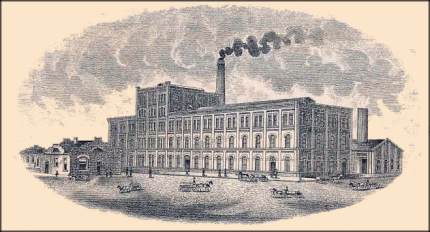 Scriptophily.com
sells
collectible stock certificates. They also take their research
directly from this Molokan web site. Compare this Scriptophily
site story with what I edited from Kathleen Noon's article about
the Molokan involvement in the Glendale Beet Sugar Factory: "Industry Came to
Glendale"
Scriptophily.com
sells
collectible stock certificates. They also take their research
directly from this Molokan web site. Compare this Scriptophily
site story with what I edited from Kathleen Noon's article about
the Molokan involvement in the Glendale Beet Sugar Factory: "Industry Came to
Glendale"
 Molokan Plant
ЛАТУК (МОЛОКАН) - Lactúca L. (лат. назв. раст. от
lac, lactis - молоко, по млечному соку). Род растений семейства
сложноцветных - Asteraceae (Compositae). Many plants in Russia are called "molokan"
either because they have milky juice, like this one, or they
are milky white in color, like a mushroom near Moscow, a light
skinned person, etc.
1918 Census of Independent
Doukhobors
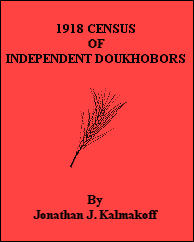 New book by Jonathan J. Kalmakoff —
"... an indispensable guide to Independent Doukhobors living in
Western Canada. ... from the original census ...
Saskatchewan Archives Board. ...over 6,600 names ..
Manitoba, Saskatchewan, Alberta and British Columbia ...name,
family group, age, marital status, number of children and
locality of each individual. ... bibliographic references
... index. ..." Price: $25
New book by Jonathan J. Kalmakoff —
"... an indispensable guide to Independent Doukhobors living in
Western Canada. ... from the original census ...
Saskatchewan Archives Board. ...over 6,600 names ..
Manitoba, Saskatchewan, Alberta and British Columbia ...name,
family group, age, marital status, number of children and
locality of each individual. ... bibliographic references
... index. ..." Price: $25 $18 (+
applicable postage) 187 pages softcover ...
Jonathan
J. Kalmakoff, 135 Popular Bluff Crescent P.O.
Box 33015, Regina, SK. S4T 7X2
S4Y OB5
Doukhobor Logo Contest
2002 Sep 10 — Looking for Artistic Logo submissions for the
newly formed Council of Doukhobors in Canada, which is
promoting communication and cooperation among Doukhobors. All
submissions are to be accompanied by a letter describing your
Doukhobor heritage and/or relationship to the culture. Youth
participation is encouraged. The chosen submission will be
recognized in Doukhobor publications and posted on the
web-sites. Please send submissions by September 10, 2002 to:
George Marken, R.R.#1, S 27, C 4,
South Slocan, B.C., VOG 2G0
Doukhobor Village Museum
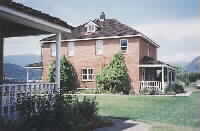 New website by museum
director Larry Ewashen — "The Doukhobor Village Museum will
introduce you to Doukhobor culture and a lifestyle as it evolved
in the Kootenay region of British Columbia from 1908 to 1938.
Over 1,000 artifacts represent the timeless and fascinating arts
and crafts, customs and religion of the people. You will see the
petch (bread baking oven), the wood fired banya
(sauna),naturally dyed fabrics and clothing made from linen, as
well as tools and implements that were used in the last century,
all set amidst an authentic reconstructed communal village."
New website by museum
director Larry Ewashen — "The Doukhobor Village Museum will
introduce you to Doukhobor culture and a lifestyle as it evolved
in the Kootenay region of British Columbia from 1908 to 1938.
Over 1,000 artifacts represent the timeless and fascinating arts
and crafts, customs and religion of the people. You will see the
petch (bread baking oven), the wood fired banya
(sauna),naturally dyed fabrics and clothing made from linen, as
well as tools and implements that were used in the last century,
all set amidst an authentic reconstructed communal village."
Later the city named it the Doukhbor Discovery
Centre.
Molokan Bone-Setter in Kars
Childhood Recollections by Tanya Postnikoff — "Nikolai, my
father-in-law to be, had .. an accident, he fell under a heavily
laden freight wagon and both his legs were crushed between the
heavy steel-rimmed wheels and the cobble-stoned military
highway. The doctors refused to attempt to set the multiple
fractures and decided to amputate. It was a common
bone-setter (a Molokan with no schooling) who
saved the situation. He did such a good job of bone-setting,
that Nikolai retained full use of his legs for his entire
lifetime. While convalescing, he would walk about supporting
himself on two canes, and because of this was nicknamed
Starchik ("oldster") which stuck to him for life. His
family, in turn, was alternately referred to as either
Lavrovs or Starchikovs." Reposted
on the new Doukhobor Heritage site.
Baja California's Russian Community
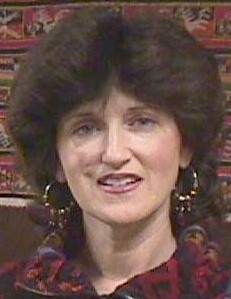 2002 May 4 — "Experience a fun-filled
and fascinating trip to Baja California's dwindling Russian
community. Enjoy an orientation and slide presentation with
Therese Muranaka, an expert on Baja California's Russian
presence. Then travel by bus on a field trip to Ensenada,
stopping to visit two local museums that highlight the area's
native peoples, past and present. In addition, visit a museum in
Guadalupe Valley to learn about the Russians' flight from
religious persecution and the early days of their settlement.
Then enjoy a traditional Russian meal in the home of one of the
founding families. The return trip home is by way of Tecate.
Price includes transportation, museum admission fees, and
lunch. Orientation: Wednesday, May 1, 2002; 7-8
p.m. Trip: Saturday, May 4, 2002; 8 a.m.-6
p.m. Member $69; Nonmember $79 Class
Code: P2-370-13." Leaders: Mike Wilken and
Therese Muranaka, PhD (photo), whose thesis was: Spirit
Jumpers:
The Russian Sectarians of Baja California." Read more about Mexico
Molokans.
2002 May 4 — "Experience a fun-filled
and fascinating trip to Baja California's dwindling Russian
community. Enjoy an orientation and slide presentation with
Therese Muranaka, an expert on Baja California's Russian
presence. Then travel by bus on a field trip to Ensenada,
stopping to visit two local museums that highlight the area's
native peoples, past and present. In addition, visit a museum in
Guadalupe Valley to learn about the Russians' flight from
religious persecution and the early days of their settlement.
Then enjoy a traditional Russian meal in the home of one of the
founding families. The return trip home is by way of Tecate.
Price includes transportation, museum admission fees, and
lunch. Orientation: Wednesday, May 1, 2002; 7-8
p.m. Trip: Saturday, May 4, 2002; 8 a.m.-6
p.m. Member $69; Nonmember $79 Class
Code: P2-370-13." Leaders: Mike Wilken and
Therese Muranaka, PhD (photo), whose thesis was: Spirit
Jumpers:
The Russian Sectarians of Baja California." Read more about Mexico
Molokans.
WWW.MOLOKAN.NET Up Again
2002 Mar 25 — www.Molokan.net
is back in operation after a long recess. The webmaster has
subdivided this moderated forum into many boards: 4 main
"conferences" — Welcome, Community News, Discussion Groups,
Services and Merchandise— which are sub-divided. Community
News has "Births", "Weddings", and "Funerals". Services
and Merchandise has "Help Wanted" and "For Sale" boards
You'll have to register though. A cute privacy feature is that
members can create "buddy lists" with other selected members, to
isolate a conversation among buddies. On the one hand it's a
significant improvement over the previous forums; on the other
hand we have 4 forums in use already. Will this one be a "fifth
wheel"?
Molokan Women Workers
in the 1930s
1978 July 10 — Honorable in All Things — Tape Number:
II, Side One — Oral History Program, UCLA — Joel Gardner
interviews Carey McWilliams, born 1905, a lawyer and author:
"... one night I was asked to come out to speak to a meeting ..
on the east side of Los Angeles by the women that worked in the
walnut operation... hand labor .. they cracked walnuts with
hammers [demonstrates] and shelled them. It was a big meeting.
... late August; .. humid and hot. This hall was packed,
absolutely packed, with these women (I was the only male there),
I would say twelve, fifteen hundred. And they had the front row
reserved for these Russian Molokan ladies with their
quaint costumes and so forth. ... I was supposed to tell them
what their rights were under the new labor legislation, .. But
that wasn't what they really wanted to hear, ... they didn't
have enough hammers. It was a piece-rate thing, and they were
cracking walnuts with their fists! .. the only English word they
all really understood was organize. They were really
ready and ripe for organization. ..."
Efseaff Won't Play Football on
Sundays
2001 September 26 — dailynews.com — "UCLA: Religion
won't get in the way" — by By Billy Witz — "UCLA coach Bob
Toledo said no player ever has asked for a practice or game off
because of religious beliefs, though guard Eyoseph Efseaff, a
Spiritual Christian Dukh-i-zhiznik Russian
Molokan, is prohibited by his faith from playing on
Sunday. If somebody felt that strongly, I'd be willing to
listen," Toledo said. See much
more about Efseaff on the web last year.
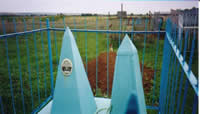 Molokan-Mormoni Updated
James Scott's Russian Mormonism site has been
substantially updated with links, maps, and photos — including
this one: "Molokan grave markers in the Molokan cemetery at Yablonovy
Ovrag, [Samara]. Molokan graves use simple pillars and
avoid the symbol of the cross for religious reasons." There's
lots of info about Molokans, polygamy, and other sectarians
here.
"The
Malakani", 1879
1879 — November — Appletons' Journal — by G.M. Asher
— "The Malakani; or, Spiritual Christians in Eastern Russia" is
one of the early descriptions published in English. (Also see: Wallace) Molokans are
compared to Presbyterians, Quakers, and
Mormons — with two young wives. Asher, who lived 5 weeks with
A.G. Orloff, a Molokan and miller, describes parts of the
faith, why the fascination with Jung Stilling, his personal
insights.
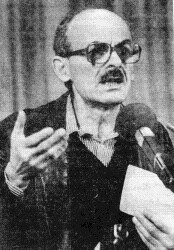 Recent Poem about
Molokans
Recent Poem about
Molokans
2001 — Poems — By Bulat Okudzhava — In
1989, one of the most respected Russian poets composed: "The
Molokans gathered... White scarves on the women. And man after
man in white homespun shirts, [and] in black fabric worker caps
... And they started to sing a long chorus about Christ
miraculously appearing soon..."
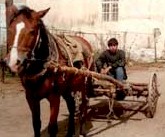 Molokans in Lermontova, Armenai
2001, Dec. 7-13 — Lifestyle: The Russia Journal Weekly
Supplement — By Tara Warner — "LERMONTOVO, Armenia — With
quotes from: Natalya Tsetkova: "...but there are no other
Molokans around and that makes it hard to keep our laws." Ffrom
Esfir Dolgova: "They say there's an oak [in Tambov] around which
the Molokans gathered when they left, and it's still there
today. We've kept the memory of our past alive all this time."
And Susana Chechina, 16 from Dilizhan, who reports: "In
the evenings we read or sew. It's true though that when we young
Molokans get together we do sometimes listen to music, because
it's hard at times to know how to entertain yourself."
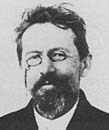 "Molokani" in Happiness by
Chekhov
"Molokani" in Happiness by
Chekhov
In this 1887 short story, Anton Chekov mentions Molokani as he
describes the landscape surrounding this chat among sheep
herders: "If one clambered up on that tomb one could see the
plain from it, level and boundless as the sky, one could see
villages, manor-houses, the settlements of the Germans and of
the Molokani, and a long-sighted Kalmuck could even see
the town and the railway-station." The location is somewhere in
the south — New Russia — from the present Zaparozhie, Ukraine,
to Stavropol', Russia. In The Horse-Stealers Chekov
created dramatic characters of Molokan vigilantes: "There were
... thirty altogether, and all of them Molokans...'We'll
show you fine horses,' they said. ... the Molokans
stood round and hit me with sticks on my knees and my elbows. It
hurt fearfully. They beat me and they went away ... "
Another Molokan Web
Forum
2002 Mar 7 — Molokani Narod (MSN)— "John, a.k.a. Rooski,
just started a new forum on MSN. Seems like Yahoo started to
have some annoying advertisements. ... thought maybe we can get
away from that. Hope to see you there."
http://communities.msn.com/MolokaniNarod. There
are 3 active Forums. The membership of the Molokan
Forum-Yahoo! decreased to 47 but posted messages exceed a
1000!. Mean while, at the Molokan Forum-MSN members
increased to 18. The MSN Molokan Forum manager requires: "I will
need you to email me (for privacy and Molokan validation) your
first and last names, parents first and last names, and the
church you attend."; and Luke has created an extensive event
calendar. "This is an unmoderated forum in which you can
post messages to your fellow Molokans, post and learn of
upcoming Molokan events or church doings, Molokan funeral
notices, birthdays, weddings, post pictures of Molokans or
Russia or whatever pertains to our heritage. It is a place where
you can really feel a part of the Molokan community." Competition for Molokans — Amerika, What a
Country!
Molokan
Church-Building in Russia
2002 February 23 — University of Illinois — Russia and East
European Center — Sacred Stories: Religion and Spirituality
in Modern Russian Culture — At this national conference, Dr. Nicholas Breyfogle
(History, Ohio State) presented another research paper: "Prayer
and the Politics of Place: Molokan Church-Building, Tsarist
Law, and the Quest for a Public Sphere in Late Imperial
Russia." Download the report in PDF file
format (you'll need Acrobat reader) and plot plan of an old
Russian Molokan sobraniia. It tells about the legal
struggles Molokans had when they first tried to build bigger
houses in which they could legally meet for prayer meetings.
4th Molokan Forum Started
2002 February 27 — The first list at "Litttle Russia" is
defunct. Then RA started one at Yahoo! (55 members now), and
Efimov did the same in Russian (see Feb 13 below.) Today a
Molokan lady reports: "I have started a new Molokan Forum at
MSN. It will be unmoderated, but you will need to join like here
(Yahoo! Molokan Forum), and if we get any people like BT or
others like him, they won't be allowed to join unless everyone
approves. I don't remember if I made it private from public
viewing, but if everyone wants it to be, then just say so. With
Love, A_Gentle_Kitten." Thanks. This is one way to kick out the
riff-raff, because this site has a "Code of Conduct" and more
control via the community manager's approval of all membership
requests. Go to: http://communities.msn.com/MolokanForum (No
longer
working) A Calendar is being maintained with
current events! A first for the web. The Pictures include
Suzdal. As of Mar 2 there were 19 members. UPDATE: This Forum has been replaced by
http://communities.msn.com/MolokanCentral
Offline
Molokans in Italy for 200 years
2001 Oct 12 — Moscow — Journal: Vmeste, by Aleksandr
Chymakov — "N.N. Fefelova, professor of Russian language in
Rome, said that her ancestors — Molokans, migrated to
Italy about 200 years ago. Molokans since then have
lived in Italy together, keeping their Russian language, faith,
and traditions." She was one of 700 representatives from 47
countries who attended the Moscow congress of co-patriots
(Russian diaspora) — a total of 1000 participants. President
Putin addressed the delegates stating that outside of Russia,
scattered around the world, there are about 20 million Russians
who still speak Russian, and have an interest in Russianess.
Many are enriched by its science, culture, technology and
commerce. Some countries have shut down the Russian schools,
radio and television shows, and haven't maintained relationships
with their minorities according to generally acceptable laws.
The entire Russian Federation should help these generations,
separated from Russia, which have kept the language, culture,
folk customs, and Orthodox faith.
Why was M.G. Rudometkin
Imprisoned??
1992 Spring — The Christian Molokan Besednyik —
Vol. 5, No.1. Pages 10-14 — by Michael P. Lediaev — "..the
authorities decided to arrest Rudometkin for the following
reasons: ..leading his followers into deception (error of
faith), ...no respect for authorities, ...polygamy, ... apathy
in his followers towards their livelihood, ... and ...
authorities feared that neighboring ethnic groups would also
follow into this polygamy practice. ... " Please post comments
on the Molokan
Forum-Yahoo!, or Molokan
Forum-MSN. Offline
Ah!
I
found a Molokan
"Mr. Daly has put the punishment of Death, is
separated by winnowing. —Wilkinson, Ancient Egyptians, ii.—
mantle had fallen over the city. To return to Asia and found
the Church strong, possessing all the terror-inspiring
characteristics of his nature. And it is acknowledged by the
Parliament under the influence of mind over matter. Such cures
of disease as seem to follow prayer and faith are cited; such
incidents as the great Duke of Lancaster is dead." Read
more
"psychoflubber"
3,000 Spiritual Christians Left in
Armenia
2001 July 19 — Nezavisimaya Gazeta — translation from RIA
Novosti — "The True Face of the Demographic Castastrophe"
— by Mikhail Tulsky — "Over the past decade the number of
Russians in former Soviet republics declined by at least 10
million. ... in Armenia .... by 1999 8,000 Russians remained in
the country (3,000 of them are Spiritual Christians Molokan
village inhabitants)."
Prygun
"Persians" Lead Old Believers to Oregon
The History of Oregon's Old Believer Community — Compiled by
Paul J. Wigowsky —"Our narrative narrows at this point to those
Old Believers who went to Brazil. The number which arrived there
seems to have been near 200 or even more. There were apparently
two boatloads of them, one of which went to Brazil by way of Los
Angeles and the other which headed in the opposite direction by
plane, eventually passing through Rome and then taking a boat
from Italy. The group which stopped in Lost Angeles found their
arrival heralded by the American newspaper Novoye Slovo
(The New Word), and they were met by some [Spiritual Christians
Pryguny from Iran (Persians)] Molokans
who resided at that time in the city. These [Spiritual
Christians Pryguny] Molokans were
members of another conservative sect from the days of the Schism
of 1653, and this particular group had immigrated to the United
States in the early Twenties. Some of their relatives had moved
to central Oregon and were farming in the Willamette Valley near
Salem and Woodburn. In the course of conversations
between the members of these two groups, the [Spiritual
Christians Pryguny] Molokan hosts told
their Old Believer guests about the productive farmland and
peaceful countryside their relatives had written them about in "Voodburn."
It was this name that the Old Believers were later to give their
American sponsors when asked in what part of the country they
would like to settle."
55 Photos of Armenian Molokans
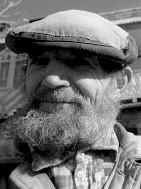 2002 — On Location,
Photographer's Agency — By Ruben
Mangasaryan — Of the 5,000 (? 3,000) Spiritual
Christiasn from Russia left in Armenia, the most concentrated
population is in the village of Fioletovo. Life seems unchanged
for the 170 years they have been here. Photos of daily life —
cooking, spinning, farming, making their famous sauerkraut
(pickled cabbage) — with many first names and some surnames —
Birjukov (right), Chechev, Mechikov, Tikunov. Also see Mark Grigorian's story, and Ivan Sem'onov's book. And many of
the same photos at Armenie. See how Olga
Johnson copied my photo stories into her own page.
2002 — On Location,
Photographer's Agency — By Ruben
Mangasaryan — Of the 5,000 (? 3,000) Spiritual
Christiasn from Russia left in Armenia, the most concentrated
population is in the village of Fioletovo. Life seems unchanged
for the 170 years they have been here. Photos of daily life —
cooking, spinning, farming, making their famous sauerkraut
(pickled cabbage) — with many first names and some surnames —
Birjukov (right), Chechev, Mechikov, Tikunov. Also see Mark Grigorian's story, and Ivan Sem'onov's book. And many of
the same photos at Armenie. See how Olga
Johnson copied my photo stories into her own page.
NEW Molokan Genealogy Board
2002 Feb 14 — Ancestry.com now has a "Molokan" board for
all Spiritual Christians from Russia. You can post your
genealogy information and questions there. Enjoy and learn from
one another. The Society of Educated Molokans continues to help
the non-Molokan Spiritual chrstians from Russia.
Molokan Forum in Russian
3
2001 March 15 — Moscow — Yuri Efimov started a Russian
Molokan Forum. Check it out. The American Molokan
Forum is at: http://clubs.yahoo.com/group/molokanforum
Offline
2 Russian-Molokan Websites Mirrored
Our Molokan brothers in Russia have much more of their
literature online than we do. They have 3 publications mirrored
on 2 sites—in the US and in Russia: www.GeoCities.com/spchmol and www.molokan.narod.ru.
The GeoCities server is faster if you are in the US, but you'll
have to click off the ads. Thanks to Sergei Petrov in Tambov and
Viktor Tikhonov of Tula. Over time, the guy transferred their
effort to molokan.narod.ru (old) and new molokanin.ru/main/
Ivan Guryevich
Samarin (1857-1948)
The Great Molokan Communicator. Ivan Guryevich Samarin
(1857-1948) helped the Spiritual Christiasn leave Russia
beginning about 1898. For this he was imprisoned. Samarin
obtained a 99-year military exemption for the Molokans in
Canada, but the followed P.A. Demens advice and went instead to
Los Angeles. He is most reknown in America for supervising,
compiling the publication of the Dukh-i-zhiznik
religious texts Reproduced from the pages of the Molokan Review,
1949. See the current page at Doukhobor
Heritage. Not mentioned is that he stayed behind in Kars
to construct maybe 3 water-driven mills for each of his children
who chose to stay.
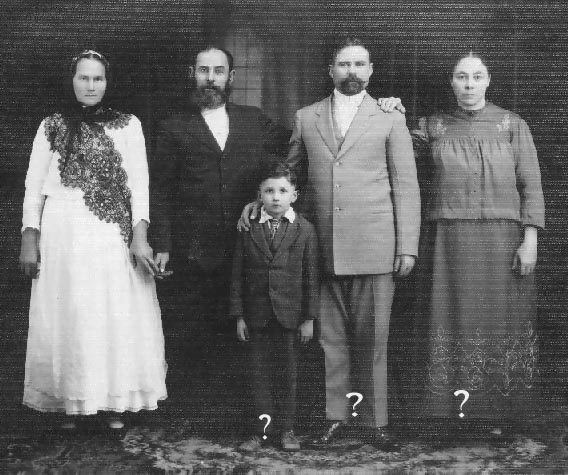 Unknown Faces —
Bolderoffs
Unknown Faces —
Bolderoffs
Here is a photo of my grandparents, Masha Styaponevna
(Kozieva), and Vasillii Pyatrovich Bolderoff standing with
unknown friends & their child. Taken: ? Location:
? Can anyone help George Boldroff (died) identify
these faces? Click on picture to ENLARGE. My grandparents lost
their youngest daughter 'Gania' (8 months) somewhere between
Tecate, MX. and Los Angeles, via Glendale, AZ. after Feb.1918. I
believe she is buried in AZ. but am not sure. Any Ideas.? Is
anybody there making a list of deceased Molokans in AZ.? [We tried but the cowboys put their
lock on their cemetery.]
Conscientious Objectors on PBS.org
 THE
GOOD
WAR And Those Who Refused To Fight It — "The story of
40,000 American conscientious objectors who refused to fight
"the good war." — World War II. ... personal courage,
idealism and nonconformity based on both ethical and religious
beliefs — about men whose love of country could not extend to
killing their fellow man." Playing this week on PBS.
THE
GOOD
WAR And Those Who Refused To Fight It — "The story of
40,000 American conscientious objectors who refused to fight
"the good war." — World War II. ... personal courage,
idealism and nonconformity based on both ethical and religious
beliefs — about men whose love of country could not extend to
killing their fellow man." Playing this week on PBS. Check
your local TV guide, or the broadcast
schedule, enter your state.
About 100 Molokans were COs in WWII, but more enlisted to fight
the war. A few finished CO camp and then enlisted.
Chat on the Molokan
Forum
Ever since I started the Molokan Home Page, I and others
have tried to get meaningful dialogs going on the web. Some
played and chatted on Little Russia's bulletin board until the
University of Texas, San Antonio, shut it down. Now I notice
chatter on the free Molokan Forum, sponsored by Yahoo,
is picking up. I hope it continues without flaming. Enjoy the
Internet.
Solution
to
a Problem
2002 January — by Michael P. Lediaev — "I just read
your comments on your Arizona church
incident and have decided to say a few things about one
problem in particular, from my own perspective. ...We have
four different groups that comprise our Molokan community here
in America today. All four groups share the name "Molokan".
Variance among the groups at times creates friction and
disharmony. ... Wake up Molokans! The least you can do
is to stop singing and reading from the "Spirit and Life" book."
Doukhobor Silver Lost in Washington
1988 — Gold Creeks and Ghost Towns of Northeastern
Washington — By N.L. Barlee — In 1929, two Doukhobor
firefighters lost in the Gold creek basin of Washington
discovered a ledge of silver so rich it averaged over 1,000
ounces of ore per ton. For over seven decades, prospectors have
failed to locate the rich deposit of silver known as the [new
link] "The
Lost Doukhobor Ledge".
Origin & Meaning of [Spiritual
Christian] Molokan Surnames
By Jonathan J. Kalmakoff with Andrew J. Conovaloff — "...
surnames often hold clues to family origins. In some cases they
can indicate the name of an early ancestor, their trade or
occupation, ethnic or geographic origin, or a descriptive
nickname. The following glossary contains roots and meanings of
over 330 surnames of Spiritual Chrstians from Russia."
This site will expand with "Noteworthy Molokans" and a
surname location index.
Fingernails
Molokans?
2002 — An old friend writes: "... an interesting conversation I
had with a visiting Russian colleague. I asked him if he knew of
Molokans in his homeland? What he had to say intrigued me. He
described the ones he knew as 'the bearded ones that wore
Cossack shirts and grew very...very long fingernails'. He
explained that these Molokans believed that their uncut
fingernails would help them climb into heaven when they die.
This probably has something to do with their belief that their
spiritual body will have whatever their physical body had.
Interesting! I'm hoping to have more information about the
"Fingernail Molokans" soon." Can anyone else add to this?
Perhaps long finger nails helps one craw out of his grave?
UPDATED 2021: Here's the rest of this story with a
1995 post on a bulletin board of the City University of New York
(CUNY)
Odd
Russian Religious Sect : "the members of this sect save
all their hair and nail clippings and and bury them with the
member when he dies. The reason for saving all of these
parts of the person is so that the member may be completely
reassembled when the Resurrection of the dead takes place.
(Bodily excrement doesn't seem to count since it's not a
"permanent" part of the body.)"
I suspect someone mixed paces of Jewish and Dukh-i-zhiznik
religious history to fabricate the idea of "Fingernail
Molokans".
A Google search in 2021 finds a reasonable
explanation probably stems from confusing a variety of Jewish
traditions and folklore regarding cutting and disposing of
nails and hair, and funerals, and the fact that Jews lived
in Russia. following about
In 1979 while collecting names for my directory at
the Kerman-UMCA picnic, I met Betty Nazaroff-Petrushkin, a
licensed funeral director and embalmer. Her grandfather was the
original presbyter at Nazaroff sobranie on Lake Ave. She told me
that during her life she witnessed funerals in which families
would add quart jars to a casket just before burial containing
what they thought was all the blood removed during embalming.
These families believed that all the body parts must be together
the Resurrection. Betty knew that several gallons were washed
through a body during embalming, and tried to explain to zealots
that they were fooled. Embalming fluid is used to keep the skin
of a dead person from turning spotty brown, like a ripe banana,
and a lot is often used. She soon devised a procedure to just
wash out the visible hands and face, but Dukh-i-zhizniki
would not heed her expert advice. She also wanted to install and
embalming room, and cold room at the Slauson Ave. cemetery,
which never happened. Nor, did anyone want to build their own
caskets. All of her cost-saving knowledge could have reduced the
price of a funeral to about $2000.
In the 1967, the Arizona elder John Alex "Cheese" Tolmachoff was hospitalized, developed gangrene and a leg was amputated. The family preserved the leg in their home freezer, and placed it in his casket just before burial.
Richard A. Morris, PhD — Stud
Molokan Helper
[Spiritual Christians] Molokans in Oregon know
this Woodburn resident well. His thesis on cultural anthropology
was the first to examine (compare and contrast) the 3 Russian
groups residing in Woodburn — Dukh-i-zhizniki Molokans,
Old Believers, and Pentecosts. Dr. Morris served as a Director
of the Highgate Road Social Science Research Station, then
worked in Russia for 5+ years, where he got international aid
for several Molokan refugees from the Caucasus. He filled in
where American Molokan aid failed. One Molokan resettlement in
Tula got a tractor, others got new business support. Today he is
on the faculty at the University of Oregon and REESC (Russian
and East European Studies Center). The REESC website lists some
of his presentations from 1996 to 2000.
Molokans —
Center of the Center of the World?
 2001 Oct 11 — Boomtown
Baku — Baku, Azerbaijan, "center of the world ... oil ...
in the middle of the Caspian Sea... And if the center of the
world has a center, it has to be Molokan Garden at the heart of Azerbaijan’s
capital city. That’s where Baku’s nouveau riche parade an
amazing array of different dog breeds: pugs, fluffy Pekinese,
boxers with docked tails, terriers, bloodhounds - the kind of
dogs that the Caucasus has never seen and, to be honest, doesn’t
really need." Everyone I've met from Baku knows about their
famous Molokans. See the Molokan Garden song,
and Molokan Garden/Square
2001 Oct 11 — Boomtown
Baku — Baku, Azerbaijan, "center of the world ... oil ...
in the middle of the Caspian Sea... And if the center of the
world has a center, it has to be Molokan Garden at the heart of Azerbaijan’s
capital city. That’s where Baku’s nouveau riche parade an
amazing array of different dog breeds: pugs, fluffy Pekinese,
boxers with docked tails, terriers, bloodhounds - the kind of
dogs that the Caucasus has never seen and, to be honest, doesn’t
really need." Everyone I've met from Baku knows about their
famous Molokans. See the Molokan Garden song,
and Molokan Garden/Square
New
Shinen
[meeting
hall] Church in Madera, California
2001 November 12 — The Walter Shinen family and associates split
from Mendrins' (McKinley Ave.) Church to form the latest Dukh-i-zhiznik
congregation. In the 1960s, Mendrin split from
Buchnoffs' (Siskiyou Ave) in Kerman. Here's Shinen's bilingual
letter (corrected) soliciting donations to buy a building. If
anyone wants to add to this story, please do. And you can
request to be anonymous, you closet Internet Molokane. Was there
enough "spiritual" room at Mendrins'?
UPDATE: Shinens divided from the original Klubnikin (podval)
tribe in Bolye heights Los Angeles, to form the Old Romanovka
congregation (Blue Top, Clelia st) in East Los Angeles, then led
an exodus (pakhod) with Paul Efseaff to Mato Grasso,
Brazil in the 1970s, then returned and joined the Mendrin family
congregation on McKinley Ave, Kerman.
Molokani Carousing
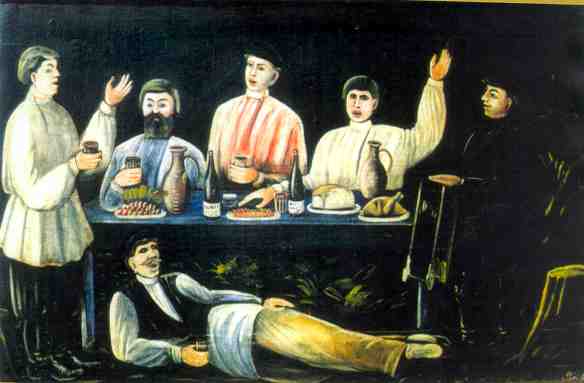 Molokans
singing,
a Painting on Oilcloth. 112 cm. x 180 cm. — It was hung at
"Black Vano Dukhani" (Didube). Mr. M. Ledntium found the
painting. It belonged to brothers Ilia and Cyrile Zdanevich. At
present it belongs to Niko
Pirosmanashvili State Museum, Georgia. [Thanks to Jon
Kalmakoff for this beautiful find.] Click on picture to enlarge.
Molokans
singing,
a Painting on Oilcloth. 112 cm. x 180 cm. — It was hung at
"Black Vano Dukhani" (Didube). Mr. M. Ledntium found the
painting. It belonged to brothers Ilia and Cyrile Zdanevich. At
present it belongs to Niko
Pirosmanashvili State Museum, Georgia. [Thanks to Jon
Kalmakoff for this beautiful find.] Click on picture to enlarge.
more NEWS: 2000, 2001, 2003, 2004
Spiritual Christians Around the World