Kosherization
of the World
|
This list is
dedicated to my late Uncle Andy, who many times
lividly complained: “The Jews are
kosherizing the world! We food manufacturers are being
forced into kosher
certification to stay in buisiness, while the non-kosher consumer
pays.” While I was marketing graduate student in the 1980s, he
challanged me to write a book titled “Kosherization of the
World”. At the time I found only
one book about the subject which concluded that US rabbis argued among
themselves so much that they could never get together to control more
than a few
suppliers to a few Orthodox markets. But the prophetic Andrei Andreich Shubin, founder- owner
of Harlequin Confetti Corp. (candy decors), was right. 28% of customers
bought kosher in 2003, and 40% of supermarket sales were kosher in 2005. — By Andrei Conovaloff
|
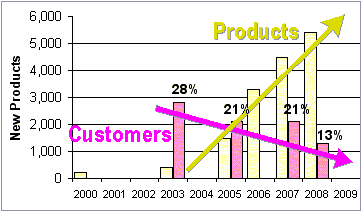
Kosher markert dynamics, 2000-2008
The chart and table below show the number of new U.S. kosher-
certified processed
food products was rapidly increasing (13 times since 2003), while the
percentage of customers who buy kosher decreased (half since 2003).
Data
is summarized from reports on this
webpage, below.
Year
|
New
Products
|
|
%
Purchasers
|
| 2008 |
5,389 |
|
|
13%
|
| 2007
|
4,477 |
|
|
21%
|
2006
|
3,290 |
|
|
|
| 2005
|
1,491 |
|
|
21%
|
| 2003 |
399 |
|
|
28%
|
2000
|
211
|
|
|
|
This may be the first sign of a reversal of the trend for kosherization
of the world. This data appears to show a rush to sell to the emerging
kosher non-Jewish market share at the
beginning of the decade, which may have been aided by agressive
selling, publicity,
more trade shows, and use of the Internet to speed processing and
lower some costs. But the increased cost of kosher certification during
a down economy may have caused a reduction in customers who chose
to buy kosher for reasons other than religion.
|
5,389 New Kosher Products in 2008
"Kosher was in first place with 5,389 new launches in 2008 in a top ten
list of claims for new food and beverage products, followed by “all
natural” and “no additives/preservatives”. This major surge is rapidly
driving the number of kosher products sold in the U.S. with kosher
certification to a record 112,500 products with sales of over $12
billion. ... The 2008 top ten claims for new products were: Kosher; all
natural; no additives/preservatives; organic, microwaveable; transfat
(low/no/reduced); fat (low/no/reduced); premium; low/no/reduced
allergen; calorie (low/no/reduced)." — "MAJOR GAIN FOR
KOSHER IN 2008: 5,389 New Kosher Products in 2008, Mintel Study Shows",
KosherToday Newsletter,
February 3,
2008.
|
13% of Americans bought kosher in 2008
Most of the 13% of Americans who bought kosher foods in 2008 are not
Jewish and purchased for safety, not spiritualism. 40% of them bought
at Wal-Mart which
started selling kosher in 2003. Major
reasons cited:
| Food
quality |
62%
|
XXXXXX
|
General
healthfulness
|
51%
|
XXXXX
|
| Religous
|
30%
|
XXX
|
| Food
safety |
17%
|
XX
|
The kosher market share is down from 21% in 2007,
and 28% in 2003. Of those who buy kosher, 14% follow
kosher rules, 10%
are similar to
kosher, and 6% follow halal
rules. Under-35's are the most likely to buy kosher food for religious
or
ethical reasons. — "Sacred
Foods and Food Traditions - US - January 2008" (Mintel Reports); "Breaking News: 13%
of Americans Buy Kosher Food, Latest Mintel Report Shows", KosherToday Newsletter, February 3,
2008.
|
Kosher Meat Gets Scarce
The shortage ... collapse of Agriprocessors Inc. ... the largest kosher
meatpacking company ... 400 workers were arrested in an immigration
raid ... plant has closed ... kosher meat supply (cut) to the bone ...
paying up to 40 percent more ... half their normal order. — "Customers
Stew As Kosher Meat Gets Scarce", Associated
Press, Dec. 1, 2008.
|
Is your chai kosher?
"While ... the majority of coffee produced in the U.S. was kosher, tea
was quite another matter. Indeed, kashrus experts warned that with the
growing number of flavored teas, there was a real concern about the
flavorings." — "Is
there any non-kosher tea in the U.S.?", Kosher Today, August 25, 2008
|
Few Jews own kosher companies
Less than two dozen kosher manufacturers are still owned by Jewish
families. A small core of ethnic kosher companies, private label
brands, Israeli
and other foreign imports and the nation’s largest food manufacturers
make up the kosher industry — over 110,000 items with kosher
certification, selling $11 billion per year. Kosher brands like
Manischewitz, Mrs. Adler’s, Rokeach, Horowitz/ Margaretten and
Goodman’s are no longer owned by Jewish families but by investment
companies. The vast majority of kosher companies are owned by large
food companies. Jews can own stock in these companies and sit on the
board with non-Jews. Kosherization is subcontracted to rabbinical
organizations. — "Who are the
owners in the kosher industry?", Kosher
Today Newsletter. October 6, 2008.
|
Kosher customers shun generic “k”
“... customers have
become more concerned with the integrity of the kashrus. ... preferring
... OU, OK, KOF-K, Star-K, and the cRc. ... a generic “k” product does
"about a third of the business that a product with a symbol does", ...
Dannon with the OU does 'way better than the Dannon products with a “k”
(that use gelatin).' ” — “Growing number of
kosher customers shun generic “k” in favor of kashrus symbols”, Kosher
Today Newsletter. January 22, 2008.
|
Rabbis research Category I foods
“... foods that are
inherently kosher and do not require specific
kosher certification, ... dry roasted nuts should not be considered a
Group 1 food because the same roasters are used for oil-roasted and
dry- roasted nuts. ... 'nectar' may refer to a flavored syrup, ...
rather than pure juice. Ascorbic acid is made via fermentation and most
hashgachos haven’t considered it a Group 1 for many years. ...
Ascorbic acid is used in handling tomatoes as they dry in the fields
(where the ascorbic acid prevents spoilage), ... glacial acetic acid,
which is usually less expensive than wine vinegar. ...” — “Rabbis continue
research into Category I foods”, Kosher
Today Newsletter. January 22, 2008.
|
Is Kosher Food Really Safer?
China to increase kosher
food exports:
- to counter attacks for substandard and unsafe products
- most large U.S. food companies require kosher ingredients
- kosher symbol seen as a huge marketing advantage
- quality assurance, kosher supervisors are watching when
government does not inspect all products
- perception that kosher is better quality, though not always
healthier due to high fat and salt
—
“Is
Kosher Food Really Safer?”, Kosher
Today Magazine. January 22, 2008. — "Keeping
China kosher", Los Angeles Times,
February 5, 2008. — Also see: “China: the sleeping
giant awakens”.
|
105,000 Kosher Products in 2007
More new 'Kosher' certified products launched in the U.S. in 2007 than
any other category. Total kosher products now over 105,000. 55% who buy
kosher foods said they thought they held a higher mark of health and
safety.
Category ______________
|
Food
|
Beverage
|
Total
|
_Percent
|
| Kosher |
3,984 |
728 |
4,712
|
51%
|
| All Natural |
2,023 |
405 |
2,428
|
26%
|
No
Additive/Preservative
|
1,780 |
379 |
2,159
|
23%
|
2007 Total —>
9,299 100%
|
— “Israel
is World's Largest Kosher Market With a Caveat”, Kosher
Today Magazine, November 19, 2007.
|
Half of Jews are not kosher
"...more than 60% percent of Israel's 5.7 million people
maintain some degree of kosher observance in their home ... ...in the
U.S., only 20% of the nation's estimated 6 million Jews eat kosher
year-round and another 25% occasionally, such as during Jewish
holidays. ... The number of [U.S. kosher] products (102,000) is nearly
triple
what it is in Israel." — "Israel
is World's Largest Kosher Market With a Caveat", Kosher
Today Magazine. November 19, 2007.
|
Non-Jews are 75% of kosher
customers
"The kosher
market is made up of 3 distinct and disparate groups..." which totals
10.1 million people — Orthodox Jews, other Jews, and non-Jews. Some
American Jumper-Maksimist-Molokans are small part of the 75% of
non-Jews who
support the kosher industry, which inlcudes Muslims, lactose intolerant
shoppers, and people who
think kosher food is better. Surprise, Orthodox Jews are the minority,
and non-Jewish buyers are about 3 times more than Jews.
| Orthodox
Jews |
1
million
|
10%
|
||
|
| Other
Jews |
1.6
million
|
16%
|
|||
|
| Non-Jews |
7.5
million
|
74%
|
|||||||||||||||
|
"Kosher
Market Not Monolithic, Kosherfest Keynote Session Hears
...", Kosher
Today Magazine. November 13, 2007.
|
21%
of Americans spend $10.5 billion on kosher products
"An estimated 11 million Americans ... buy some $10.5 billion of kosher
products ... Costco, Target and Sam's Club are also adding many kosher
certified products. ... ... 21% of Americans ... buy kosher products.
... 102,000 products to choose from, worth an estimated $225 billion.
2,000 new items were certified in the past 12 months ... 40% of kosher
food sales took place around the Passover holidays "... Also: Dunkin'
Donuts, and Starbukcks not all kosher. — "Kosher
Consumption on the Rise as Kosher Community is Set to Gather for
Kosherfest '07", Kosher
Today Magazine. November 5, 2007.
|
921 Kosher certifications world-wide
"921 Kosher Symbols and Agencies World-Wide" are listed in the current
Kashrus Magazine: "2008
Kosher Supervision Guide". "...many of the new certifiers are based
in the New York area. Some rabbis are concerned that the new
certifications will only add to the confusion in the marketplace.
'People recognize that there is money to be made in the kosher
business..." — "Kosher
Certifications Flood New York
Market", Kosher
Today Magazine. October 8, 2007.
|
3,290 New Kosher Products in 2006
17,779
food products were introduced in 2006; of those, 3,290
were certified kosher — 18.5%, according to the Mintel International Group,
a global market research firm. Their new study on “Sacred
Foods and Food Traditions” showed that "in 2000 the number of new
kosher products was 211 and has been rising steadily since". The price
for the complete report is US$ 2,995. — "Mintel
Study Cites Dramatic Increase in New Kosher Products in 2006 to 3,290",
Kosher
Today Magazine. January 8 & 16, 2007.
|
Kosher Market Grows by 15% in 2005
(New York) Sales of kosher foods in the US grew by 15% in the last 12
months ... The annual survey ... indicates that this is the 10th
straight year for double digit growth by the industry. ... an estimated
11.2 million Americans buy kosher food products on a fairly regular
basis with nearly 3 times the amount (21% of all Americans) buying an
occasional product, ... some of the growth is attributed to the core
group of everyday kosher consumers (1.1 million), there is a growing
number of consumers who say they buy kosher products for health and
safety reasons. Others include vegetarians, Muslims, and members of
other religious groups. The number of packaged good items on
supermarket shelves is approaching 100,000 with nearly double that
number for ingredient items. US sales of kosher certified items is
estimated at $195 billion (nearly 40% of all foods sold) while the
market for kosher products is $10.5 billion). There were more than 2500
new kosher certified items in the past 12 months. — "Kosher
Market Grows by 15% in 2005 - 2006, New Survey Shows",
Kosher
Today Magazine. October 30, 2006.
|
Is your borsch paganyi
or kosher?
Should you only make borsch from vegetables imported
from hothouses in Israel? Are most frozen vegetable infested?
(New York) "Many Rabbis say it is virtually impossible to
remove bugs
attached to vegetables ... To help consumers keep their produce
bug-free the OU publishes a Guide
to Preparing Fruits & Vegetables [PDF] ... Some restaurants and
caterers now routinely advertise that they retain special rabbis to
check the vegetables. ... rabbis warn that many pre-cut vegetables on
the market test positive for bugs." — "Rabbis
Still Bugged by Vegetables", Kosher
Today Magazine. May 15, 2006.
|
Is your soda paganyi or
kosher?
(New York) "You Don't Have to Be Jewish to Love Passover Coca Cola."
... which uses sugar instead of the high fructose corn syrup. ...
consumers who are allergic to corn also stock up on the Passover
beverage because they suffer severe allergic reactions to corn. ... I
was trying to avoid the `evil’ high fructose corn syrup found in
practically every soft drink and `fruit’ drink today. It seemed a
worthwhile endeavor.”... a blind tasting ... reported that a
co-worker who stopped drinking Coke years ago put two identical cups
through the test. “She swirled the cups and stuck her nose into them.
She liked the Passover Coke better. So did I.” If Coke is looking for a
potential new winner, perhaps its Passover version fits the tab.” — "Consumers
Say Passover Coke is Actually Better", Kosher
Today Magazine. May 2, 2006.
|
Is your cellphone paganyi
or kosher?
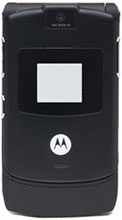 (Jerusalem, AP)
Most American
Molokans and Jumpers / Maksimisti think kosher refers only to food, and
a cellphone cannot be "unclean" [Russian: паганый, paganyi]. The Associated Press
reports: "...The kosher phone is stripped
down to its original function: making and receiving calls. There's no
text messaging, no Internet access, no video options, no camera. More
than 10,000 numbers for phone sex, dating services and other offerings
are blocked. A team of rabbinical overseers makes sure the list is up
to date. These are the same rabbis who have told followers to scorn
television and radio. But mobile phones are considered just too
essential ..." — Google
search "kosher
cell phone", March 31, 2006. (Jerusalem, AP)
Most American
Molokans and Jumpers / Maksimisti think kosher refers only to food, and
a cellphone cannot be "unclean" [Russian: паганый, paganyi]. The Associated Press
reports: "...The kosher phone is stripped
down to its original function: making and receiving calls. There's no
text messaging, no Internet access, no video options, no camera. More
than 10,000 numbers for phone sex, dating services and other offerings
are blocked. A team of rabbinical overseers makes sure the list is up
to date. These are the same rabbis who have told followers to scorn
television and radio. But mobile phones are considered just too
essential ..." — Google
search "kosher
cell phone", March 31, 2006.
|
OU Education Programs on Kashrus
(New York, NY) The Orthodox Union’s Kosher (Kashrut) Division announced
plans for two new programs in which its in-house specialists will share
their knowledge and expertise on a wide variety of topics with kosher
consumers and other interested individuals around the world. The
programs are Kosher Tidbits, a comprehensive series of 15-minute
broadcasts on OU Radio (www.ouradio.org)
which will be available as well on the OU and OU Kosher websites; and a
lecture series in which the OU experts will hit the road to share their
knowledge with audiences across North America. OU Kosher recently
established an internal Communications and Marketing arm under the
direction of Rabbi Dr. Eliyahu Safran. The first program, Kosher
Tidbits, coordinated by Rabbi Dr. Safran and assisted by Rabbi Eliyahu
W. Ferrell – a Rabbinic Coordinator who oversees numerous chemical
industrial plants – will feature RC’s who will make presentations on OU
Radio that can be downloaded at the OU website, www.ou.org, and the OU Kosher website, www.oukosher.org. The programs will
be targeted to rabbis, scholars, students - indeed, everyone who keeps
kosher and who wants to better understand the intricacies of kosher
law, including the contemporary food industry. ...— "OU
Steps Up Its Education Programs on Kashrus", Kosher
Today Magazine. February 21, 2006.
|
40%
of 2005 Grocery Sales Certified Kosher
(Washington, DC) An estimated $190 billion of the nation's
2005 grocery store sales of $467.2 billion is certified kosher.
According to the latest data from the Bureau of Census, general grocery
sales rose by 4.3% over 2004, but kosher food sources estimate that
kosher food sales for the 9th straight year reached double digits (10%
- 15%). The 4.3% gain is the largest one-year gain in at least the past
13 years for which comparable data is available. Overall food and
beverage stores saw sales rise 4.9% to $522.6 billion, with December's
preliminary total jumping 6.0% over the same month last year. Beer,
wine and liquor stores, meanwhile, continue to see sales climb, rising
9.5% in November over the prior year. The addition of beverage brings
total US kosher food and beverage sales to $208 billion. While the
figure does not represent kosher food sales (people who buy kosher
because the product is kosher are estimated at $10 billion), it does
show the growing importance of kosher to both manufacturers and
retailers.— "10
Most Interesting Kosher Stats of 2006", About.com: Kosher Food.
|
90,000 kosher food products
(New York) The
number of kosher certified products on grocery shelves in the US has
soared to 90,000, a survey by LUBICOM Marketing Consulting reveals on
the eve of Kosherfest ’05, which opens next Tuesday November 15 th for
its annual two-day run at the Jacob K. Javits Convention Center. There
are as many as 250,000 ingredient items that are used to produce kosher
foods, certification agencies say. Today’s mega supermarkets that carry
upward of 80,000 products may include as many as 25,000 kosher
certified items. In 2005, as many as 2500 new items became kosher, but
most were from line extension. “Unlike previous years, most of the new
products did not emanate from large bellwether food companies that made
news by going kosher; they were mostly from smaller companies and new
products from larger companies,” said Menachem Lubinsky of LUBICOM. — "Record
90,000 Kosher Products on Grocery Shelves", Kosher
Today Magazine. November 7, 2005.
|
(New York) Food industry
executives gathered here for the Fancy Food
Show will no doubt notice that nearly 40% of food items on display at
the show (Jacob K. Javits Convention Center) have a kosher symbol. They
are part of some 90,000 packaged foods now on grocery shelves with some
sort of kosher certification. The biggest growth so far in ’05 comes
not from new companies opting for the kosher symbol, but from line
extension. An even more dramatic increase was the number of ingredient
items that have secured kosher certification, including a significant
number in Southeast Asia. There are as many as 250,000 ingredients that
are supported by a kosher letter of approval. Industry experts expect
the number of kosher certified products to continue to grow for the
remainder of ’05 with a significant presence by companies overseas. — "Number
of Consumer Goods with Kosher Symbol Tops 90,000", Kosher
Today Magazine, July 11, 2005.
|
Kosher is big business
There's never been a better time to be peddling mock meats. ... deli
slices that merely look like bologna ... meat impostors ... chicken,
bacon and ground beef--are low in fat and made with ... soy. ... kosher
certification ... an ancient food-safety program. From the Hebrew word
meaning "fit" or "proper," ... non-Jewish ... majority of the
kosher market. ... kosher trademarks give products an instant upgrade.
... food sales are growing by about 1% to 2% annually ... kosher food
sales have increased more than 10% a year for more than two decades.
... "crossover kosher consumer"--a group that includes not just
vegetarians and the vegetarian-inclined, but vegans and people who are
lactose-intolerant (estimated to be 20% of the population) or suffer
from food allergies. ... Hindus, Muslims and Seventh-day Adventists ...
more than 75,000 kosher consumer packaged goods (up from 60,000 in
2000), with sales of US$165 billion annually. ... kosher food sales in
Canada grew almost 20% in one year, from $480 million in 2000 to $575
million in 2001. ... PepsiCo Inc., Kraft ... and Krispy Kreme ...
Campbell Soup Co. ... Procter & Gamble ... Crisco vegetable
shortening in 1911. Coca-Cola ... 1930s. ... H. J. Heinz Co. ... pork
and beans ... Hebrew National ... "We answer to a higher authority"...
the first national brand to bring kosher to the mainstream. ... For a
product to be kosher, all of its ingredients must first be certified
kosher. ... the majority of food ingredients in North America (as many
as 70% of them) already meet kosher standards. ... kosher certification
has become the standard. ... Once it's kosher for one, it's kosher for
all. ... The basic annual fee for kosher supervision of packaged
products ranges from about $2,000 to $5,000 ... sterilizing equipment
... high temperatures ... blowtorch, hot coals or hot steam before the
equipment can be used to produce kosher products. — "Funny,
you don't look kosher: An old quality-control standard is big business",
Keter Malchut Israel,
March 28, 2005.
|
Bring home the kosher bacon
"Kosher food is not all about chopped liver. It's salsa and
sushi--upscale, gourmet foods," ... "the kosherization of America." ...
$35 billion industry in 1994 ... to $165 billion today. ... due to
non-Jewish consumers' ... 28 percent ... knowingly purchased a kosher
product ... Kosher World ... Los Angeles ... "bringing kosher to the
mainstream and the mainstream to kosher." ... Most consumers have very
likely bought kosher food without even realizing it. Some 75,000
products are certified kosher in the United States. Coca-Cola ... since
the 1930s, Oreos ... Campbell's Soup ... Quaker ... the symbol makes
the price worth it. ... Muslims, Seventh- Day Adventists, vegetarians,
and the lactose-intolerant look for kosher labels ... sense that their
food is safer. ... Finer foods are also getting a kosher makeover. ...
Wal-Mart ... Trader Joe's and Whole Foods Market — "Bring
home the kosher bacon," US News
& World Report, Nov.2, 2003.
|
28% bought kosher products in 2003
"...28 percent of the country's population saying they have knowingly
purchased a kosher product, while only 8 percent said they bought
kosher foods for religious reasons, ... Other religious groups,
including Muslims and Seventh-day Adventists, whose dietary laws are
similar to kashrut, often turn to kosher products when food prepared
according to their own religious codes is not available. Albertsons has
kosher sections in all of its 1,750 grocery stores. ... Wal-Mart, the
nation's largest retailer, has begun to offer kosher food in about 600
supercenters and neighborhood markets [about 10% of stores worldwide in
2003]..." — "You
Don't Have to Be Jewish to Eat Kosher", The New York Times. June 28, 2003.
Source data from: "Kosher Foods
Market - US Report", Mintel International Group Ltd. Mar. 1, 2003,
99 Pages.
|