Дилижан —
туры
в Армению с компанией Апага-Тур |
Dilizhan is a
Tours of Armenia
with the company Apaga-Tur, 2006 |
 |
|
| Дилижан:
Историческая справка Точное время основания города неизвестно, однако упоминания о нём встречаются в различных документах первой половины XIX века, когда Дилижан стал развиваться как курорт, привлекая сюда людей, страдающих заболеваниями лёгких. |
Dilijan: Historical information The exact time of the founding of the city is unknown, but references to it are found in various documents in the first half of the 1800s, when Dilijan was developing as a health resort, attracting people here suffering from lung diseases. [Dilijan is now in southwest Tavoosh [Tavush] province, Republilc of Armenia. Armenian spelling: Dilijan, Russian: Dilizhan. See 12 photos in and near Dilijan and a satellite image. See Dilijan city outline on satellite image.] |
 |
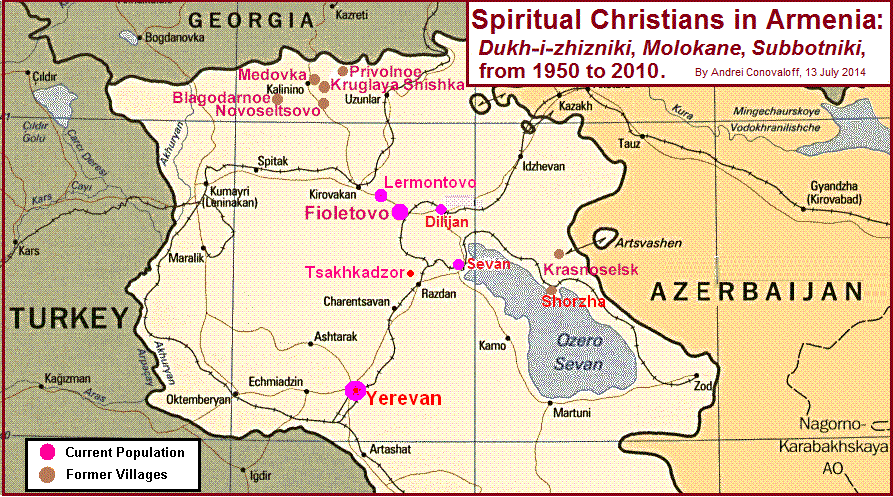
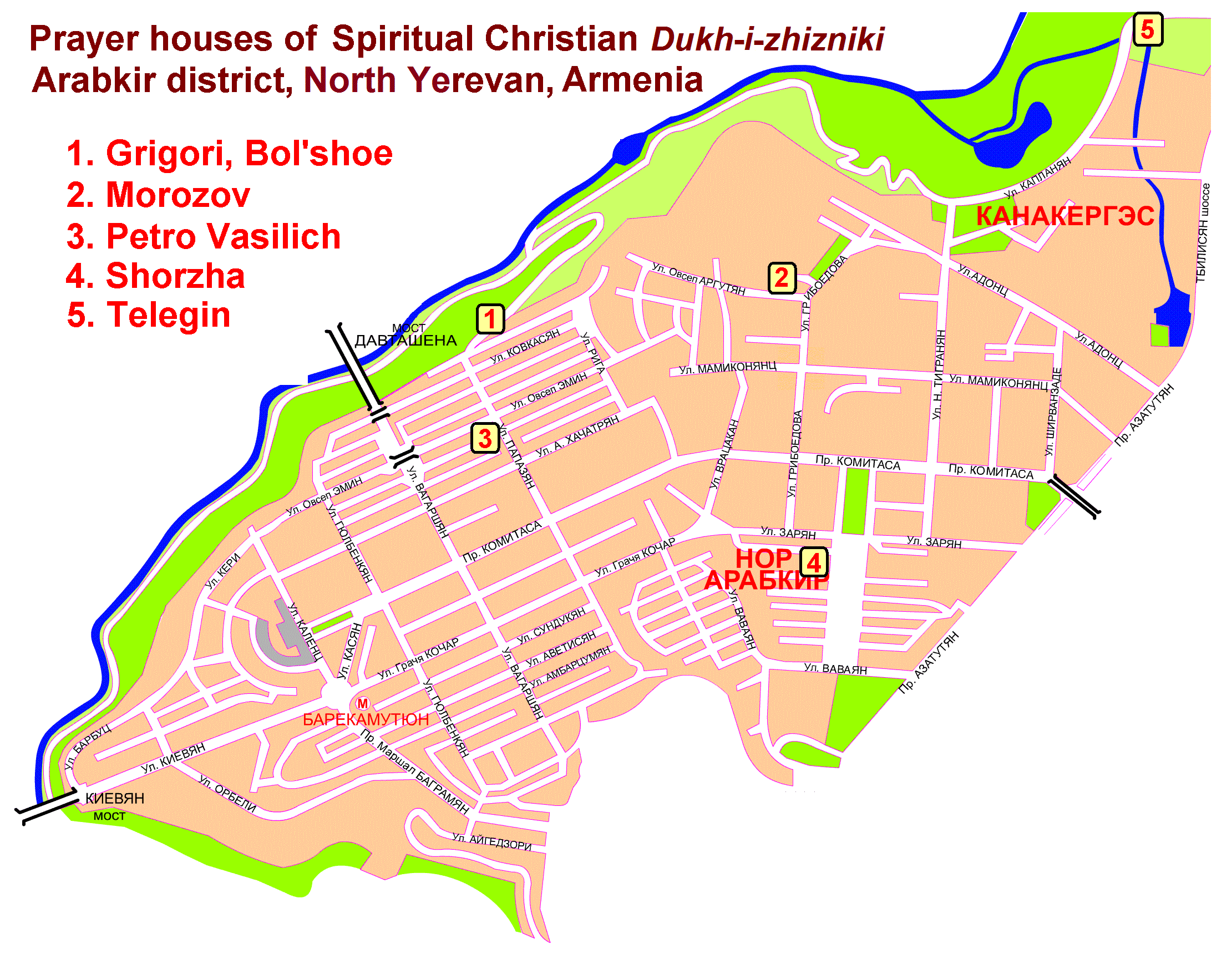
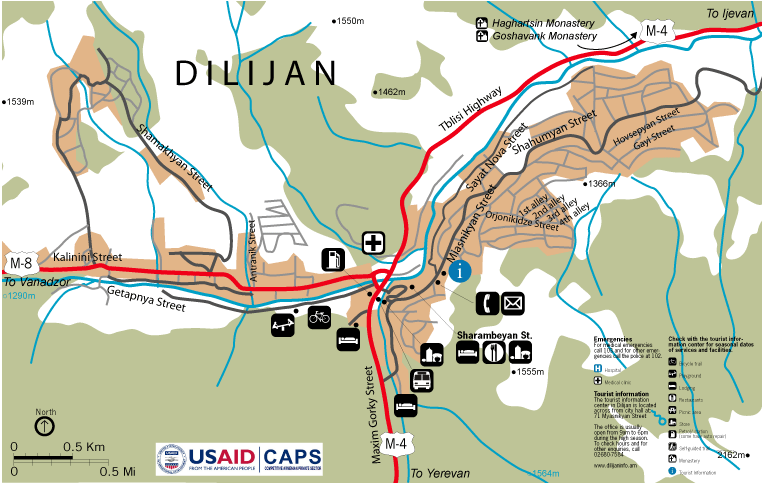 Molokans and Jumpers liove mostly along the west and south roads with 4 congregations. |
|
|
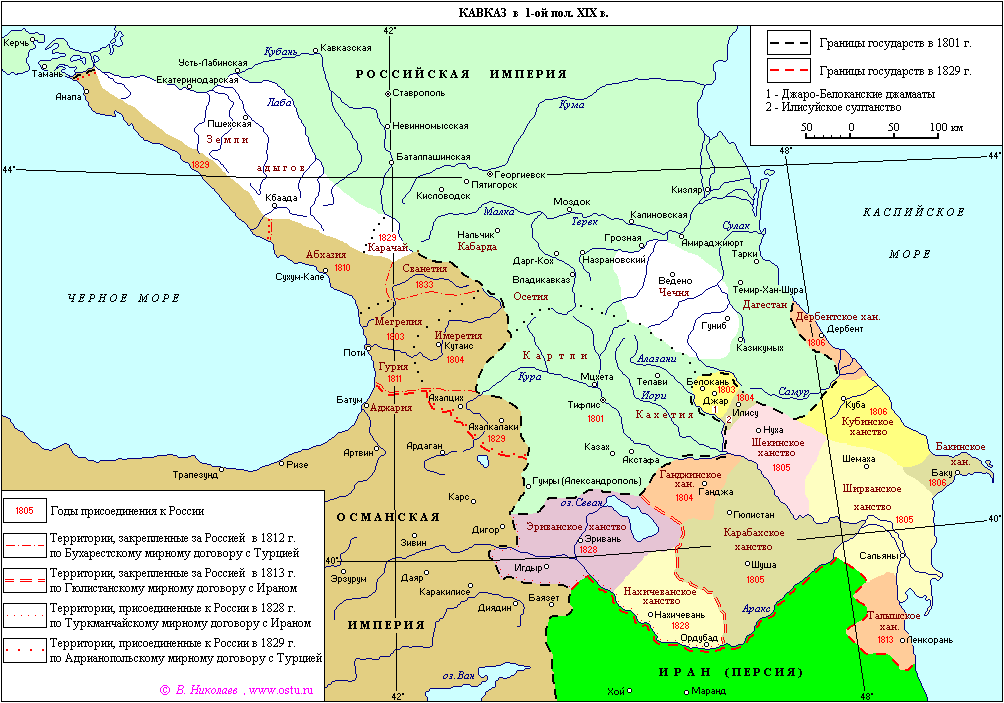
| В начале ХIХ века Россией началось освоение Закавказья, территорию которого занимали земли Грузинского царства, множество мусульманских ханств вассальных Персии, а также несколько регионов Восточной Армении, находившихся под игом Турции. | In the
beginning of the 1800s, Russia began development of
Transcaucasia, territory which was occupied by the
Georgian empire, numerous Muslim khanate* vassals
of Persia [now
Azerbaijan and Iran], and also several regions of
Eastern Armenia which were under the control of Turkey. [* A khanate is a state under the rule of a khan, a muslim ruler.] |
|
Caucasus in the first half of the
1800s
 |
|
Первый поход Русских войск
на Эривань состоялся в 1804 году, а второй — в 1808 году.
И лишь третий поход в 1827 году увенчался успехом.
Некоторые крупные регионы Восточной Армении были
присоединены к России.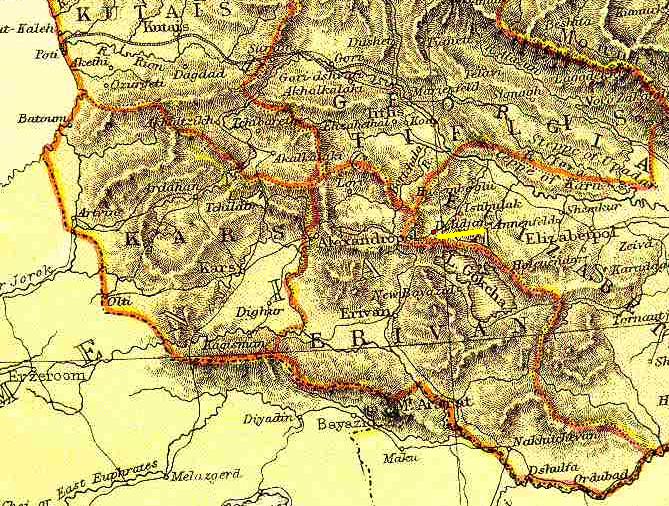 |
The first campaign of Russian armies in Erevan [Yerevan] province took place in 1804, and the second in 1808. And, only the third campaign in 1827 was crowned a success. Some large regions of Eastern Armenia were attached to Russia. [Today the Transcaucasus, or South Caucasus, is 3 countries: Georgia, Azerbaidjan and Armenia. In the 1800s the Transcaucasus were 7 provinces. Today's Georgia was Tiflis, Kutais, and Abkhazia provinces. Azerbaidjan was Baku and most of Elizavetpol' province. And, today's Armenia was Erivan, southern Tiflis, and eastern Kars province. See map of the Russian Empire Caucasus, 1882, map on left, and map of 19th Century Doukhobor Settlements in the Caucasus.] |
| Было решено на присоединённых землях создать русские поселения, жители которых могли бы со оружием в руках защищая своё имущество, помогать в освоении края. | To help develop the border
territory, it was decided to create Russian settlements on
the annexed land such that the new Russian settlers would
be able to protect their properties with weapons. [Used military rifles
were given to Molokans, Jumpers and Doukhobors to defend
their villages, which was cheaper than the military
providing security. For much more about Molokans,
Doukhobors, and Subbotniki moving to the Caucasus, see Dr. Breyfogle's
PhD thesis and book. Also see: Caucasus
Roads:
Where Molokans traveled in the 1800s] |
 |
|
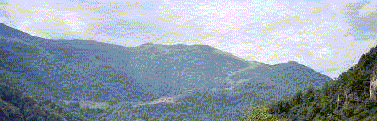
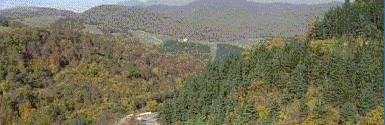
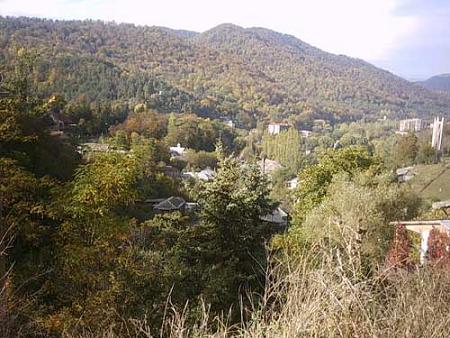
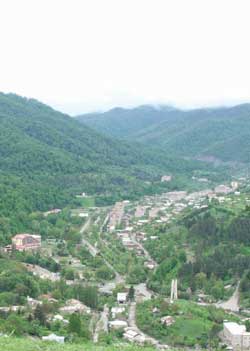
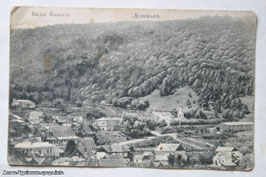 Дилижан, Виды Кавказа Dilizhan, View of the Caucasus |
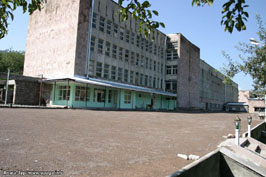 Дилижан, радиотехникум Dilizhan, radio-technical school |
| Это давало возможность сократить численность оккупационной армии. Одновременно это давало возможность решить вопрос удаления из России “особо вредных сект” и изоляции от них православного населения. И уже в 1831 году в Карабахской провинции возникло первое поселение духоборов из донских казаков. Через год в Нахичеванской губернии появилось первое духовные христианское молоканское село Базарчай. | This allowed for a
reduction in the numbers of the occupational army.
Simultaneously it allowed for a solution to the problem of
removing the "especially harmful sects” [Molokane, Doukhobory, Pryguny, Subbotniki,
Khysty] from Russia, and isolating them
from the Orthodox population. And in 1831, the first
settlement of Don Cossack Doukhobors appeared in Karabakh
province [renamed
Elizavetpol' province in, now ]. A year later the
first Spiritual Christian
Molokan
village, Bazarchai,
appeared in Nakhichevan province [Gandzhinskoe
khanate, later Elizavetpol', now the Republic of
Armenia; ~ 75 miles southeast of Erevan city. Dr. Breyfolge states the first Molokan
settlements in the Caucasus were in what is now south
Azerbaijan, formerly Baku province, in the Plain
of Morgan.] |
| Русских стали расселять на магистральных направлениях, имеющих стратегическое значение для России. Одна волна селилась по трассе, которая затем стала основным торговым путём между Россией и Персией: Тифлис — Елизаветполь (Ганджа) — Казах — Дилижан — Еленовка (Севан) — Ахта (Раздан). | Russians began to settle in
the main magistrates having strategic value for Russia.
One immigration wave settled on a main road which then
became the core trading route between Russia and Persia
[Iran]: Tiflis — Elinzavetpol' (Gandzha) — Kazakh [Qazak]
— Dilizhan [Also
spelled: Dilijan] — Yelenovka (Sevan) — Akhta
(Razdan [Also:
Hrazdan]). [See resettlement
route map, brown line.] |
| Другая волна расселялась по другой стратегически важной трассе следования русских войск на Турцию: Тифлис — Александраполь (Гюмри) — Карс — Эрзрум. Здесь помимо сектантских создавались православные сёла из числа военнослужащих и казаков. | The other immigration wave was settled on another strategically important main road following the Russian armies into Turkey: Tiflis — Aleksandropol' (Giumri) — Kars — Yezrum. [See resettlement route map, green line.] Besides the sectarian villages here, Orthodox villages of [Russian] military men and Cossacks were built. |
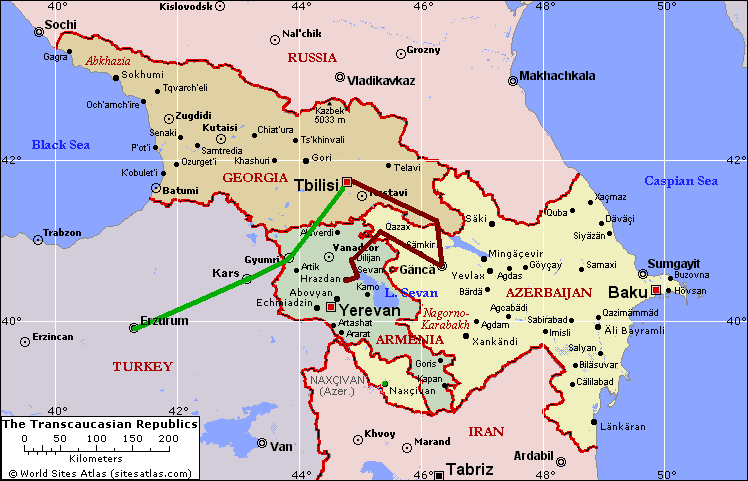 |
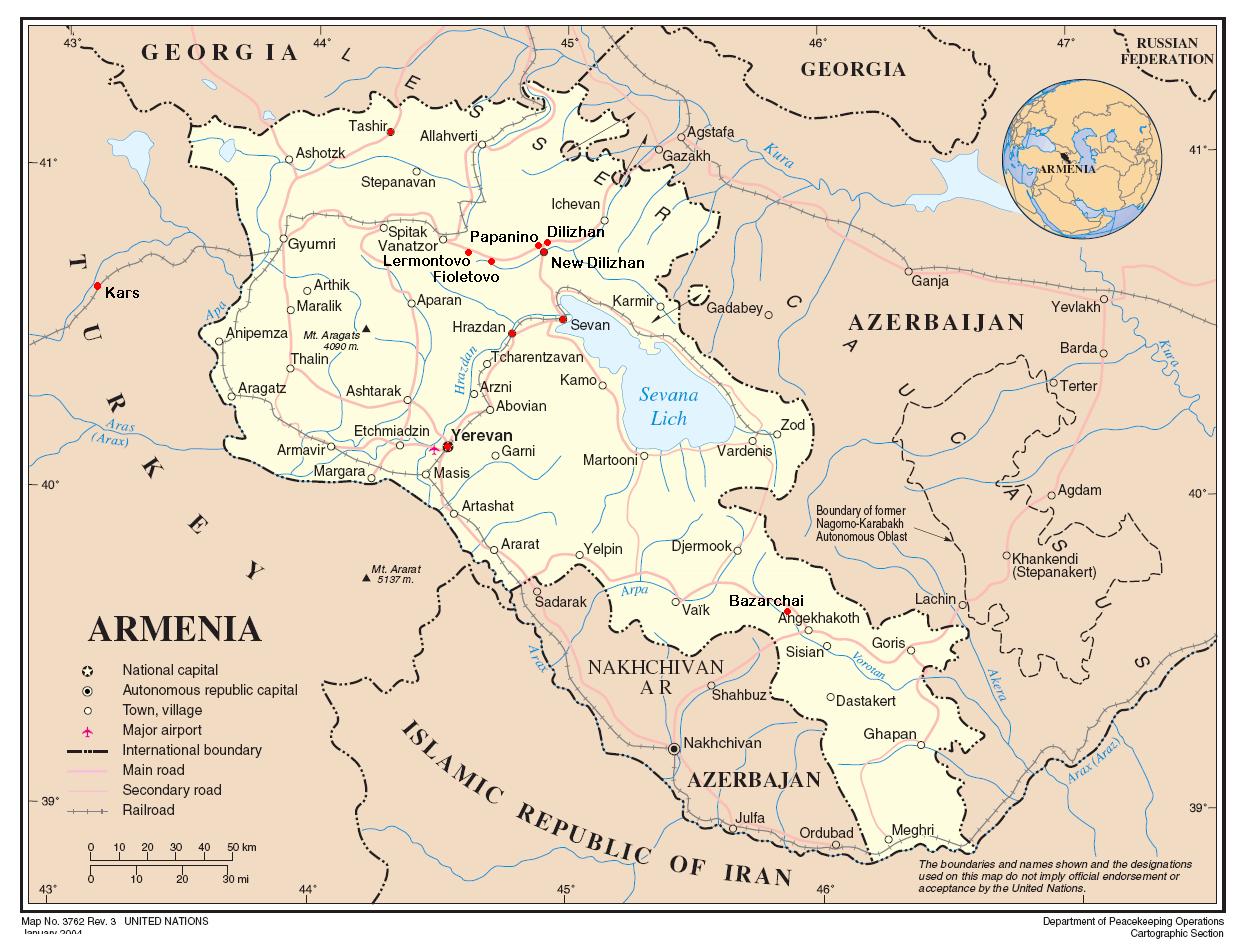
Map showing all villages in this article. The regions were renamed during Soviet times, see Former Regions within Present Provinces in Armenia. |
| Получается, что Дилижан — одна из стратегически важных точек. В середине 1840-ых годов рядом с селом Дилижан поселились духовные христиане староверы, выселенные из Российских губерний, которые создали сёла Головино и Слободка (Новый Дилижан, Папанино). | It turns out that Dilizhan is one of the strategically important points. In the mid-1840s, Spiritual Christians Old Believers moved from Russian provinces, settled next to Dilizhan village and created the villages of Golovino (New Dilizhan) and Slobodka (Papanino) [Now suburbs of Dilizhan, see village map above]. |
| Русские селились, главным
образом, в местах, природно-климатические условия
которых, были схожи с теми, которые они оставили в
России. В 1835 году появилось молоканское поселение
Еленовка (Севан), в 1842 году — Никитино (Фиолетово), в
1849 году — Воронцовка (Ташир), в 1847 году — Воскресенка
(Лермонтово) и другие. |
Russians settled mainly in
places where the natural climatic
conditions were similar to what they had in Russia.
Molokan [and Jumper] settlements appeared — Elenovka
(Sevan) in 1835, Nikitino (Fioletovo*) in 1842, Vorontsovka (Tashir)
in 1849, Voskresenovka**
(Lermontovo) in 1847
[see village
map above], and in other
places. [* Today Fioletovo is mostly inhabited by 3 Dukh-i-zhinik congregations and 1 Molokan. On both sides are congregations in Lermontovo and 4 in Dilizhan and Papanin. 5-7 congregations exist in Erevan. Spiritual Christians vacated all northern villages. A Subbotnik congregation still exists in Sevan.] [** See village photo in Caucasus Roads: Where Molokans traveled in the 1800s] |
| Русские принесли на Кавказ
картофель, способствовали развитию в крае огородничества.
До сих пор лучшую капусту, морковь, свеклу можно купить у
духовные христиане
молокан.
Это одна из самых работящих общин Дилижана. Прибывшие, в
свою очередь, многому научились у коренных жителей.
Взаимная помощь создала мост дружбы между армянами и духовные христианами молоканами,
но при этом, каждый из народов сохранил свои традиции,
обычаи. Духовные
христиане Молоканы — староверы, армяне —
христиане, но это не мешает нашему общению. Некоторые духовные христианами молоканами
молоканские поселения слились с Дилижаном, став его
частью. |
The Russians brought
potatoes to the Caucasus, and promoted the development of
truck farming [growing vegetables] in the border
territory. Until now the best
cabbage, carrots, beets can be bought from Spiritual Christians
Molokans.
These are one of the hardest-working communities in
Dilizhan. On the other hand, new-comers learned a lot from
the natives. Mutual aid created a bridge of
friendship between Armenians and Spiritual Christians Molokans,
but each nationality has kept their own traditions and
customs. Spiritual
Christians Molokans are an old faith*, and Armenians
are Christians, but it does not keep them from
communication. Some Spiritual
Christians Molokans settlements have merged
with Dilizhan, becoming part of it. [*Literally: Old Believers. Many journalists in Armenia seem to either confuse sectarians with Old Ritualist Orthodox, or think that Molokans are an old not-so-Christian faith as the Orthodox Armenian Church.] |
| Лилит Чибухчян — 2006 год, Дилижан | Lilit Chibukhchian — 2006, Dilizhan |
|
|
|
| Spiritual
Christians in Armenia Spiritual Christians Around the World |
|