The Phoenix Gazette — Wednesday,
April 11, 1984 — page C-6
Russian* graves halt construction on road projectBy Lori Baker, Gazette Northwest Bureau — Corrections in RED *Though they immigrated from Russia, but not all were ethnic Russians. |
|
| GLENDALE—an unmarked grave Community Development Administrator Bob Spaulding said
the city was unaware that the grave The Dukh-i-zhizniki Molokans,
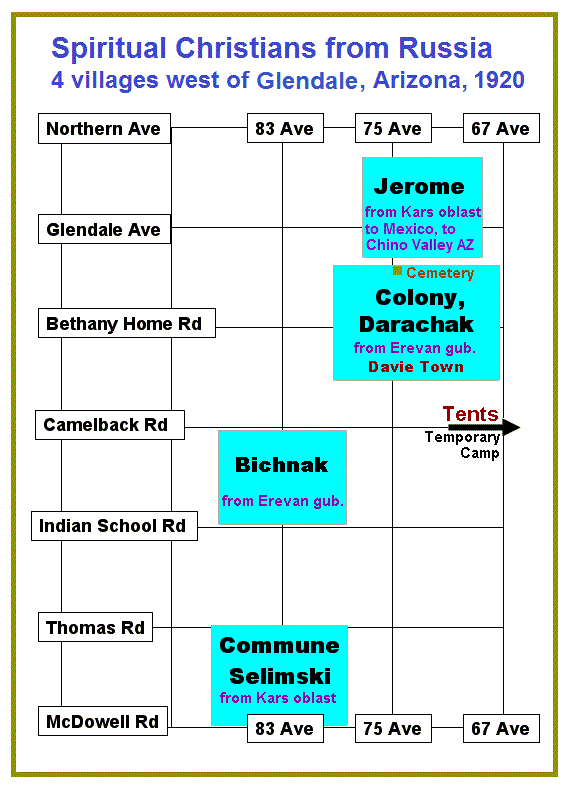
descendants of At least The Dukh-i-zhizniki Molokans were unaware that Maryland Avenue would be widened until a developer moved the cemetery's fence back eight feet last week. [Discovered by Harry Pete Tolmachoff, who immediately phoned his sister Mary Tolmachoff-Long.] Dunlap and Magee Inc., the developer of a 361-lot single-family subdivision near the cemetery, is required by the city to widen a quarter mile of Maryland Avenue east of 75th Avenue into a standard two-lane street and install curbs, gutters and sidewalks. The street ["Pancho's lane"] currently is an oil-caked access road to farm land owned by the late presviter William Sergei Tolmachoff. Work a safe distance from the cemetery will continue. The unmarked grave Spaulding said the city would realign the street after
the congregation |
Mary
Tolmachoff-Long The Molokans have hired
an attorney, Mr. Yarnell, to work with the
city regarding the grave sites.
"We don't disapprove of progress but we don't want to disturb our heritage," Tolmachoff said. "There was a flu epidemic in 1918 and many children died. During World War I, there was a depression and families moved to California and left the children behind," he said. He said the cemetery has been used continually since
1912 by a group of "The graves originally were, marked with cedar but some stakes rotted and others were burned in a field fire several years ago. The first big fire was in the 1930s, with about one a decade afterward because few cut the weeds. Tolmachoff said he has been unable locate records, which do not exist, about where the graves are but some of the elders of the church can remember at least two graves in the city's right of way. According to the deed of trust for the church's
cemetery, a 33-foot right-of-way,
originally owned by William Sergei Tolmachoff to
access his field (later named Pancho's lane, after the
man who lived in in the center of the section),
was designated for Maryland Avenue. The property was in
Maricopa County when it was established as a cemetery,
and Glendale continued the right-of-way designation
after it was annexed into the city, City Attorney Nick
Dotterman said. According to sparse
Glendale historical society records, the Dukh-i-zhizniki
Molokan
are During World War I, 34 |
|
|
|